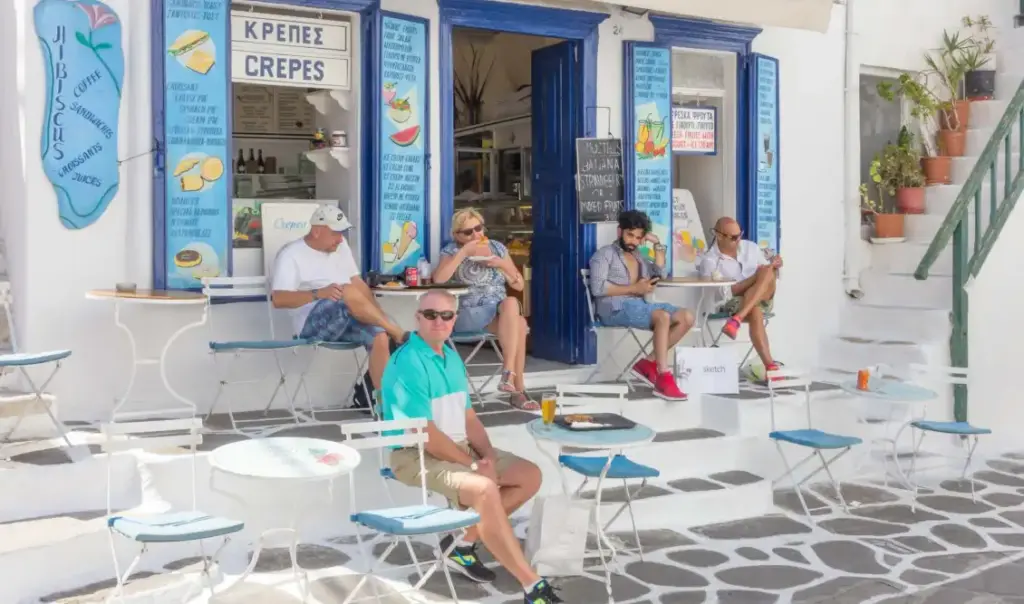
In a year where international tourism is navigating an environment of heightened uncertainty — with geopolitical tensions, cost-of-living pressures, and energy price fluctuations all influencing traveler decisions — British tourists are showing unwavering confidence in Greece. The largest traditional market for Greek tourism is making a powerful comeback in 2026, boosting both arrivals and sector revenues.
Read also: Overtime during the tourist season: What the legislation means for workers and businesses
Behind the positive figures, however, lies a significant shift in British traveler behavior: they are booking their holidays later — often at the last minute — yet they continue to choose familiar, trusted destinations. Data from the Bank of Greece captures the momentum of the British market. In the January–May 2026 period, visitors from the United Kingdom increased by 35.9% compared to the same period in 2025, adding 254,900 travelers.
In total, British arrivals reached 965,700 visitors in the first five months of the year. Even more impressive was their contribution to tourism revenues. Receipts from the British market surged by 50.9%, reaching €736.3 million, making it one of the most significant sources of growth for Greek tourism. British visitors also appear to be spending more generously on their holidays, with average expenditure per trip rising by 11% year-on-year. The strong return of British tourists comes as no surprise to those in the tourism industry. The United Kingdom has long been one of Greece’s most important markets, with millions of travelers choosing Greek destinations for their summer holidays every year.
At a time when consumers are becoming more cautious due to the high cost of living and economic uncertainty, Greece holds a significant advantage: it is a destination that British travelers know and trust. The country’s image as a safe destination — offering high-quality services, a consistent tourism product, and a wide variety of options — appears to be acting as a shield against the pressures affecting travel demand globally. Despite the market’s strong performance, however, British traveler habits are changing. The traditional logic of booking months in advance appears to be fading, with more and more travelers waiting until the last moment to make their decision.
Last-minute bookings on the rise
According to data from online travel agency loveholidays, bookings made just one day before departure increased by 26% year-on-year this year. Similarly, bookings made two days before travel rose by 19%, while those made within three days grew by 15%. This trend is linked to a combination of factors. High airfare prices, uncertainty about weather, and consumers’ efforts to find better deals are all driving many British travelers to delay their holiday decisions. However, this shift does not mean travelers are choosing unfamiliar or riskier destinations. On the contrary, the trend shows that they are choosing — at the last minute — the very same destinations they already know and trust. Greece sits squarely in this category, as a destination that combines sun, sea, safety, and easy access from the UK.
Spain remains top competitor
Greece, however, does not operate in a competition-free environment. Spain remains the top choice for British travelers, particularly for family holidays, while Turkey, Portugal, and Italy also maintain a strong presence. Data from the Association of British Travel Agents (ABTA) shows that Spain remains the most popular destination for British families, with the Costa del Sol, Costa Blanca, the Canary Islands, and the Balearic Islands capturing a large share of demand. At the same time, Greece maintains a strong position in British travelers’ preferences. The strong British demand provides a significant boost to Greek tourism, but it also highlights the major challenges facing the sector. The increase in arrivals is positive; however, the goal is no longer simply to attract more visitors, but to enhance the economic value they leave behind.
The rise in average spending by British tourists is a promising step in that direction. Meanwhile, the last-minute booking trend creates new demands. Hotels, accommodations, and destinations are being called upon to adapt to a traveler who decides later, compares more, and seeks the best value for money and experience. 2026 confirms that Greece remains one of the Mediterranean’s strongest players. And British tourists, despite the changes in how they plan their holidays, continue to cast a vote of confidence in Greek tourism.
Published in Apogeumatini tis Kyriakis