Greece is turning a new page in water management, moving away from the logic of emergency measures and piecemeal interventions. As pressure on water reserves intensifies and networks are put to the test, the focus is shifting from responding to each new crisis toward a unified plan for the protection, management, and utilization of water resources. At the heart of this change lies the new National Water Strategy, which seeks to unite the pieces of a fragmented landscape. With the Ministry of Environment and Energy (YPEN) acting as conductor, the previously scattered interventions are being brought into a common rhythm and unified direction. With interventions exceeding €600 million, the water supply “map” is changing on two parallel levels. While a nationwide “relay race” of new projects is unfolding, YPEN is also advancing the most significant institutional restructuring of recent years in water management. The bill submitted to Parliament redefines the boundaries and responsibilities of providers, expands the role of EYDAP and EYATH, and strengthens oversight by RAAEY. Infrastructure projects and institutional changes are thus moving forward simultaneously, as two complementary pillars of the new National Water Strategy.
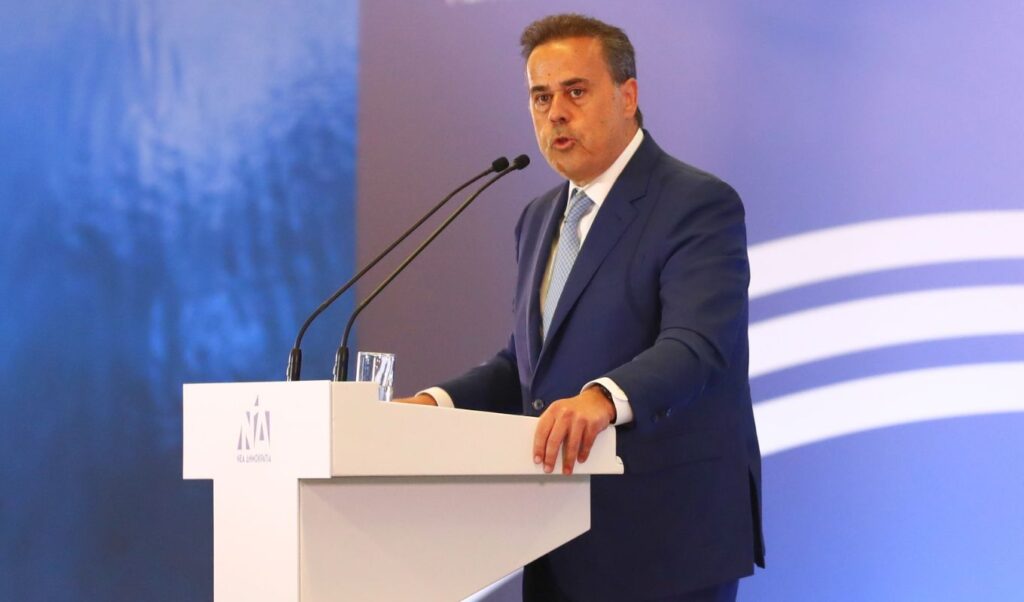
The government’s water policy is summarized for Parapolitika by Minister of Environment and Energy Stavros Papastaurou: “Water is the most precious public good, and uninterrupted, safe, and affordable access to it — amid the challenges of the climate crisis — is a non-negotiable priority of the Kyriakos Mitsotakis government.” “We are putting the new national water management policy into action,” he added. As the minister noted, “YPEN has already funded 103 water supply projects in 63 municipalities, worth €142 million. We also launched a new call for water supply projects across the country to combat water scarcity, which, together with ongoing calls, reaches €150 million. To definitively settle the debts of absorbed municipal water utilities (DEYA) to energy service providers, we allocated — together with the Ministry of Interior — an additional €200 million. In total, including projects from the Recovery and Resilience Fund, more than 200 projects have been carried out in 119 municipalities — more than one in three across the country — with a total value exceeding €600 million.”
From the natural springs of Volos to the desalination units of the Dodecanese, a major “relay race” of 103 projects is currently underway in 63 municipalities across the country.
“Additionally, in cooperation with the European Investment Bank, we are strengthening the protection of critical water and energy infrastructure, fortifying our networks against modern challenges. With planning, responsibility, and respect for water as a public good, we are ensuring sufficiency and quality for all citizens — today and for generations to come,” he concluded.
New funding calls
The map of interventions is now expanding with a new round of financing. YPEN is proceeding with a call for proposals worth up to €65 million from the Ministry’s Sectoral Development Programme, aimed at covering additional water supply needs in areas affected by water scarcity. The call is open to municipalities and Municipal Water and Sewage Enterprises (DEYA) from across the country, which are invited to identify the needs of their local communities and the networks they manage and to propose the required interventions. Applications must be submitted by Friday, September 11, 2026, accompanied by a detailed project description and clear budget documentation. The goal is to direct available resources toward mature, adequately costed projects that respond to the real needs of each area. The funding relay does not stop at €65 million. By September, two additional calls are expected — in cooperation with the Ministry of National Economy and Finance — worth €30 million for islands with more than 3,500 residents and €20 million for mountainous regions. This brings the total budget for new projects to €115 million. Added to this new package are two financing programmes already underway. The first is a call under the “Environment and Climate Change” programme, worth €14.47 million, for the restoration of damage caused by Storm Daniel to water supply infrastructure in Thessaly. The deadline for submitting proposals is September 30.
The second strand concerns smaller islands included in the “GReco Islands” initiative. For islands with a population below 3,500 residents, a total of €20 million is available, with a proposal submission deadline of March 31, 2027. This creates two distinct funding lines for the island territories: one for islands with more than 3,500 residents and one for smaller islands, where geographical isolation, limited water availability, and high infrastructure costs make addressing water scarcity even more complex.
The project map
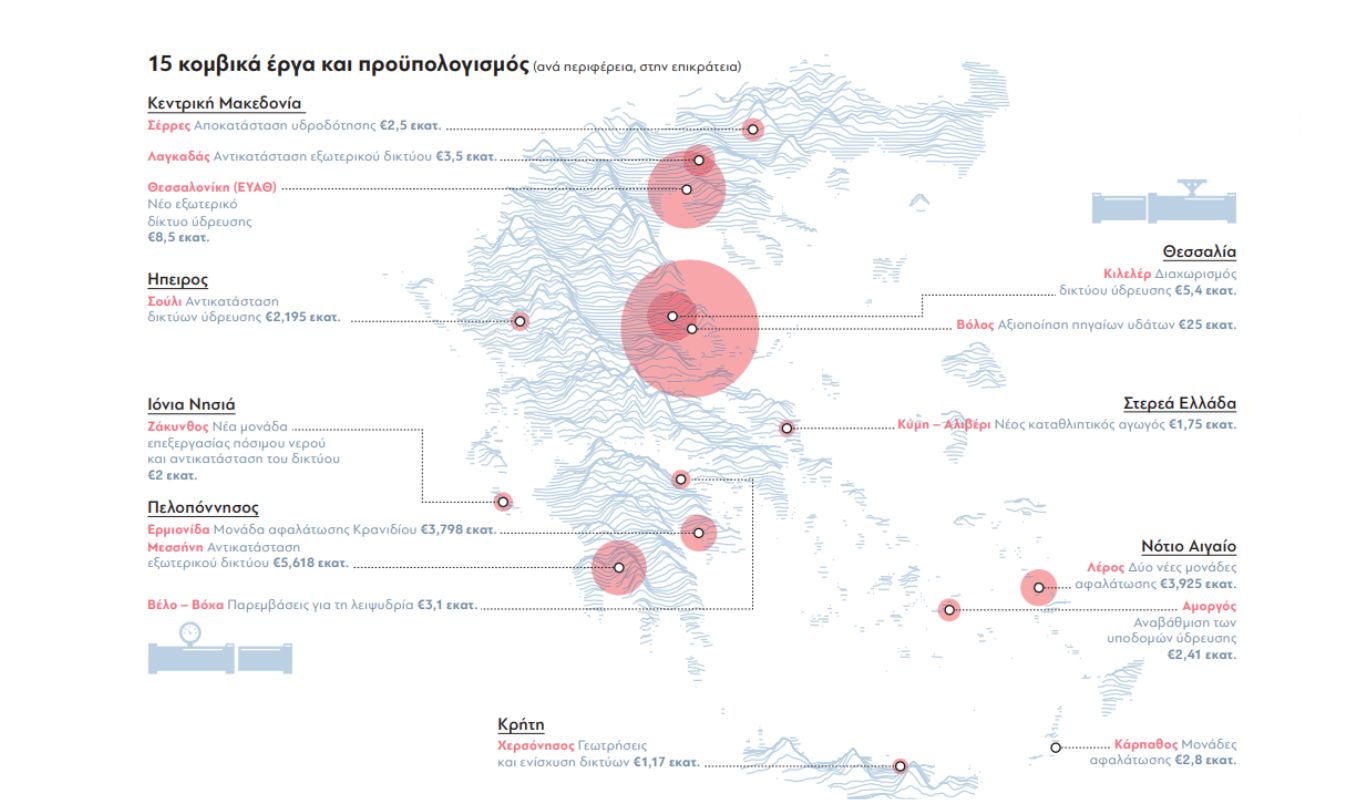
The funding is now moving into the field through a nationwide “relay race” of projects at different starting points and stages of maturity, but with a common goal: strengthening water security. From the natural springs of Volos to the desalination units of the Dodecanese, a major relay of 103 projects is underway in 63 municipalities. YPEN secures the financing, municipalities and DEYA mature and tender the interventions, while technical services and competent authorities are called upon to unlock permits and contracts. Some projects are already under construction, others have been contracted, and others are still at the starting line — in the tendering or technical preparation phase.
The biggest undertaking is in Volos, where €25 million are being directed toward harnessing the natural spring water of the eastern and western catchment fronts. In Kileler, €5.4 million are being invested in separating the Nikaia network to conserve drinking water, while in the Meteora area four interventions worth €1.68 million are replacing old pipelines in Kalambaka, Xirokampos, Oxyneia, and Sarakina. In southern Pelion, the baton passes to an undersea pipeline worth €2 million, which will carry water to Palio Trikeri.
Further north, EYATH is rolling out a new external network worth €8.5 million for Pefka and the settlements of Chortiatis. In Nea Propontida, six projects worth approximately €5.9 million combine desalination, new boreholes, arsenic removal, and pipeline replacement. Meanwhile, €3.5 million are being directed to the external network of three settlements in Lagkadas, and approximately €4.82 million to water treatment facilities, boreholes, aqueducts, and reservoirs in Serres.
In the Peloponnese, water is finding new routes. In Messini, €5.62 million are funding the replacement of the external network of Agios Floros, while in the Municipality of Velo-Vochas a package of €4.65 million includes a new transmission pipeline, a water treatment plant, and a portable desalination unit. In Ermionida, approximately €4.6 million are being directed to desalination for Kranidi and Porto Heli, and in Kalamata €2.03 million are going toward supplementary works.
In the island territories, desalination takes the lead. In Rhodes, 14 projects worth over €8 million span from Faliraki and Ialyssos to Soroni and southern Rhodes, with new networks, pipelines, borehole connections, and pumping station restoration. In Leros, approximately €4.93 million are funding new desalination units and transmission pipelines, while in Naxos €2.31 million combine a reverse osmosis unit with the replacement of old networks in the town of Chora. In Amorgos, projects worth €3.2 million include desalination, water supply infrastructure, and a new reservoir, while in Alonnisos interventions worth €3.17 million link desalination units with new networks.
The relay continues across Karpathos, Astypalaia, Andros, Kythnos, Kea, Patmos, Lipsi, Folegandros, Fournoi, Ithaca, Paxos, and Meganisi. In the Ionian Islands, approximately €4 million are directed to drinking water treatment and network replacement in Zakynthos, and nearly €2 million to desalination and urgent works in Corfu.
The thread of interventions also reaches Euboea, with a new pipeline in Aliveri and network and borehole projects in Eretria, as well as Crete, where approximately €3.75 million are distributed across Ierapetra, Hersonissos, Sitia, Phaistos, and Viannos.
The new management architecture
YPEN’s holistic approach does not stop at pipelines, boreholes, and desalination plants. While the investment map spreads across the entire country, the institutional arm of the new policy has already crossed the threshold of Parliament. The water bill, submitted on July 21, redraws the administrative “map” of water management, expanding the competencies of EYDAP and EYATH and strengthening oversight by RAAEY. Under the new framework, EYDAP extends its territorial jurisdiction to all of mainland Attica, Aegina, and Agkistri, as well as Boeotia, Phocis, and Euboea. Twenty-six municipal departments providing water and sewage services, seven DEYA, and eight Local Land Improvement Organizations are being incorporated into the company. At the same time, EYDAP is taking on irrigation responsibilities for the first time, including those previously exercised by the Region of Central Greece through the former Kopais Organization. In total, 43 providers and bodies are coming under its umbrella.
“With planning, responsibility, and respect for water as a public good, we are ensuring sufficiency and quality for all citizens and future generations.” — Stavros Papastaurou, Minister of Environment & Energy
Modern infrastructure
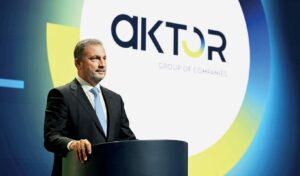
For his part, the CEO of EYDAP, Haris Sachinis, notes that “water is the most precious public good and our responsibility toward future generations. EYDAP’s expansion is not simply about new geographical boundaries — it is about transferring expertise built over a century, through major projects, international partnerships, continuous innovation, and daily service to millions of citizens. Today, we are implementing an investment programme worth €2.5 billion, while within the framework of the national water management strategy and in close cooperation with the Ministry of Environment and Energy, we are contributing to an integrated and long-term management of the water cycle, with the goal of infrastructure resilience and the protection of water resources. Together with the people of the new areas, we will invest in modern infrastructure, safe and quality water, environmental protection, and sustainable solutions that create economies of scale and keep costs as low as possible. We are committed to working closely with local communities so that every citizen can enjoy water and sewage services worthy of the best European standards,” he tells Parapolitika.
Correspondingly, EYATH is expanding its activity to encompass the entire Regional Units of Thessaloniki and Chalkidiki. Its new perimeter incorporates 5 municipal water and sewage departments, 8 DEYA, 11 Local Land Improvement Organizations, and one General Land Improvement Organization. The total number of providers and bodies transferring to EYATH amounts to 25. In total, the new model brings 68 providers and bodies under the two public companies. Specifically regarding irrigation, YPEN stipulates that the price of irrigation water will not increase for a three-year period.
Commenting on the benefits of the new framework for Parapolitika, the CEO of EYATH, Anthimos Amanatidis, emphasizes that “the incorporation of the DEYA of the Regional Unit of Thessaloniki and Chalkidiki into EYATH can create significant organizational, financial, operational, and strategic benefits. Leveraging EYATH’s expertise, experienced personnel, and managerial capacity will accelerate the planning and implementation of water supply and sewage projects. At the same time, economies of scale in procurement, tendering, and energy cost management can substantially reduce expenses. The implementation of modern SCADA systems, non-revenue water reduction technologies, and trenchless repair methods will improve network reliability and the speed of fault response. Furthermore,” he said, “it will facilitate the execution of urgent infrastructure projects to address water scarcity and protect the environment. With local offices, crews, and dedicated coordinators per municipality, proximity to citizens is maintained, while effectiveness, transparency, and social justice are all strengthened.”
Published in the Parapolitika newspaper.