Three in four Greek households are unable to make ends meet comfortably. According to the nationwide MRB TRENDS survey (July 2026, sample of 2,000 people), 75.4% of respondents say they struggle or are unable to meet their basic financial obligations, while only 23.9% report having no financial difficulty.
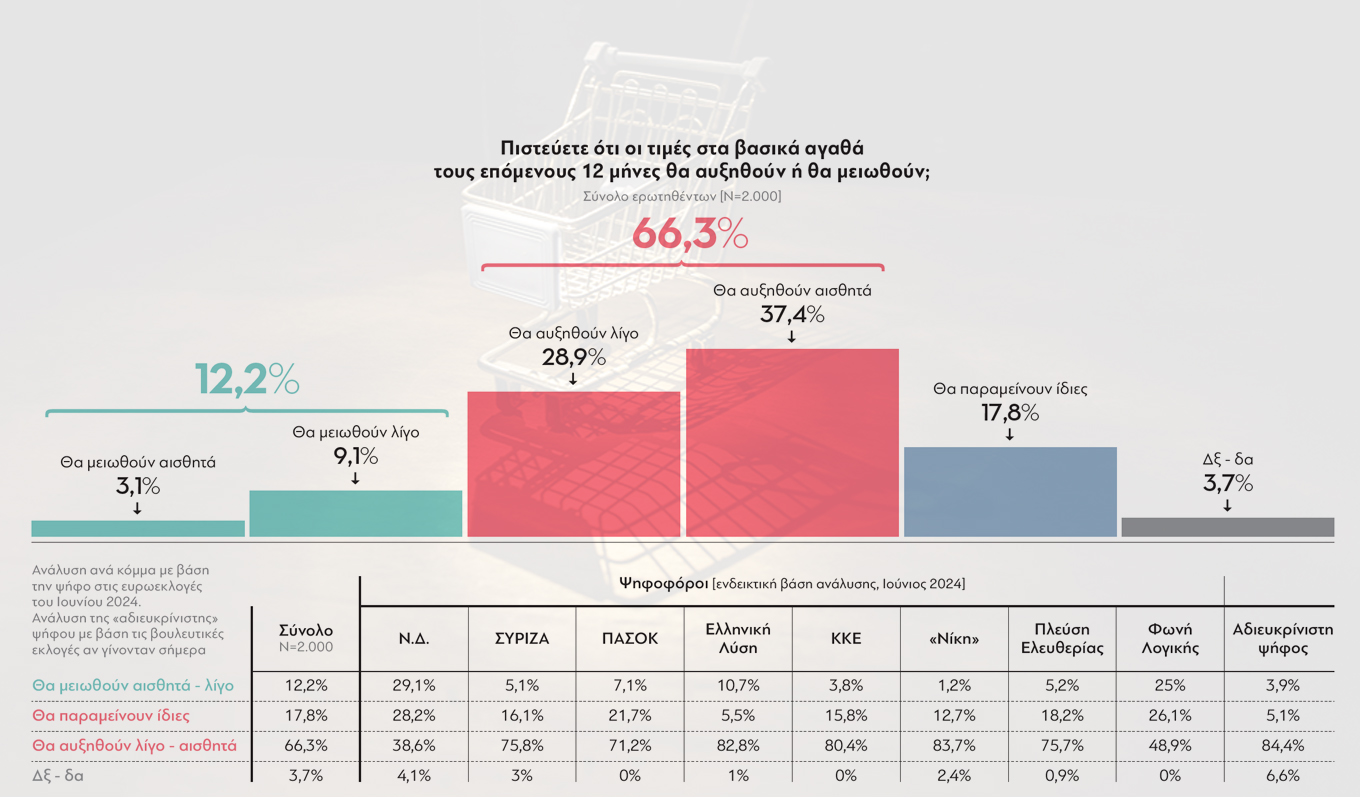
The financial pressure shows no sign of easing. Two in three citizens (66.3%) expect prices of essential goods to rise further over the next twelve months, while only 12.2% anticipate any decline. The negative outlook for the country’s economy (63.9%) exceeds even personal financial pessimism (48.6%), with 54% expecting the country’s economic situation to worsen over the next year. This climate is translating into raw emotion: anger dominates as citizens’ primary feeling about the state of the country (49.9%), painting a picture of what can only be described as “furious insecurity.”
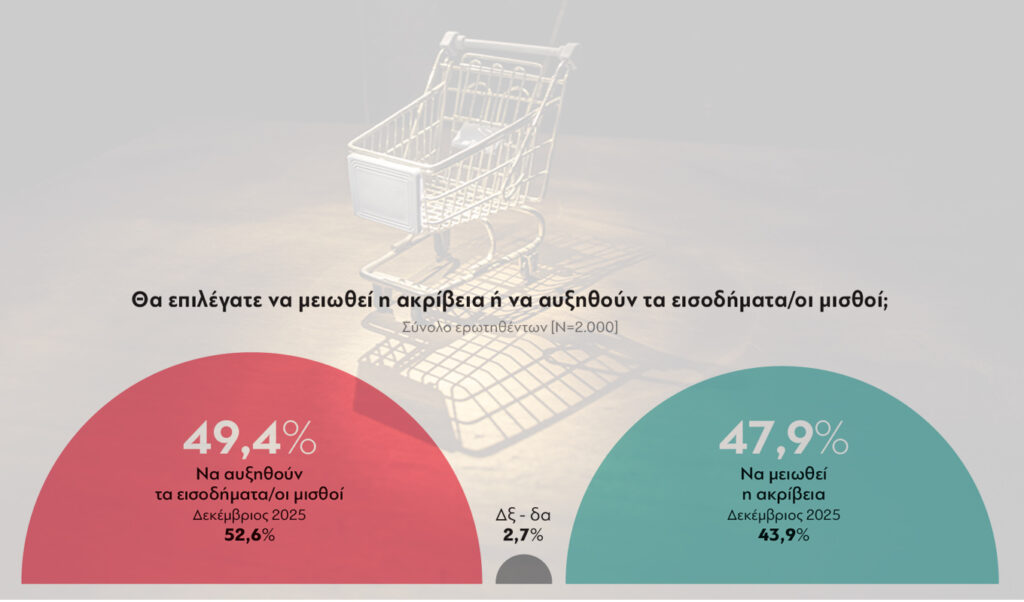
Also revealing is the near-tie between two policy priorities — reducing the cost of living (47.9%) versus increasing incomes (49.4%). This gap has narrowed significantly from December 2025, when the split stood at 43.9% versus 52.6%, signaling that the daily burden of high prices is increasingly weighing on public consciousness.
Although 62.7% believe the government has taken fewer measures than the economic situation warrants, targeted interventions are finding public support. The price comparison platform posokanei.gov.gr has earned positive ratings from 51.6% of respondents, with 59.7% saying they are aware of it or have used it. Meanwhile, the new borrower protection law is considered a “step in the right direction” by 66.6% of those surveyed.
The bottom line: Greek households are under pressure and growing angry, calling for relief above all in supermarkets, energy, and housing — yet they do acknowledge specific measures when they see them. They are waiting, however, to judge whether those measures actually deliver results.
Published in “Parapolitika” newspaper