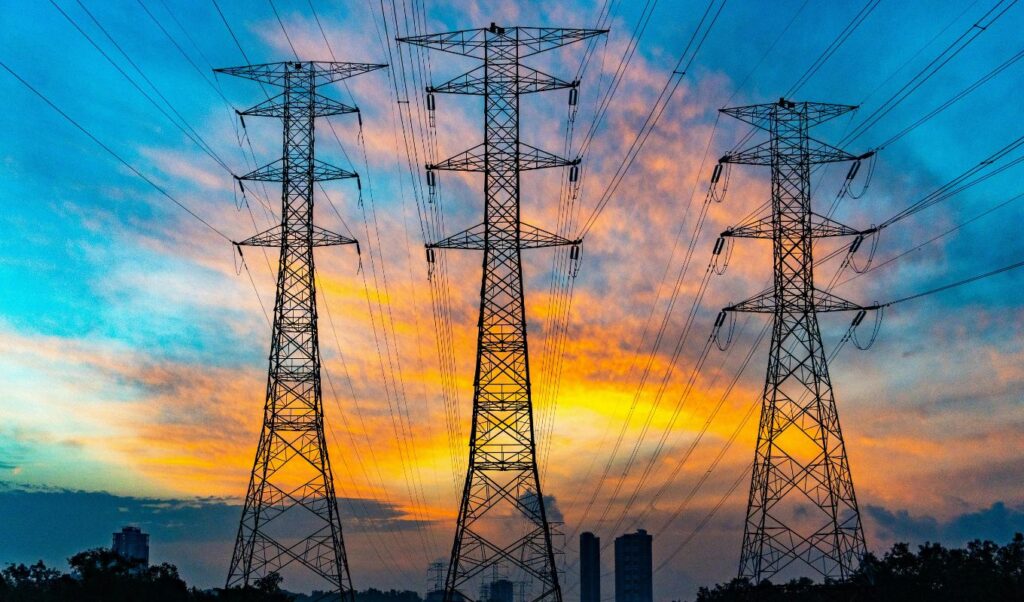
A significant development in European energy policy has emerged following the approval by the EU Council of Energy Ministers, meeting in Luxembourg, of the new European Commission package on European Energy Grids (European Grids Package), which had been presented on December 10, 2025. These regulations bear a strong Greek imprint, as the Greek government had already highlighted back in 2023 the need to treat electricity grids as a European — rather than strictly national — matter.
In line with this position, Prime Minister Kyriakos Mitsotakis wrote to European Commission President Ursula von der Leyen in January 2025, calling for a new European strategy on cross-border energy infrastructure. At the same time, Minister of Environment and Energy Stavros Papastaurou and Deputy Minister Nikos Tsafos consistently advocated for these same positions in the relevant European councils throughout the negotiations.
Papastaurou: The path opens toward a stronger internal energy market
Speaking before the Council of Ministers earlier today, Papastaurou emphasized: “Greece has been an enthusiastic supporter from day one. We supported this regulation not because we think it is perfect, but because we believe it opens the path toward a stronger internal energy market, toward a stronger Energy Union — something that is absolutely necessary.” He noted that strengthening energy integration is a prerequisite for ensuring affordable and secure energy for European citizens, and warned that it would be “a massive disappointment” if the Council had failed to reach an agreement on the regulation.
“We all have observations to make. But the big picture is that this is a positive step toward better coordination of the European internal energy market. I believe a good balance has been struck between cooperation and the autonomy of member states,” he stated. He also specifically highlighted the need to protect critical energy infrastructure, pointing out that threats to submarine cables and cross-border energy networks do not come from Russia alone, but from multiple directions — making a common European resilience and security strategy essential.
Today’s approval confirms that the European Union is now adopting an approach that Greece had timely identified as necessary for the completion of the Energy Union.
European planning with a Greek approach
At its core, the Grids Package introduces a new philosophy for energy network planning across Europe. It provides for greater coordination at EU level, faster licensing procedures, simplified rules for cross-border projects, and a fairer distribution of costs among the member states that benefit from new infrastructure.
This philosophy closely aligns with Greece’s longstanding positions, as it treats interconnections as European projects of strategic importance rather than purely national investments. Particular emphasis is also placed on making better use of existing networks, digitalizing them, enhancing system flexibility, and integrating renewable energy sources more effectively — since the growing share of renewable electricity generation demands significantly stronger interconnections at the European level.
Three Greek-interest projects among the eight “Energy Highways”
Of particular significance for Greece is the fact that three of the eight strategic projects — designated “Energy Highways” — that the European Commission has prioritized directly involve the country.
These are:
• The Trans-Balkan Pipeline, whose reverse flow represents a key pillar of the Vertical Natural Gas Corridor;
• The Greece–Cyprus electricity interconnection (Great Sea Interconnector – GSI), which will end Cyprus’s energy isolation;
• And the strengthening of electricity interconnections in southeastern Europe, along the Hungary–Romania–Bulgaria–Greece axis, with the aim of enhancing supply security and stabilizing energy prices across the wider region.
Why Europe is investing in energy grids
The European Commission describes electricity grids as the “backbone” of the European energy market. Today, the European electricity network spans more than 11 million kilometers, making it one of the largest and most reliable interconnected systems in the world.
However, demand is growing at a rapid pace. The transition to clean energy, electromobility, the electrification of industry, and the continuous expansion of renewable energy sources have all driven an unprecedented surge in applications to connect new projects to the grid. According to the European Commission, approximately 40% of Europe’s distribution networks are more than 40 years old, while cross-border electricity transmission capacity will need to double by 2030. For this reason, investments of hundreds of billions of euros are estimated to be required over the coming decades to modernize and expand Europe’s energy networks.
With today’s approval of the Grids Package, the European Union takes a significant step toward more coordinated planning of energy infrastructure — a development that strengthens Europe’s competitiveness, resilience, and energy security, and confirms Greece’s strategic choice to treat interconnections as a European rather than a purely national matter.
Three-year delay for the Methane Emissions Regulation
Also at the Energy Ministers’ Council, Greece backed a joint initiative to defer implementation of the Methane Emissions Regulation by three years, stressing the need to allow the market and competent authorities more time to adapt — without undermining the overall European target of reducing methane emissions in the energy sector.
The relevant non-paper was supported by 18 EU member states, reflecting broad European backing for a more realistic and workable transition to the new regulatory framework.