The Committee on Economic Affairs has begun reviewing the draft bill submitted by the Ministry of Finance titled “Measures to address the energy crisis and boost citizens’ disposable income, wage and tax provisions, regulations for the out-of-court debt settlement mechanism, public sector pension arrangements, regulations for the Gaming Supervision and Control Commission and improvements to the gaming framework, regulations for the Public Real Estate Company and other provisions.”
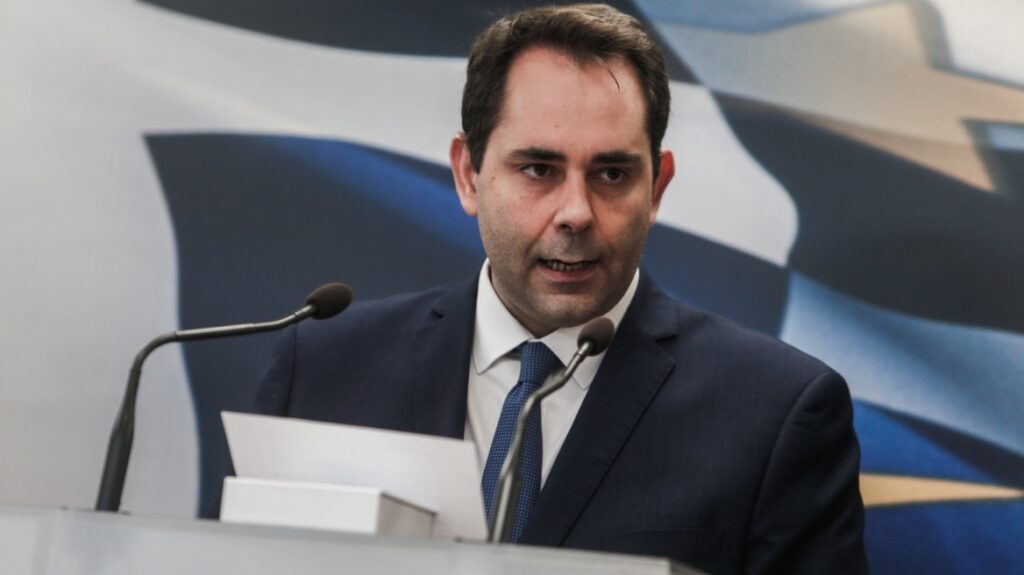
Deputy Minister of National Economy and Finance Dimitris Markopoulos stated that the bill “comes to resolve real problems faced by citizens across all social categories and groups, with a holistic approach, seriousness and responsibility.” Through the supplementary budget of €800 million, he said, “we are showing that the government stands by its citizens” through permanent, responsible policies that do not shift debt onto future generations — and not through tele-marketing-style tactics or empty promises. He called on the parliamentary debate to avoid turning into a “grand bazaar” of competing promises about who can offer the loudest and most popular pledges.
Deputy Minister of National Economy and Finance Thanos Petralias noted on his part that the bill “encompasses the full set of announced measures from December 2025 through to the present.”
Deputy Minister Markopoulos dismissed opposition criticism that the bill amounts to a collection of pre-election, piecemeal handouts, saying: “We are not all the same. We have proven that we keep our word — and make no mistake, elections will be held at the end of the four-year term.” He stressed that this bill is part of a series of support measures implemented throughout the government’s tenure, whenever the country’s fiscal position allows. He pointedly asked whether “the six increases to the minimum wage, the 83 tax cuts, the 16% pay rises from 2023 to date, the reductions in property tax (ENFIA), the interventions on the Solidarity Levy and personal salary differentials, last year’s pay rises for uniformed personnel, and the zero-tax policy for young people up to the age of 25 were pre-election giveaways.” The New Democracy government, said the Deputy Minister, is “in favour of supporting citizens full-time, not part-time.”
Markopoulos agreed that “nothing comes for free,” and in response to opposition criticism that revenues derive from higher indirect taxes, he stated that “only 10% of surpluses come from indirect taxes — the money available for these measures comes from sound fiscal management, from growth that in our country exceeds the European average, from attracting investment, and from cracking down on tax evasion through new digital tools, which some opposed, but which are now delivering results that flow back to citizens.”
On the issue of rising rents, the Deputy Minister argued that “we are heading in the right direction through digitalisation and intensified inspections, so that all rental income is declared.” Markopoulos questioned whether the bill’s provisions — allowing some families to receive child support payments, an additional €200 million compared to last year to boost pension supplements to €300, housing allowances for civil servants posted to remote areas, and new measures protecting debtors to the state and banks — do not in fact address the cost-of-living crisis. “We come with empathy, acknowledging problems and declaring ourselves present,” he said.
On criticism regarding the outcomes of the out-of-court debt settlement mechanism, Markopoulos noted “a 65% increase compared to last year, with 62,000 settlements totalling €19.21 billion,” adding that the government is extending repayment options with up to 72 instalments. Regarding the protection of primary residence borrowers and the Katseli Law, the Deputy Minister observed that while it provided some solutions in its time, certain “myths” have built up around it — if it had truly been a panacea, the problem would have been solved. “We need to study the new data in depth and with a clear plan, without sweeping issues under the rug, especially following the clear court ruling that has emerged. The Minister of National Economy and Finance Kyriakos Pierrakakis was explicit on this last week — but there is no need to rush into a solution driven by economic populism, without proper study and responsibility. That would be wrong.”
Thanos Petralias: With the improved out-of-court mechanism, debtors can arrange not just 120 instalments, but 240 or even 440
Deputy Minister of National Economy and Finance Thanos Petralias informed the Committee that a legislative improvement will be submitted to Article 53 of the bill — concerning the “allowance for equalising wage differences arising from personal salary differentials” — to ensure that civil servants on secondment to other services, who are entitled to the €300 allowance (offset against any personal salary differential), also receive it, given that their transfer is for a defined period of time.
Petralias clarified that the provision on personal salary differentials “comes, after 11 years, to rebalance the system in a horizontal rather than selective manner, as it essentially concerns approximately 1,500 employees, addressing a disparity between newer and longer-serving staff that had been created by the austerity cuts of the Memorandum era.”
Outlining the full range of provisions contained in the bill, the Deputy Minister explained that it incorporates the four newly announced measures to tackle the housing crisis: a rent rebate for teachers, doctors and nurses; a new “Repair & Rent” programme with tax incentives to increase housing supply; an extension of the short-term rental ban to the First Municipal Unit of Thessaloniki to protect long-term tenants; and a broadened eligibility perimeter for rent rebates compared to last year, covering 55% of salaried workers.
The second “package” comprises two announced measures requiring legislation before they can be granted to farmers: the refund of excise duty on agricultural diesel at the pump, enabling the new system to be used from 1 November, and the GAIA electricity tariff — which DEI has already begun offering at reduced rates and which also covers new farmers, who can enrol with a single application.
The third subset of measures legislates the announcements aimed at addressing the energy crisis: financial support for families with children (€240 million); an increase in the benefit from €250 to €300, with broadened income criteria for pensioners and all vulnerable social groups — a measure affecting 85% of pensioners. The bill also includes the announced measures on private debt settlement: asset protection from seizure if 25% of the debt is paid, with arrangements for the remainder; a reduction of the threshold for access to the out-of-court settlement from €10,000 to €5,000; a lower repayment instalment for debtors seeking to protect only their primary residence; and provisions for 72 instalments.
Responding to opposition references to “restoring the 13th pension payment,” Petralias noted that when announced by the Tsipras government, it amounted to “€300 to €500 gross, whereas the benefit now being introduced stands at €300 net, covers 1.8 million beneficiaries, and has a total cost of €560 million.”
On the opposition’s counter-proposal for 120 instalments for overdue obligations and the cancellation of surcharges at the end of the repayment period, the Deputy Minister pointed out that “when the 120-instalment scheme was introduced under SYRIZA, the out-of-court mechanism did not exist, debts of €6 billion were restructured, it covered small debts, and the standing arrangement allowed for only 12 instalments. Today, we have the out-of-court mechanism, debts of €19.5 billion have been restructured, the standing arrangement instalments have doubled to 24, and there are an additional 72 instalments for debts incurred during the pandemic or the energy crisis — up to the end of 2023 — at the interest rate of the standing arrangement.” He added: “Telling society not to pay your debts, leave them and the state will come along with 120 instalments and write off the surcharges — that is the recipe for disaster.”
With the out-of-court mechanism as it is being improved, Petralias added, “someone can arrange not 120 instalments, but 240 or even 440 — and with a haircut on the principal debt itself, not just the surcharges — depending on each person’s means and assets. This is a measure of justice, because the person who pays is not the fool and the one who can pay but doesn’t is not the clever one. This is a core position of our government.”
On the energy debts owed to DEI by General Government entities or local authorities, the Deputy Minister stated that “the state will pay the debt but will charge the entity through the Independent Authority for Public Revenue (AADE).” Regarding pay rises for judicial officers, Petralias clarified that “this concerns not senior but lower-ranking judicial officers who, upon promotion when no substantive post exists, were not on a par with Legal Council of the State (NSK) officials — and there is a relevant court compliance ruling that must be respected.”