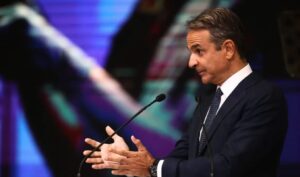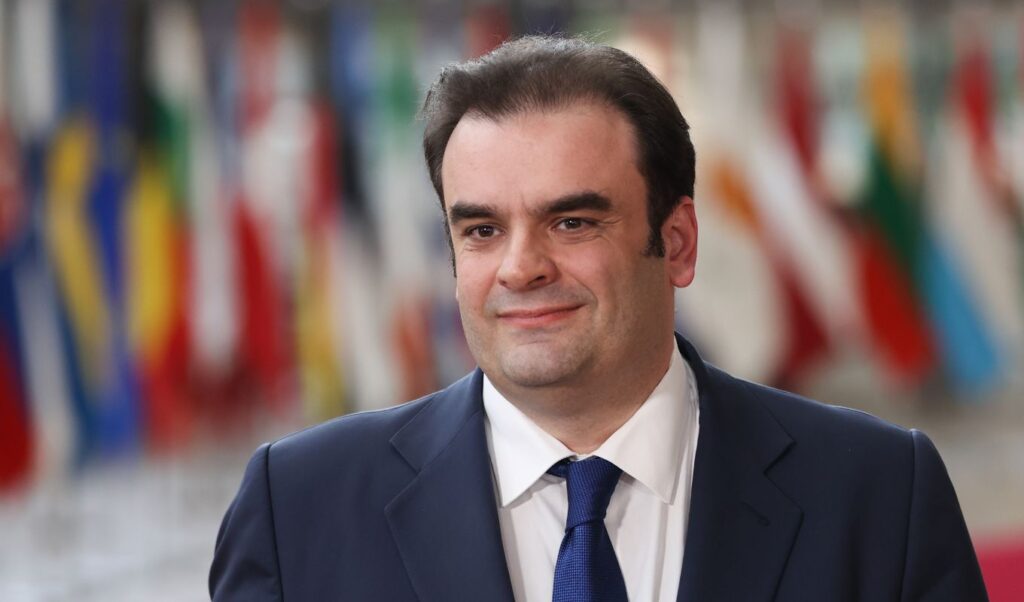
Kyriakos Pierrakakis, speaking at the 7th Occupational Insurance Conference, stressed that Europe needs more investment, greater economic resilience, and that European savings can be part of the answer. “Europe holds more than €10 trillion in private savings. This is an enormous financial reserve that can support growth, innovation, and the competitiveness of our continent,” said the Minister of National Economy and Finance.
Read also: Kyriakos Pierrakakis: “Greece stands before a period of significant opportunities and has achieved political and economic stability” (Video)
“Europe itself will finance Europe”
Minister of National Economy and Finance Kyriakos Pierrakakis emphasized in his address that “Europe is called upon to invest more in defense and security, energy autonomy, digital infrastructure, artificial intelligence, and the technologies that will define its competitiveness in the decades ahead. At the same time, demographic trends make the discussion around long-term pension adequacy and the sustainability of insurance systems even more critical.” He added: “Faced with these challenges, a crucial question arises: who will finance Europe’s future? The answer is simple: Europe itself. The Savings and Investments Union is the way the European Union can invest in its own future and multiply its strength.”
Occupational pension funds are a powerful institution with a long-term horizon
Speaking about occupational pension funds, Kyriakos Pierrakakis noted that they represent a powerful institution with a long-term investment horizon and serve as an important complement to the retirement system for workers. They enhance pension adequacy and enable more citizens to plan their futures with greater financial security. He underlined that occupational insurance builds bridges between citizens’ financial security and the economy’s development needs — connecting long-term savings with growth and transforming future planning into a force for progress across society as a whole.
He also noted that developing the second pillar of insurance is a strategic choice for the country. It strengthens the overall resilience of the insurance system, fosters a culture of saving, and contributes to the creation of a broader investment ecosystem.
Full address by Minister of National Economy and Finance Kyriakos Pierrakakis
“The theme you have chosen for this year’s conference is extremely timely, as it connects directly to one of the European Union’s most important strategic priorities: the Savings and Investments Union. This is an endeavor that goes beyond the boundaries of economic policy. It is about how Europe will strengthen its resilience and finance its great priorities for the decades to come.
Europe is called upon to invest more in defense and security, energy autonomy, digital infrastructure, artificial intelligence, and the technologies that will define its competitiveness in the years ahead. At the same time, demographic developments make the conversation around long-term pension adequacy and the sustainability of insurance systems even more pressing.
Faced with these challenges, a critical question emerges: who will finance Europe’s future? The answer is simple: Europe itself. The Savings and Investments Union is the mechanism through which the European Union can invest in its own future and amplify its strength.
Europe holds more than €10 trillion in private savings. This represents an enormous financial reserve that can support growth, innovation, and the competitiveness of our continent.
Yet, at a time when the investment gap remains significant and financing needs are growing, a large portion of these funds is seeking investment outlets outside Europe — effectively helping to finance the growth of other economies.
The great opportunity offered by the Savings and Investments Union is to bring European savings closer to European needs. To give European citizens’ savings the power to finance the next generation of European businesses, critical infrastructure, innovation, technological progress, and ultimately European strategic autonomy.
The challenge is great, but so is the opportunity. If we succeed in mobilizing more European savings in the service of the European economy, we will have laid the foundations for a more competitive, more resilient, and more powerful Europe in the decades ahead.
Within this broader European effort, occupational pension funds sit at the heart of the solution. The Savings and Investments Union is not only about markets — it is about creating strong European institutional investors with a long-term outlook. Occupational pension funds are exactly that kind of institution.
For workers, they serve as a vital complement to the public pension system. They enhance retirement adequacy and allow more citizens to plan their futures with greater confidence and security.
Occupational insurance builds bridges between citizens’ financial security and the economy’s development needs. It links long-term saving with growth and transforms forward planning into a driver of progress for society as a whole.
For citizens, this debate translates into a straightforward question: how can more and better-paying jobs be created? The answer runs through investment. The more productive investment that takes place in an economy, the greater the gains in productivity, wages, and opportunities for everyone.
This is precisely where the importance of the second pillar of insurance becomes clear. Occupational pension funds strengthen long-term saving and pool capital that can support economic growth. That is why their development is a European priority — not merely a national choice.
The success of this effort requires trust. Trust is the foundation of every saving decision. It is the reason a worker chooses to set aside part of their income for the future, and the reason citizens entrust an institution with the fruits of a lifetime of work. That is why transparency, accountability, good governance, and effective supervision are essential prerequisites for the development of this sector.
Trust is built day by day — through consistency, reliability, and results. And it is particularly significant that in recent years Greece has taken meaningful steps in this direction.
Developing the second pillar of insurance is a strategic choice for our country. It strengthens the overall resilience of the insurance system, fosters a culture of saving, and contributes to building a broader investment ecosystem.
Greece has every reason to participate actively in the broader European effort to mobilize savings and channel them into productive investments — because what is at stake is Europe’s development model, the ability of our businesses to grow, our economies to become more productive, and our citizens to enjoy a higher standard of living.
The great challenges of our time demand bold answers. Europe needs more investment. It needs greater economic resilience. European savings can be part of the answer. The success of this effort will ultimately be measured in one simple way: by how well we manage to transform citizens’ trust in the future into prosperity for generations to come.
I would like to congratulate the Hellenic Association of Occupational Pension Funds for its enduring contribution to the development of this sector and for organizing this conference. Through your work, you cultivate a culture of saving and contribute to an effort that is directly linked to the future of both the Greek and European economies. This is an effort with a powerful social, economic, and national impact. Thank you very much, and I wish you every success in your conference proceedings.”