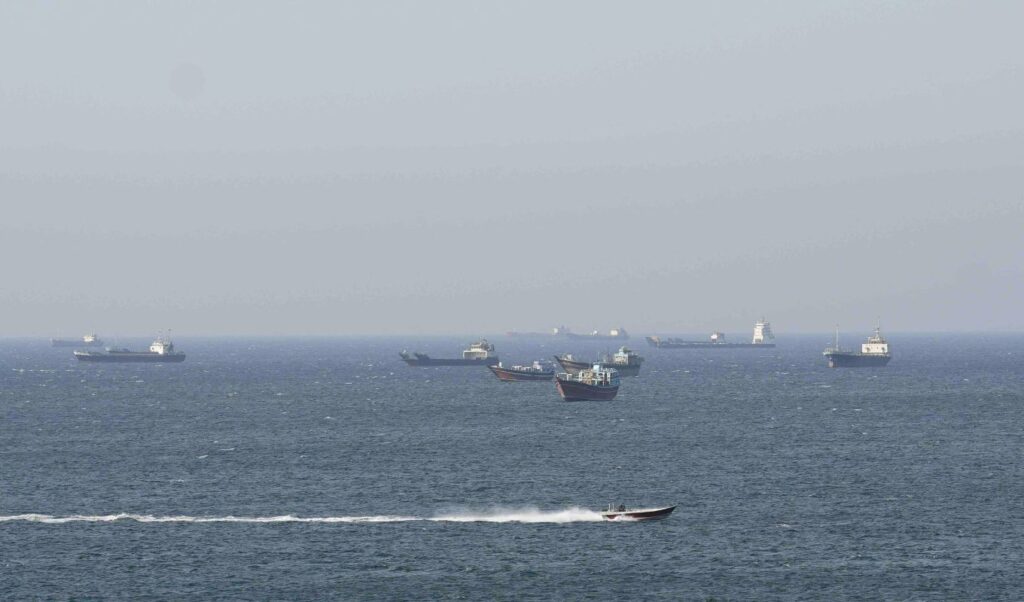
The crisis in the Middle East appears to be heading toward de-escalation following the agreement between the US and Iran on the reopening of the Strait of Hormuz. The development brought relief to markets, with a significant drop recorded in oil prices. However, a return to normalcy for international shipping and global energy trade is far from guaranteed.
Read also: The Trump deal on the Strait of Hormuz is a “gift” for central banks
When will ship traffic through the Strait of Hormuz recover?
Vessel traffic through the Strait of Hormuz could recover to approximately 50% of pre-war levels within the first month of the agreement’s implementation, provided there are no major complications, according to estimates from maritime data firm Kpler. The US and Iran are expected to officially sign the agreement on Friday, June 19, in Switzerland. The deal provides for the reopening of the Strait of Hormuz and the lifting of the American naval blockade against Iran.
Daily vessel movements could gradually increase to around 40 ships per day, according to Kpler analysts. Before the war began on February 28, approximately 100 ships were transiting the Strait of Hormuz daily.
Prior to the crisis, around 20% of global oil flows passed through the Strait of Hormuz. The situation changed dramatically when Iran began targeting tankers in early March, forcing much of commercial shipping out of the region.
The first vessels expected to transit will be fully loaded tankers that have been trapped in the Persian Gulf for the past several months.
118 tankers waiting for the “green light”
According to Kpler, approximately 118 tankers are currently in the region and could exit within the first 15 days of the agreement taking effect.
Analysts warn, however, that this outbound fleet movement represents an extraordinary and temporary phenomenon and should not be interpreted as a permanent return of shipping activity to pre-war levels. The critical question is how many new vessels will be willing to enter the Persian Gulf once the current backlog has cleared.
Shipowners remain cautious
A significant number of tankers remain anchored in the Gulf of Oman and the Arabian Sea, waiting for the safe resumption of the maritime route. Kpler’s head of tanker markets, Matt Wright, estimates that inbound tanker flows into the Persian Gulf could increase to 12 vessels per day within the first 30 days — roughly 50% of pre-war levels.
Despite this, many shipowners remain cautious. As Wright points out, several companies will prefer to monitor the initial transits before deciding to return to the region. The absence of attacks and confirmation that no active minefields exist will be essential prerequisites for restoring confidence.
A similar stance is expected from insurance companies, which will only begin reducing war risk premiums once it has been practically demonstrated that transits can be carried out safely.
Frontline CEO Lars Barstad was more optimistic, estimating that vessel traffic would increase very rapidly once the agreement is signed.
The company manages approximately 80 tankers worldwide, of which five remain stranded in the Persian Gulf.
Despite the optimism, significant factors of uncertainty remain.
The risks that remain
One of the key problems is that the United States and Iran appear to be interpreting certain aspects of the agreement differently.
Iranian state media claims that ships will be able to transit the Strait of Hormuz free of charge for a period of 60 days, after which management will transfer to Iran and Oman.
By contrast, US Vice President JD Vance stated that the American position provides for permanent free passage without any fees.
The mine threat: a serious concern
Particular concern surrounds the issue of mines reportedly planted in the area. US President Donald Trump has publicly downplayed the risk, yet Secretary of State Marco Rubio recently told Congress that Iran had mined large sections of the Strait of Hormuz.
International shipping association BIMCO warned on Monday that the mine threat remains a serious concern and classified the area as high-risk for navigation. Similar warnings have been issued by security experts, who estimate that a full mine clearance operation could take weeks or even months.
BIMCO’s head of security, Jakob Larsen, emphasized that the lack of detail surrounding the agreement and the track record of overly optimistic assurances warrant particular caution.
As he noted, the security situation remains volatile and the risks to vessels continue to be significant, despite the agreement between Washington and Tehran.
For these reasons, while the anticipated agreement marks the starting point for the reopening of the Strait of Hormuz, the return to normalcy for shipping and global energy flows is expected to be a process that will require time, safety assurances, and a full restoration of confidence.