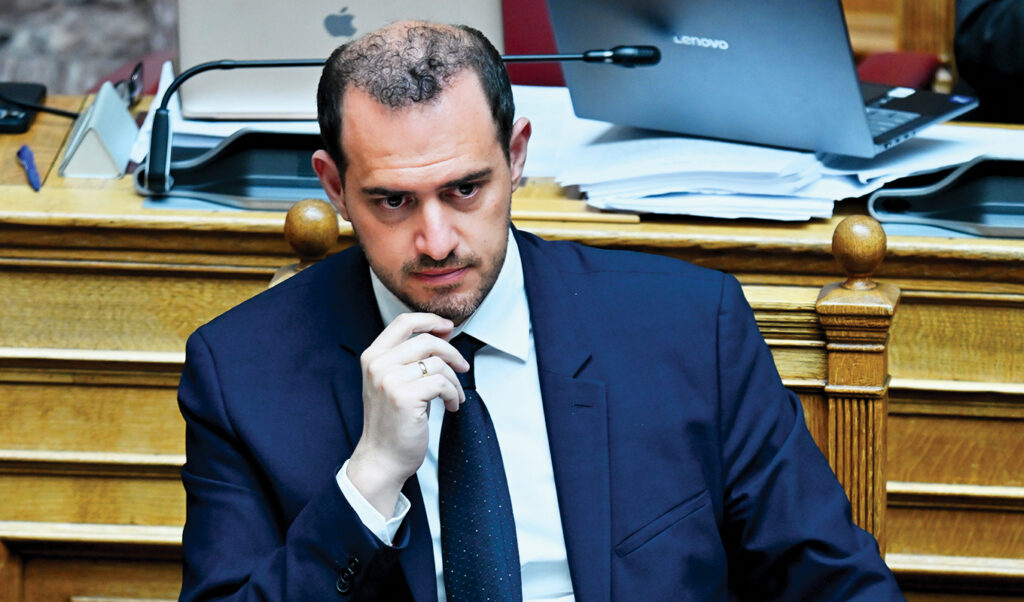
“We address the increased needs that citizens have by strengthening their available income with measure and method,” stated Deputy Minister of National Economy and Finance George Kotsiras, speaking on Wednesday morning 27/05 on SKAI. Mr. Kotsiras initially referred to the extension of the fuel subsidy for the month of June, noting that this is a measure that has already proven effective and comes as part of “a range of initiatives” to support the economy and society against the disruptions caused by the war in Iran. Within this framework, support for families with 150 euros per child from June is also included.
George Kotsiras: Within the fiscally feasible framework, we choose targeted measures
“We understand the needs of Greek society and within the fiscally feasible framework, as we have done so far, we choose targeted measures to support Greek society and the Greek market,” the Deputy Minister of National Economy and Finance characteristically stated.
He emphasized that “all this is the product of the good course of the Greek economy, which we built with tremendous effort,” while “at the same time we are paying off a significant part of public debt, so that we don’t see in the coming years what my generation witnessed and don’t find them in front of us.”
He noted that the effort to strengthen citizens’ disposable income is done through both permanent and emergency support measures and highlighted indicatively the reduction of taxation – particularly the reduction of direct taxes for families with children and for young people – support for tenants, pensioners and the Greek periphery.
Subsequently, Mr. Kotsiras referred to three important provisions for addressing private debt included in the new bill from the Ministry of National Economy and Finance, which will soon come to Parliament: the possibility of settling debts that existed until 31/12/2023 in 72 installments, lifting bank account seizure for debts to the State after payment of 25% of the amount and settlement of the remainder, and reducing the threshold for inclusion in the extrajudicial mechanism from 10,000 to 5,000 euros.
As Mr. Kotsiras explained, “we want to help with the liquidity of many businesses and fellow citizens who could not use their account for their transactions.” “These are three measures” that are added “to the already existing ones and will help quite a few of our fellow citizens who want to be compliant.” “We give them a second chance,” while at the same time ensuring a culture of payments.