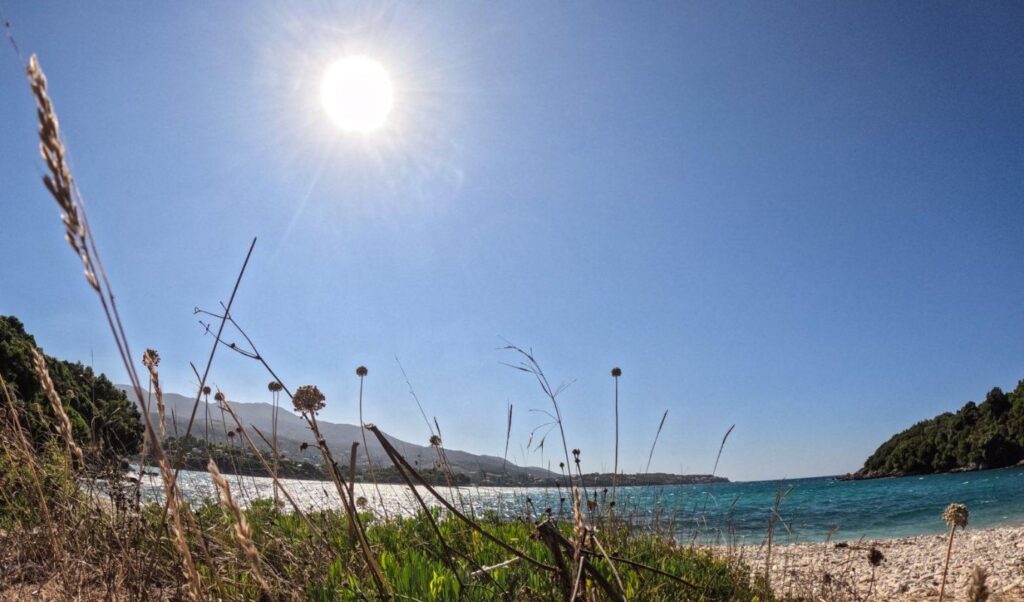
Temperatures across Greece are on a sharply rising trajectory, with the mercury expected to reach as high as 40 degrees Celsius in several inland regions. However, the scorching conditions are not set to last long, as a weather change is forecast toward the end of the week, when cooler air masses move in, bringing localized thunderstorms and possible hailstorms.
Read: After a mild June, a hotter summer is on the way: Christina Rigou’s forecast for July and August
Today, maximum temperatures will range between 34 and 36 degrees Celsius, with the highest readings expected in central Macedonia, Thessaly, western Central Greece, the Peloponnese, and southern Crete. From Tuesday onward, the heat will become more intense, with several landlocked inland areas reaching between 39 and 40 degrees Celsius.
Particularly high temperatures are expected in Evros, Pella, Pieria, Imathia, inland Thessaly, western Central Greece, Arta, Messolonghi, Agrinio, the western and southern Peloponnese, and southern Crete, where the thermometer will locally climb to 37 degrees.
In Attica, conditions will remain generally sunny, with Etesian winds continuing to blow and a temporary easing expected during the afternoon hours. Temperatures will reach up to 35 degrees, rising to 36–37 degrees over the coming days. From the weekend onward, winds are expected to pick up again.
In Thessaloniki, the weather will remain mild, with some cloud cover during the afternoon hours and light winds, while temperatures will reach 35 degrees.
Marousakis: When is the weather expected to break?
From Thursday, and especially on Friday, a weather change is forecast, as cooler and more unstable air masses will trigger localized storms, heavy rainfall, and possible hail. The areas most likely to be affected include the mountainous and semi-mountainous zones of Epirus, western and central Macedonia, western and northern Thessaly, central Greece, and the interior of the Peloponnese.
Over the weekend, temperatures will drop noticeably; however, the strengthening of northerly winds will significantly raise the risk of wildfires, particularly in areas with dry vegetation — a development that calls for heightened caution.