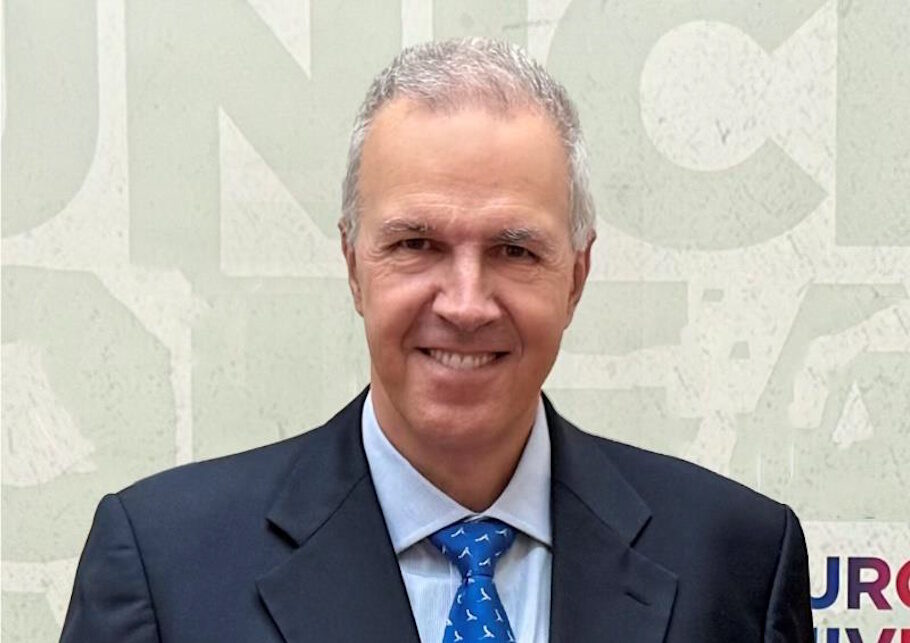
Professor Athanasios Katsis has officially assumed the duties of president of the Hellenic Statistical Authority (ELSTAT) by decision of the Minister of Finance. Mr. Katsis was nominated for the position of ELSTAT President by an international committee of experts.
ELSTAT: Who is the new president Athanasios Katsis
Professor Athanasios Katsis holds a PhD and master’s degree in Statistics from George Washington University in the United States, where he studied with a full scholarship from the university. He completed his undergraduate studies in the Mathematics Department of the National and Kapodistrian University of Athens. He has served as a professor at the University of Toledo (USA), the University of Cyprus, the University of the Aegean, and from 2004 until recently, at the University of the Peloponnese (Department of Social and Educational Policy). From December 2017 to April 2026, he served as Rector of the University of the Peloponnese, where he was elected twice to this position.
During his tenure as Rector, the University of the Peloponnese expanded significantly, smoothly absorbing schools and departments from former Technological Educational Institutes. At the same time, it joined networks of European University Alliances and began creating foreign-language study programs to attract international students. Additionally, Mr. Katsis has served as a statistical consultant to the World Bank on education economics issues.
Mr. Katsis’s research interests focus on the area of Bayesian Statistics, particularly on calculating optimal sample sizes, education economics, educational research, as well as applications of statistical distributions in telecommunications. His work has been published in international peer-reviewed scientific journals and presented at academic conferences. Furthermore, Mr. Katsis has participated, either as a partner or coordinator, in numerous research projects with international and national funding. These projects investigate, through quantitative and qualitative approaches, issues such as educational policy and vulnerable social groups, innovation and knowledge-intensive entrepreneurship.