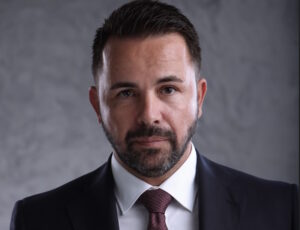
The trajectory of the Greek economy, the outlook for the banking sector, and Alpha Bank‘s core strategic directions for the years ahead were outlined at the bank’s Annual General Meeting of shareholders by Board Chairman Dimitris Tsitsiragkos and Group CEO Vasilis Psaltis. The two bank leaders addressed the challenges facing the financial sector, as well as Alpha Bank’s priorities for sustaining its growth momentum and supporting the Greek economy.
Alpha Bank’s Board Chairman, Dimitris K. Tsitsiragkos, emphasized that Greece now has a unique opportunity to capitalize on the credibility it has worked hard to earn and transform it into a new, sustainable growth model. He noted that the success of this transition will depend on the ability to combine stability with reforms, investment with innovation, and technology with human capital.
Tsitsiragkos: Growth that doesn’t reach everyone isn’t real growth
He stated that the great challenge is transitioning from growth driven by external resources to growth rooted in productivity, innovation, and outward orientation — while simultaneously strengthening social cohesion, supporting society, and addressing demographic challenges, so that growth is inclusive, fairer, and more sustainable. Mr. Tsitsiragkos stressed that growth that doesn’t reach everyone isn’t real growth, noting that this conviction underpins all of Alpha Bank’s strategic choices.
Referring to social contribution initiatives, he highlighted that Alpha Bank, along with the other systemic banks, participates in the “Marietta Giannakou” program for upgrading public schools across the country. He noted that nearly 700 schools have already been renovated or are undergoing major upgrades, providing better educational, athletic, and living conditions for more than 150,000 students, with the effort set to continue over the next two years.
He also spoke about the “Together, with Health as Our Goal” program, now in its thirteenth consecutive year, which has supported 138 healthcare facilities and improved access to health services for more than one million citizens across 114 regions of the country. He further underlined that through the “Culture for All” initiative, the bank is working to ensure that culture is not a privilege of the few, enabling participation by people with disabilities and vulnerable groups.
Alpha Bank’s partnership with UniCredit
He also made particular reference to the deepening partnership between Alpha Bank and UniCredit, noting that a Greek exporter or a Greek company expanding into Europe now has at its side both a Greek bank that understands the local landscape and a European bank with a presence in 13 countries. He described this not merely as financing, but as a genuine competitive advantage.
He noted that Alpha Bank continues to actively support the real economy, maintaining a strong presence in strategic sectors such as shipping and entrepreneurship. Closing his address, Mr. Tsitsiragkos remarked that while the current period is demanding, it is also full of opportunity — the Greek economy has come a long way, the banking system has been transformed, and Alpha Bank is clearly positioned for the next phase of growth. He also thanked the bank’s employees for their dedication and professionalism, its customers for their trust, and its shareholders for their continued support, stressing that in an environment of uncertainty, trust, consistency, and strategic foresight represent Alpha Bank’s strongest assets.
Psaltis: The next chapter for Alpha Bank
Alpha Bank Group CEO Vasilis E. Psaltis projected that banking will change more in the coming years than it did in the previous two decades. He noted that customers will evaluate a bank not only by the speed of a transaction, but by its ability to understand their needs, the quality of advice it offers, and its capacity to accompany them through every important financial decision. He stated that banking will become more personalized, more advisory in nature, and more deeply connected to every aspect of a customer’s financial life — and that this is the next chapter for Alpha Bank.
He placed particular emphasis on the Alpha Bank–UniCredit partnership, noting that it provides access to international expertise, new capabilities, a pan-European network, complementary services, and a scale that substantially enhances the value the bank creates for its customers. He stated that this partnership enables Alpha Bank to open doors for Greek entrepreneurs wherever they expand and to offer solutions that no other Greek banking institution can provide on its own. He further stressed that the partnership does not alter Alpha Bank’s character but upgrades its capabilities, representing a competitive advantage that is difficult to replicate and that no other player in the Greek market currently possesses.
Addressing Alpha Bank’s transformation, he noted that organizations change first through their people — through the way they collaborate, make decisions, and create value. He stated that this is precisely what has happened at Alpha Bank, adding that the new corporate identity, new headquarters, and new branches are not a starting point but a destination, as the transformation has already taken place within the bank and is now becoming visible. He remarked that Alpha Bank’s nearly 150 years of history are not a burden but a foundation upon which the future is being built.
Mr. Psaltis also addressed the role of the banking system during the financial crisis, arguing that banks did not cause the crisis but absorbed its consequences. He recalled that the PSI inflicted losses of more than €37 billion on the banking system, followed by three recapitalizations, capital controls, and a significant accumulation of non-performing loans. He noted that the banking system managed to withstand these pressures, with the non-performing exposure ratio now standing at approximately 3.3% — close to the European average — and the capital adequacy ratio at 15.2%.
He also highlighted that Greece continues to record one of the lowest investment penetration rates in Europe, with household savings remaining largely in bank deposits. He called for strengthening the second and third pillars of the insurance system, developing institutional savings, and fostering a culture of financial literacy, so that citizens can actively plan their financial futures and savings can be converted into investments that support economic growth.
Outlining Alpha Bank’s strategic priorities, he noted that the first centers on strengthening customer relationships, built on customer knowledge, personalization, service quality, and long-term trust. For individual customers, he explained, this means guidance on wealth building and retirement planning; for business owners, it means having a partner by their side at critical decision points — from growth to succession — along with a more structured approach to wealth management and transfer.
As a second priority, he cited the channeling of capital into sectors with genuine growth and export potential, including energy, infrastructure, logistics, manufacturing, tourism, and shipping. He emphasized that financing is only the starting point, as the real value lies in the overall customer relationship — investment planning, access to new capital, and comprehensive advisory support for businesses.
Artificial intelligence
He also highlighted Alpha Bank’s use of artificial intelligence, noting that the bank already operates more than 55 advanced analytics models in production and is the first Greek bank to deploy a generative AI chatbot at real scale, handling more than 20,000 conversations per week. He stated that the measurable benefits from these applications have already reached €10 million on an annual basis. He further underlined that the bank is expanding high-value, lower capital-intensive activities — such as transaction banking, wealth management, investment services, and insurance — as these strengthen revenue stability and make more efficient use of available capital.
Mr. Psaltis concluded by noting that Alpha Bank’s progress has value only when it goes hand in hand with the progress of its customers, of Greek entrepreneurship, and of the country as a whole. He stated that the bank’s mission is to channel the resources entrusted to it by society into businesses that are building tomorrow — financing sectors that enhance the outward orientation and competitiveness of the Greek economy, and providing comprehensive support at every stage of their development.
Closing his address, the Alpha Bank CEO stated that the bank’s goal is not simply to be the largest, but to be the first choice for customers when they face an important financial decision. He emphasized that Greece has made its comeback and must now move forward with greater speed and a steady course — something that, he noted, requires a joint effort from the state, businesses, and banks alike. He concluded by stressing that Alpha Bank has a clear strategy, a proven ability to execute, and a deep conviction that the best service it can offer its shareholders, customers, and country is to be a bank that makes a difference — not tomorrow, but today.