From insurance and risk management to energy transition, digitalization and maritime security, the conference program of Posidonia 2026 showcases an industry actively transforming in response to geopolitical instability and structural changes. Posidonia 2026 opens its doors on June 1st, welcoming to Athens more than 40,000 shipping industry professionals from around the world, in this year’s event expected to be not only the largest but also the most anticipated in the institution’s long history. Against the backdrop of geopolitical challenges in the Middle East, global shipping finds itself at the center of international attention, highlighting the strategic role of maritime transport in global trade, energy security and economic stability. With hundreds of ships remaining trapped for months in the Strait of Hormuz and energy supply chains under tremendous pressure, the resilience of the shipping industry is being tested once again on a global scale.
Read: Union of Greek Shipowners: Greece is the world’s leading maritime power – 5,800 ships
Posidonia 2026: “The premier international meeting point”
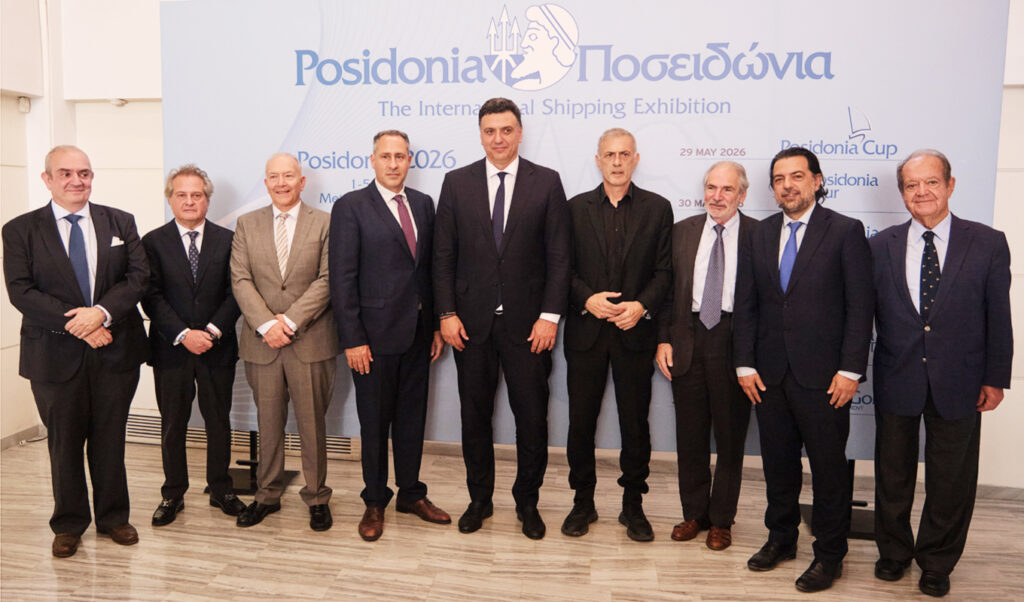
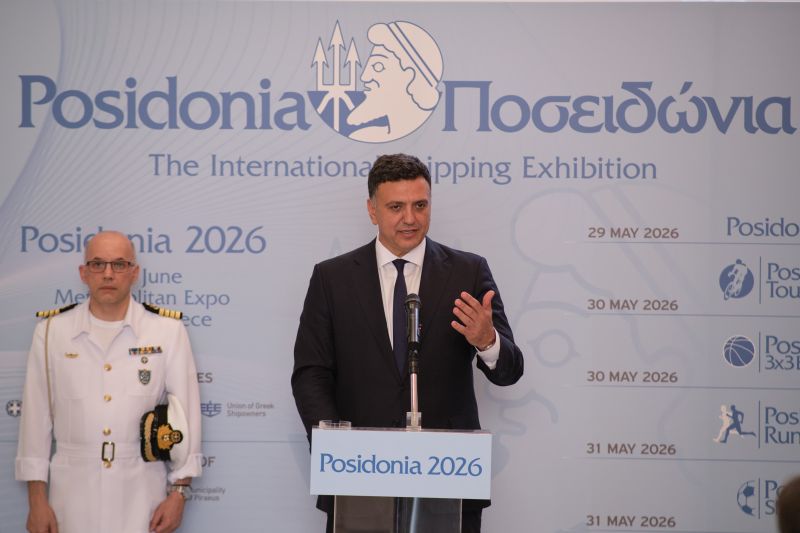
Vasilis Kikilis, Minister of Maritime Affairs and Insular Policy, stated: “Greek shipping doesn’t concern just a few. It concerns society itself, development, employment and citizens’ daily lives. Posidonia constitutes the premier international meeting point where critical decisions for the future of global shipping, energy and economy are discussed, with direct impact on local communities and people’s lives.”
In this exceptionally complex and critical environment, the significance of Posidonia has never been greater, just as shipping’s contribution has never been so crucial for the global community.
Ms. Melina Travlou, President of the Union of Greek Shipowners, declared: “In an era of international challenges and multiple disruptions, Greek shipping, as a pillar of stability, resilience and global continuity, unites the world and leads with vision, determination and institutional responsibility. The strategic value of shipping is highlighted at Posidonia 2026, a prestigious institution that promotes meaningful dialogue and cooperation for shaping the industry’s future. With pride we welcome to Greece, home of the world’s strongest shipping, the international maritime community.”
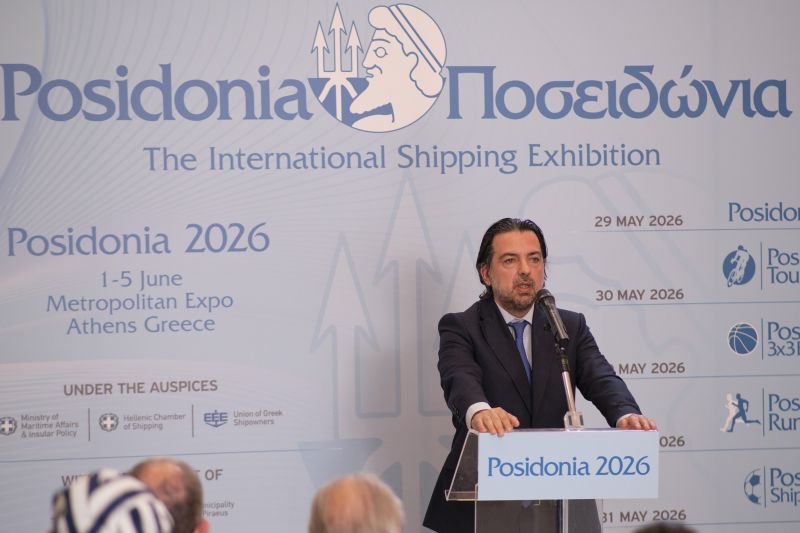
Mr. Georgios Alexandratos, President of the Hellenic Chamber of Shipping, stated: “Posidonia 2026 exhibition confirms once again its role as the premier international meeting point of the global maritime community, where partnerships, ideas and new prospects for the present and future of the industry are born. It’s the place where shipping is not simply presented, but evolves. At the same time, it highlights the strength and scope of the modern maritime cluster, demonstrating that shipping constitutes a broad ecosystem of dozens of professional paths and activities, something that must be understood daily by society, as opportunities are very often literally right next to us.”
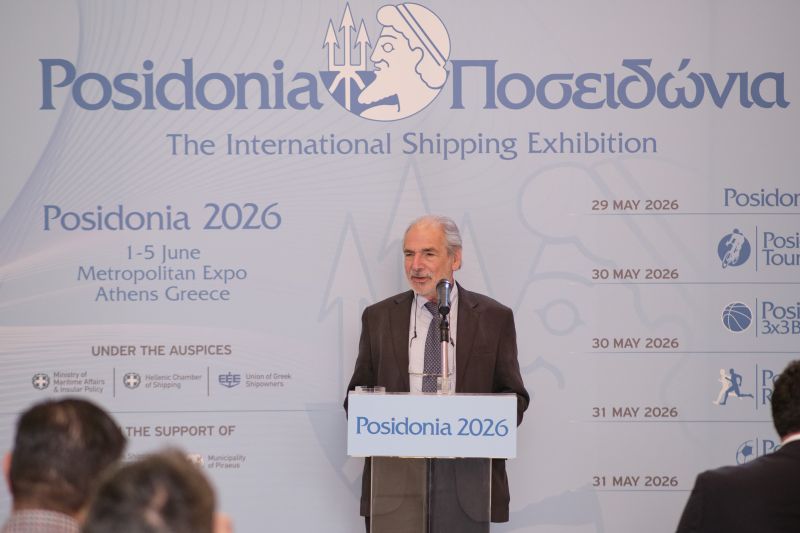
Mr. Ioannis K. Lyras, Chairman of the Posidonia Coordinating Committee, stated: “The 29th biennial exhibition and parallel events of Posidonia take place during a period when geopolitical conflicts and confrontations are at their highest level since the historically pivotal collapse of the Soviet Union 35 years ago, while attacks against commercial shipping have, unfortunately, reached their highest level since the Age of Sail. Within this worrying (and rather discouraging) environment, we are happy and proud to host a maritime week which, once again, brings together so many national delegations from around the world for the purpose of cooperation in promoting peaceful trade, goodwill and coexistence.”
This year’s exhibition will host a record number of 24 national pavilions – including official participations from Germany and Italy returning after a long absence – in the 45,000 square meter exhibition space of Athens Metropolitan Expo. In total, 2,227 exhibitors from 83 countries and territories will participate in the Exhibition, representing every sector of the international shipping industry. Compared to the 2024 event, the number of exhibitors has increased by almost 9%.
The rapid technological transformation of shipping will be strongly reflected at Posidonia 2026, with more than 30 exhibitors presenting artificial intelligence applications and capabilities specifically designed for maritime activities. Meanwhile, the industry’s accelerated transition towards sustainability and regulatory compliance is driving strong demand for environmental (“green”) technologies, with 100 exhibitors presenting solutions supporting the industry’s journey towards zero emissions.
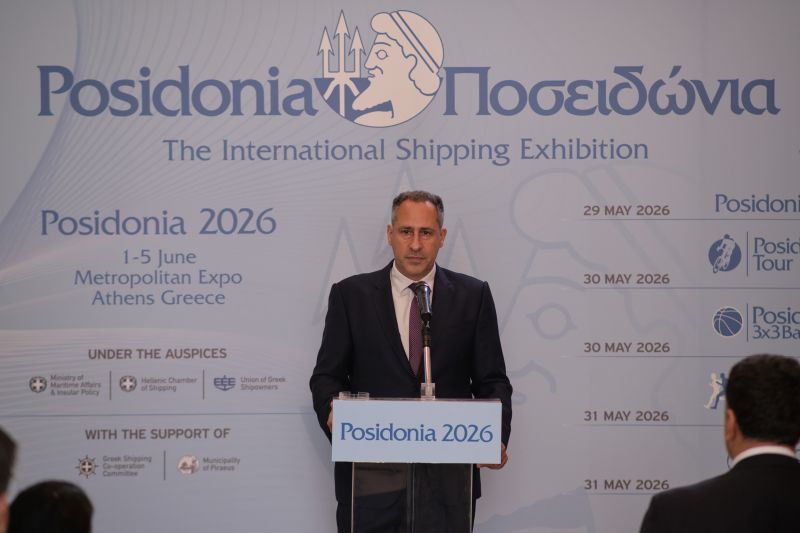
Speaking at the press conference before the event’s opening, Theodoros Vokos, Managing Director of Posidonia Exhibitions S.A., stated:
“It’s important to emphasize that, despite initial concerns, the Gulf crisis did not affect us and all exhibitors and visitors from the Gulf region confirmed their presence. However, this crisis also highlighted the resilience of our shipping industry, which not only responded effectively to challenges, but also confirmed its importance to the global economy, continuing its uninterrupted operation and support of international trade under adverse conditions.”
Mr. Vokos also emphasized the broader economic significance of this year’s event, noting that Posidonia 2026 has already begun, as conferences, business meetings, receptions and networking events have been taking place for weeks before the official opening of the Exhibition.
“The economic impact of this year’s Posidonia on the Greek economy will be greater than any other year,” he added. “Not only do we expect approximately 40,000 participants in total, but also significant extension of international visitors’ stay in Greece due to the expanded conference program and sporting events of the Posidonia Games. We estimate that the total economic turnover generated by Posidonia 2026 will significantly exceed 100 million euros.”
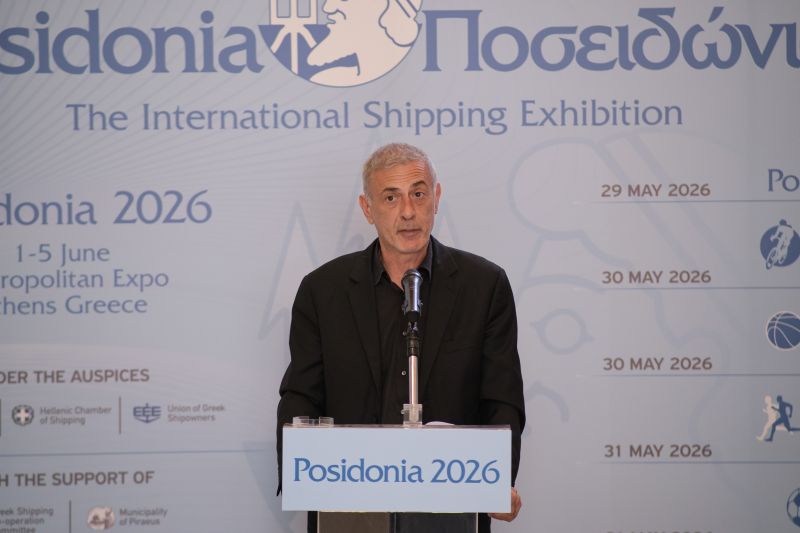
Mr. Yannis Moralis, Mayor of Piraeus, stated: “In Piraeus we welcome with particular joy the global maritime community to Posidonia 2026, an institution inextricably linked to the city’s history and identity. As the historic center of Greek shipping and one of Europe’s most important ports, Piraeus continues to be a reference point for international maritime activity, while also showcasing its modern and outward-looking face. Within the framework of this year’s event, our city also hosts the particularly popular Posidonia Running Event and Posidonia Cup, further strengthening the connection between Posidonia and Piraeus.”
Posidonia 2026 will attract an exceptionally high level of international participation again this year. The President of Panama, accompanied by members of his Cabinet, will attend the Exhibition, together with the Secretary-General of the International Maritime Organization (IMO), the European Commissioner for Transport, as well as more than ten ministers and deputy ministers representing maritime nations from around the world.
The event also strengthens its commitment to sustainability, as Posidonia receives for the third consecutive year ISO certification as a sustainable event, remaining the first exhibition in Greece to achieve this distinction.
At the same time, Posidonia’s parallel events program continues to expand significantly. This year’s conference program will include approximately 70 events, many of which will take place outside the exhibition space, due to unprecedented demand. Nuclear energy as a potential maritime fuel emerges as one of the main agenda topics, with a special high-level event examining the role of advanced nuclear technologies in commercial shipping and coastal energy production.
The Posidonia Games are developing even further this year, with the introduction of the cycling race Posidonia Tour, while proceeds from sporting events will continue to support charitable organizations and NGOs.
Posidonia 2026 is organized under the auspices of the Ministry of Maritime Affairs and Insular Policy, the Hellenic Chamber of Shipping and the Union of Greek Shipowners, with support from the Municipality of Piraeus and the Hellenic Maritime Cooperation Committee.