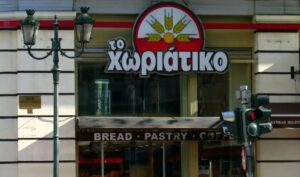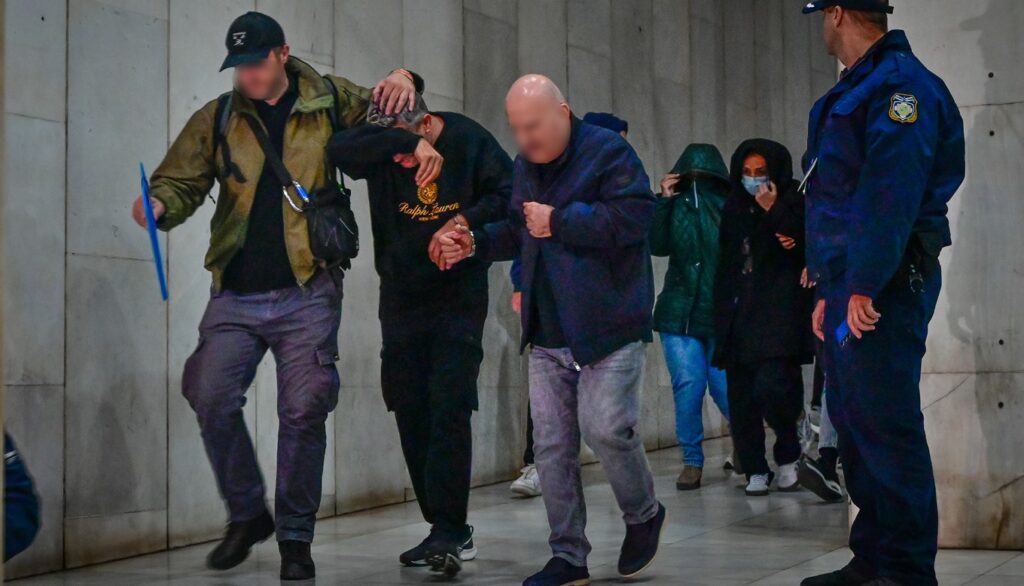
Mr. Horiatiko is alleged to have built an extensive network for the exploitation of women, who, according to a complaint filed by a former employee of a strip club on Syngrou Avenue, were being transported to venues across Athens and the Greek provinces, with some reportedly coerced into sexual exploitation. The testimony, presented on ANT1, describes a sophisticated operation involving controlled housing, designated drivers, individuals tasked with monitoring the women, and alleged ties to police officers who, according to the whistleblower, would tip off the network ahead of scheduled inspections. The investigation also includes evidence that one police officer allegedly received €1,500, as well as details regarding a second officer, known by the nickname “Lagos,” who appears to have been in regular contact with a strip club manager.
Read also: The trap set by the Greek FBI for “Horiatiko”: Undercover officers paid for coffees, cheese pies and striptease to follow the money trail (Video)
Mr. Horiatiko: Allegations of police cover-up
The former employee described to ANT1 how, according to his claims, the criminal network worked in conjunction with entertainment venues across different regions of the country.
Journalist: Did the network supply girls to all the strip clubs on Syngrou?
— Not just Syngrou. The provinces, everywhere! They supplied to people they knew were reliable — not just financially, but also from a “police” standpoint. Those people had their own “cover.”
The former employee also revealed the network’s collaboration with police officers acting as lackeys:
— Whenever anything shady happened, there were police officers who covered everything up. He had five officers who worked as his errand boys for all kinds of jobs.
— Journalist: You witnessed this with your own eyes?
— I was the one running things. The boss would tell me: “This one is ours. If anything happens, notify him… him… him…”
These claims are being examined as part of the ongoing police investigation, though the testimony alone does not constitute proof of involvement by every individual mentioned.
The officer nicknamed “Lagos” and the recorded conversation
According to evidence presented on ANT1, one police officer allegedly received €1,500 from the network, while a second officer — operating under the alias “Lagos” — appears to have maintained systematic communication with the strip club.
— STRIP CLUB MANAGER: In the end, …. is right. Do you know what … told me from the very beginning? “Change everything, change it all, bring in your own people.” (…) I’ll say it in front of all of you. You know what? … had told me from the start: “Change the staff.” And I thought I’d give it time and all that, but he’s right in the end. I’ll change the staff, I’ll bring in my own people.
— “LAGOS”: Of course, you’ll bring in your own people.
— MANAGER: Exactly, I’ll tell them… I’ll make it crystal clear, right in front of Aggelos.
The human trafficking investigation and allegations involving the women
According to ANT1, the investigation into the businessman was launched in mid-January, following a complaint regarding the trafficking and exploitation of women from Russia. According to the allegations, the women were reportedly trapped through financial debt, visa-related issues, and drug dependency, with some being forced into prostitution.
A former employee revealed to ANT1: “The girls would dance on the stage and then sit at tables with customers. If certain customers wanted ‘private dances’ and whatever else you might read into that…”
The investigation also includes a recorded voicemail found on the alleged ringleader’s phone, relating to a woman’s interest in working at the club: “Yes, Mr. …, good evening. My name is … and I’m calling regarding a young woman who is interested in working at the club. I’ll call you back in about an hour, an hour and a half. Thank you.”
The properties where the women were allegedly held
The whistleblower described, according to ANT1, a system for housing and transporting the women, claiming that the accommodations were controlled by members of the criminal network.
“The hotels they put them in, or the houses — they were always controlled. The houses were rented by them, and eight to ten girls would be placed inside, under guard. They used these places to keep the women sleeping and under control, with enforcers on site or a trusted woman installed as a supervisor who reported back on everything. They also used drivers. An entire fleet!”
The allegations of women’s exploitation and the purported police connections remain the subject of an ongoing investigation, with authorities examining the roles of individuals named in witness testimonies and recorded communications.