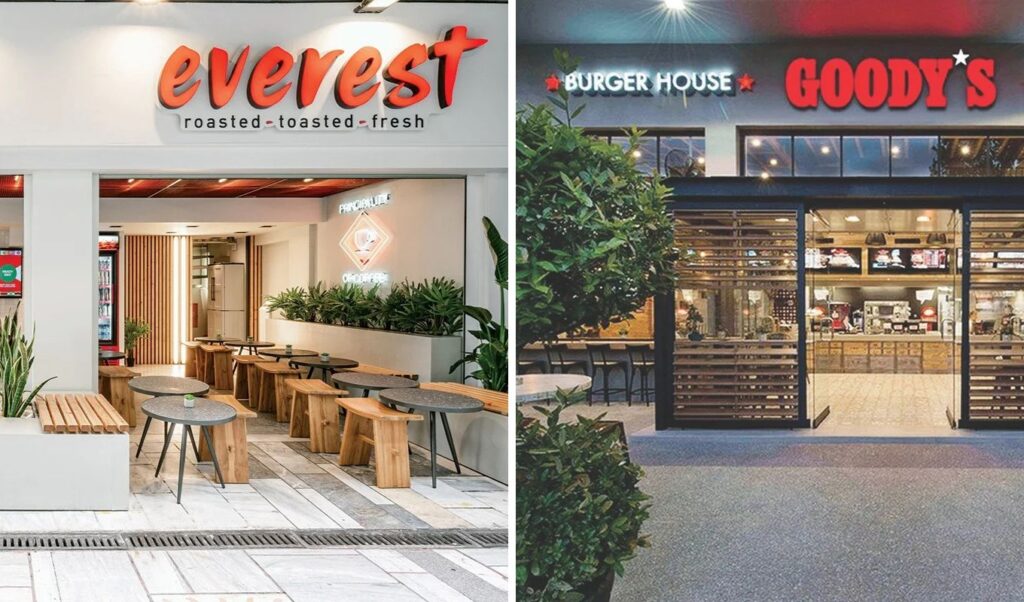
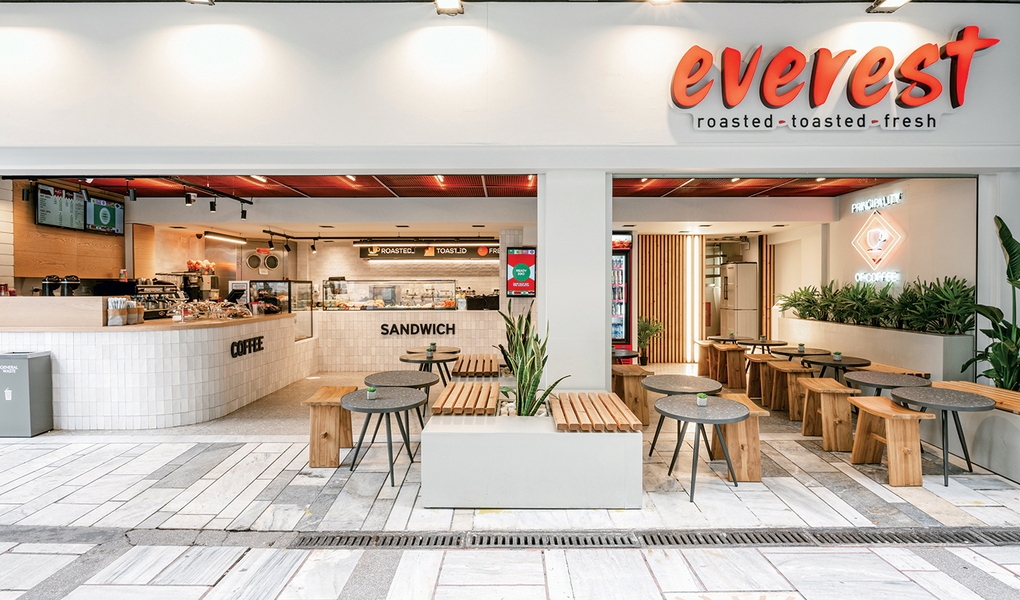
There was a time in Kolonaki when, after midnight, all roads led to Tsakalof Street. Groups who had just left a bar, businesspeople who had spent the evening talking shop, night owls, shift workers, and people simply looking for a quick bite — all of them could find themselves gathered at the counter of Everest. The first store had opened in 1965, founded by G. Maltezopоulos, S. Grapsas, and S. Nikolakakis. In an Athens that was changing but had not yet experienced the mass spread of fast food, Everest created a different kind of habit. The iconic long, pressed toast — flattened in heavy metal sandwich makers that ran non-stop around the clock — could be the last stop of a night out, or the occasion for an unexpected encounter.
The evolution of Everest
The Tsakalof Street location had something special about it: it operated around the clock, with no doors at its entrance. As people who lived through that era recall, foot traffic was so heavy that any door would have been an obstacle and would have slowed service to a crawl. At its peak, according to accounts from the management of the time, the store could sell up to 2,500 sandwiches a day. The star of the menu was the famous “pantofla” — the signature bread roll stuffed with the customer’s choice of fillings — which became the brand’s defining trademark. In 1983, Everest passed into the hands of Lorentzos Freris, who recognized the potential of a brand that had already carved out a unique place in Athenian daily life. The years that followed brought expansion of the chain, along with new business activities and organized catering infrastructure. What had started as a beloved hangout in Kolonaki was gradually evolving into a fully organized restaurant business.
Goody’s: Greece’s burger institution
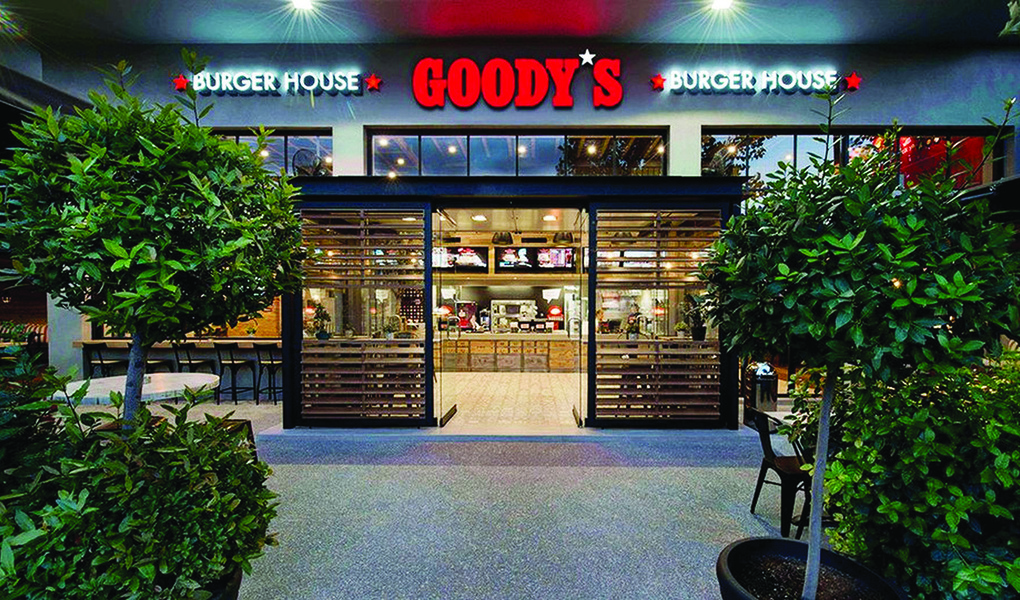
At the same time, roughly 500 kilometers to the north, in Thessaloniki, another group of entrepreneurs was writing its own story. In 1975, the first Goody’s opened on Kouskоura Street, with Yannis Dionysiadis as the central figure, alongside businesspeople such as Achilleas Folias, Nikos Pappas, Dimitris Parisis, and other partners. The concept was different from a traditional Greek souvlaki shop. Customers could order a burger, fries, and a soft drink in an organized setting, with a fixed menu and a clear brand identity.
Goody’s went on to become one of the first major Greek franchising success stories. In 1981 it opened in Athens on Solonos Street, in 1994 it was listed on the Athens Stock Exchange, and it subsequently took its first steps toward international expansion.
For those who grew up during the 1980s and 1990s, Goody’s was more than a fast-food restaurant. It was the Sunday family outing, the meetup with friends, the first burger after school, and even the designated meeting point before or after a trip to the cinema.
A new era through merger
The paths of the two chains ultimately converged under the same corporate umbrella. Delta Holdings’ entry into Goody’s in 2001 and the subsequent creation of Vivartia marked a new phase of consolidation in the Greek food and restaurant industry. In the years that followed, Goody’s, Everest, Flocafé (following the acquisition of the historic Floka patisseries), and La Pasteria all became part of a wider group that experienced both growth and the harsh realities of the Greek economic crisis.
Shifting consumer habits, pressure on household incomes, the rise of food delivery platforms, and the emergence of new competitors fundamentally transformed the landscape.
In 2014, Goody’s relaunched its identity as Goody’s Burger House. Everest maintained its signature role in everyday, on-the-go dining, gradually adapting its offering to new consumer habits.
A pivotal moment in this journey was the acquisition of the historic Floka patisseries — an institution with roots in the early 20th century that had for decades been a landmark of cosmopolitan Thessaloniki. From Eleftherias Square to Tsimiski Street, Floka had drawn artists, politicians, and business figures who savored its renowned chocolates, pastries, and confections. The acquisition by Goody’s and the creation of the Flocafé brand marked the end of a whole era.
The significant addition to the portfolio: Jackaroo
The most recent major addition to the portfolio was Jackaroo, acquired through a 60% stake in Red Meat in March 2025. The move signaled the group’s appetite for investing in newer Greek restaurant concepts that are gaining strong traction in the market.
Last week, yet another chapter was written: Vivartia announced the signing of a definitive agreement to sell 100% of Evergood to Canadian company Recipe Unlimited, which is controlled by Fairfax Financial Holdings, the investment vehicle of billionaire Prem Watsa. Recipe operates more than 1,100 restaurants across 18 brands, including Swiss Chalet, Harvey’s, and New York Fries.
And so, the iconic sandwich from Tsakalof Street and the very first Thessaloniki burger now find themselves under the investment umbrella of a Canadian billionaire with Indian roots. If there is one thread connecting the era of the doorless Everest to today’s deal, it is that Greek restaurant culture has always changed hands, faces, and business models. But the memories endure — like that last sandwich in Kolonaki, just before dawn.
Originally published in Money Pro by Parapolitika