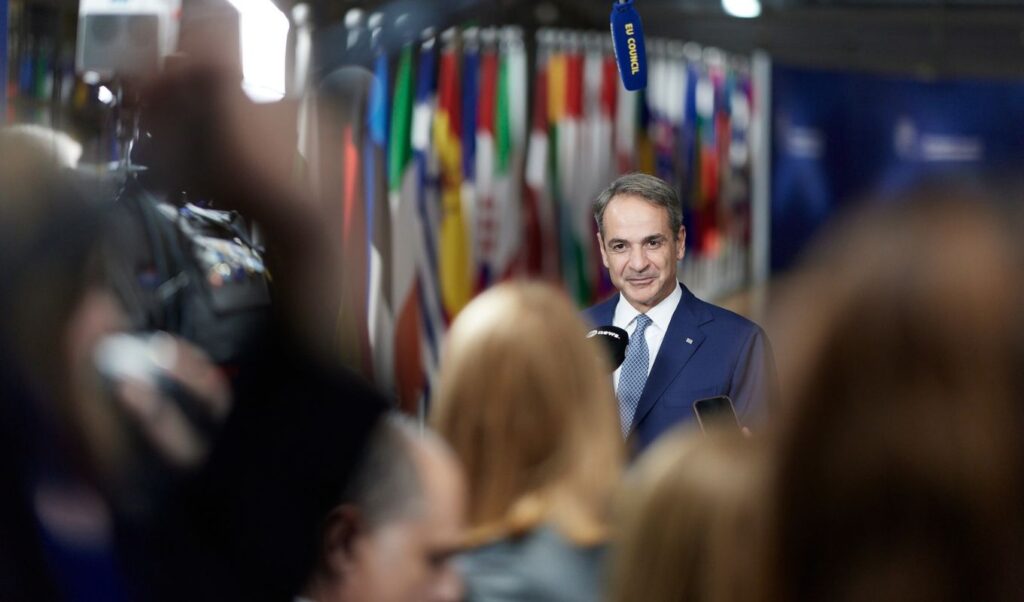
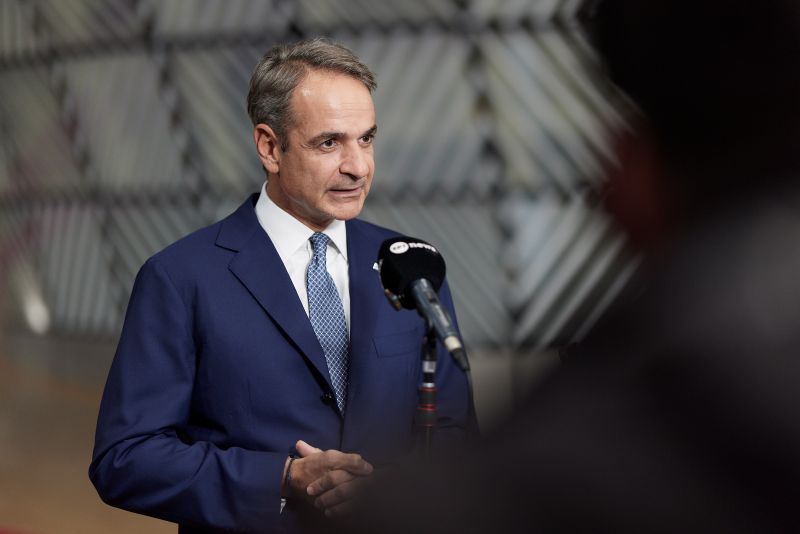
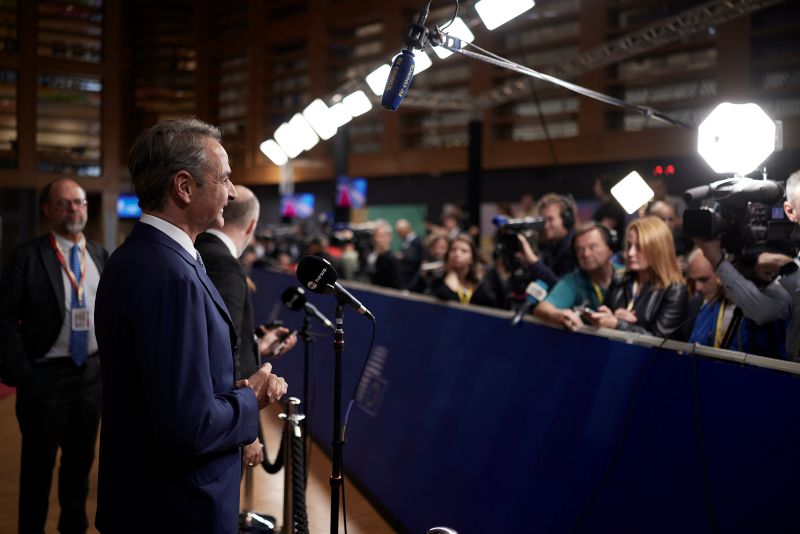
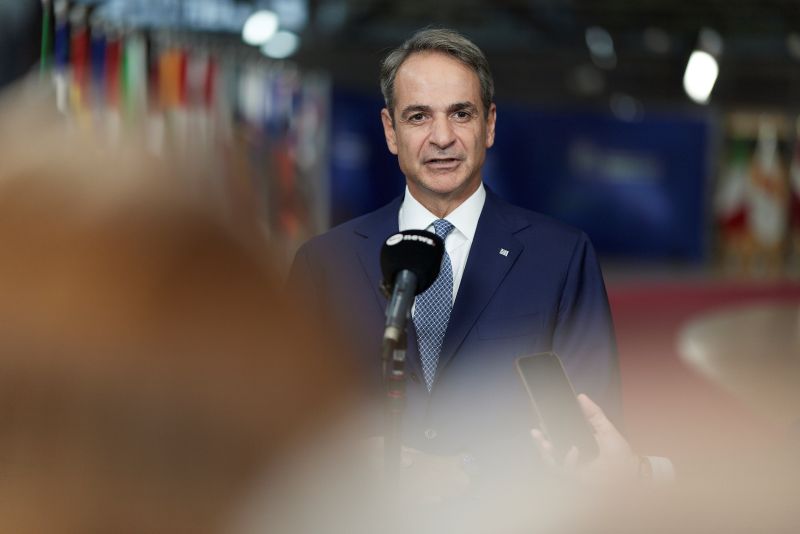
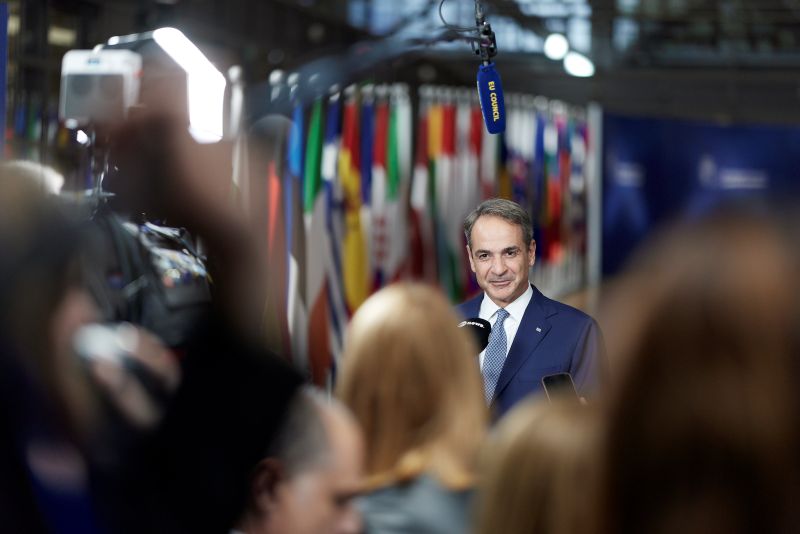
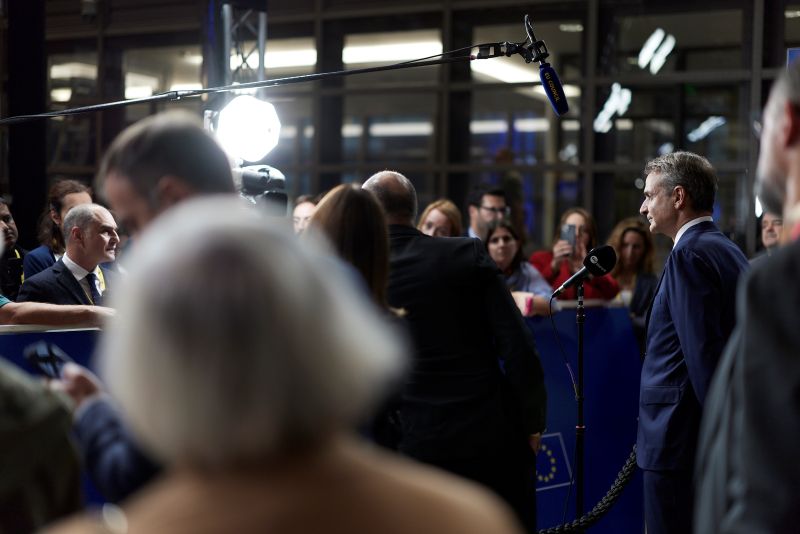
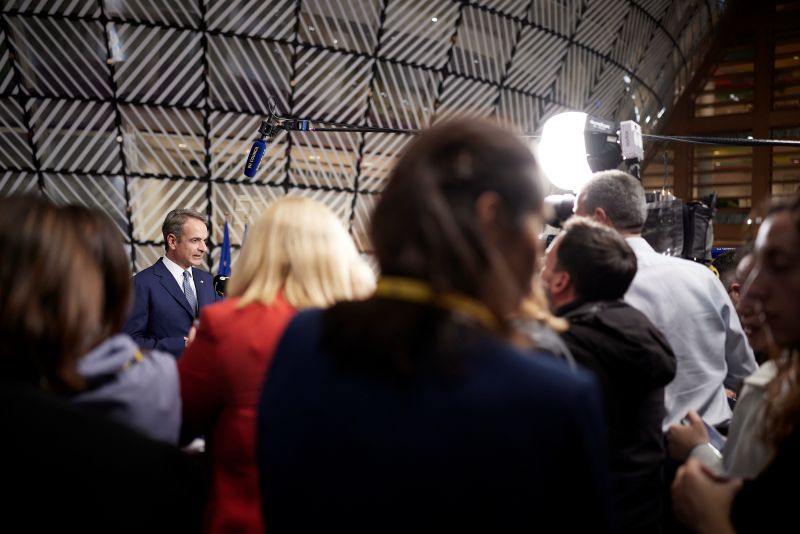
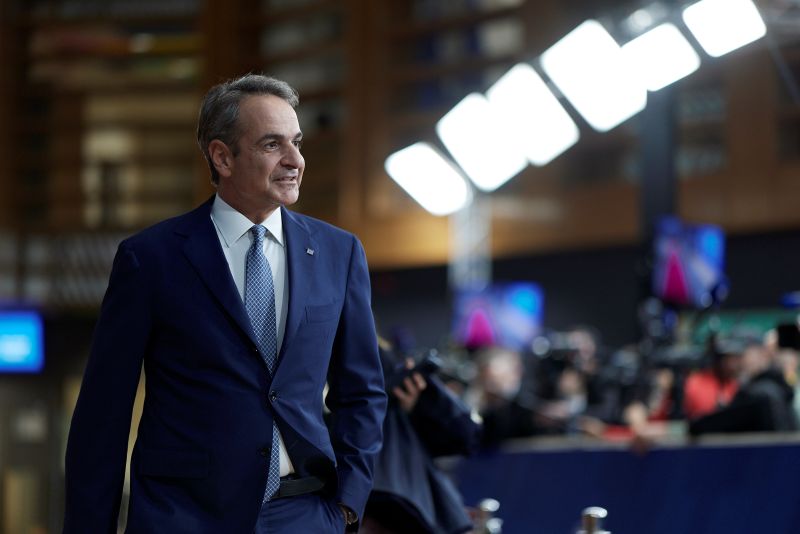
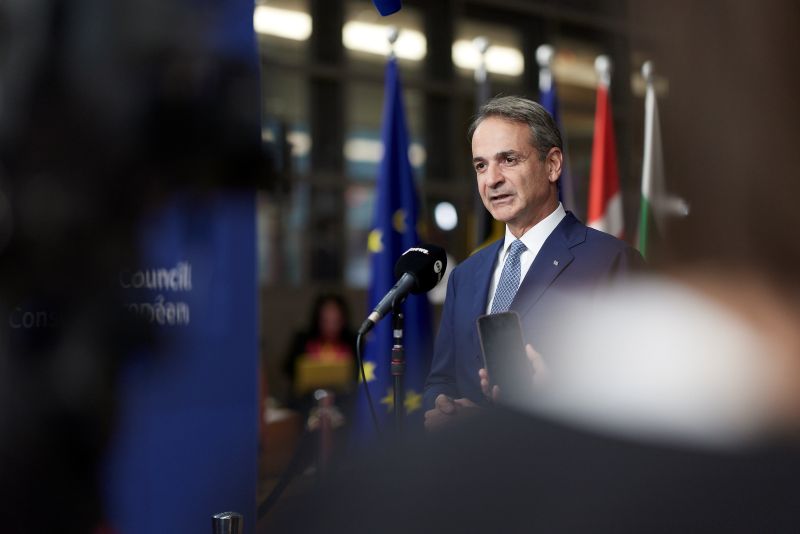
Speaking from Brussels, Kyriakos Mitsotakis kept the door open for new support measures for households and businesses, while drawing a clear line against pre-election spending sprees. With the energy crisis testing the economy’s resilience and putting mounting pressure on family budgets, the Greek Prime Minister signaled that the government has reserves in place for additional measures, while simultaneously pushing back against a bidding war of promises and sending a firm message to the opposition. At the same time, Mitsotakis drew red lines in discussions over the EU budget, making it clear that Greece will not accept cuts to funding for farmers and cohesion policy. He also noted that Greece’s position is backed by 15 other member states, forming a broader coalition within the European Union. “We are not in a position to make concessions on this plan, and another 15 countries share this view,” he stated emphatically.
Kyriakos Mitsotakis: “We need to pack plenty of shirts”
Kyriakos Mitsotakis spoke of complex budget negotiations. “We are not in a position to make concessions in this area, and another 15 countries align with this view,” the Prime Minister stressed, acknowledging that compromises will be needed while expressing his hope that “the negotiations can be wrapped up by December.” He referenced the political deadlock surrounding Macron and said: “I hope we pack plenty of shirts and stay in Brussels as many days as it takes to reach an agreement.”
“The Greek government, precisely because society is doing well, can provide support through measures exceeding €1 billion — other European countries don’t have that capacity. I don’t expect rabbits to be pulled out of a hat. What we are asking for is greater fiscal flexibility for targeted and temporary — and I stress, targeted and temporary — measures that will be accepted but will carry exactly that character. The Greek government is doing everything in its power to address what is a global — and I emphasize, global — challenge, as we find ourselves between two wars, in order to support our society. We want to support people who are paying €800 for primary housing. We are making no concessions on farmers and cohesion policy. I want people to know that we are fighting hard, and that what we announce, we deliver,” he said regarding the cost-of-living crisis and its impact on households.
On energy
Greece’s decision to continuously diversify its energy sources is aimed at achieving lower electricity prices. “We will complement our electricity production mix with natural gas, which we hope to use less and less over time,” the Prime Minister noted. Mitsotakis also reiterated that the “green transition must go hand in hand with support for productive Europe.”
“You can see that the pushback is gaining traction at the European Council. If — and God forbid — we were faced again with an incident like the one at Evros or Ceuta, we would now have a tool to deal with it. We would do the same as a country regardless, but there is a difference between acting as a nation and acting under European law. I am pleased that Europe has changed its migration policy. We have had many discussions and there are many more steps to take, but we have made progress,” he commented on the migration issue.
“Greece has fiscal space to support businesses and households. Our concern is fiscal flexibility within the limits set by the European Commission. Our surpluses will not change, but we will implement additional measures. We also want to look at what we can do for the ferry sector — keeping ticket prices stable in the face of rising diesel costs,” Mitsotakis continued.
He was also confronted in real time with opposition criticism regarding heating oil subsidies. A journalist quoted the phrase “too little, too late” to him, to which the Greek Prime Minister responded with a look of surprise, asking: “Oh, is that what they said?” He then added: “If anyone believes that Greece is some kind of Gaulish village that will be left untouched by the crisis, they are deeply mistaken. And if they think we should blow the bank and hand out money left and right just to be more popular — then I’m sorry, but that is not my approach or my philosophy.”
“For 2027, we have secured a commitment that there will be no additional taxation on fuels and household electricity prices, and we are pushing — along with other countries — to extend that protection through to 2028,” he added.