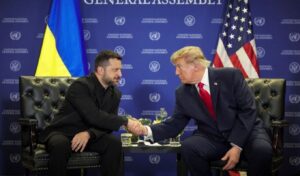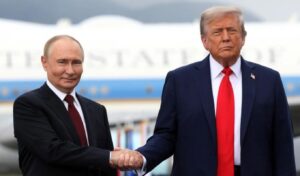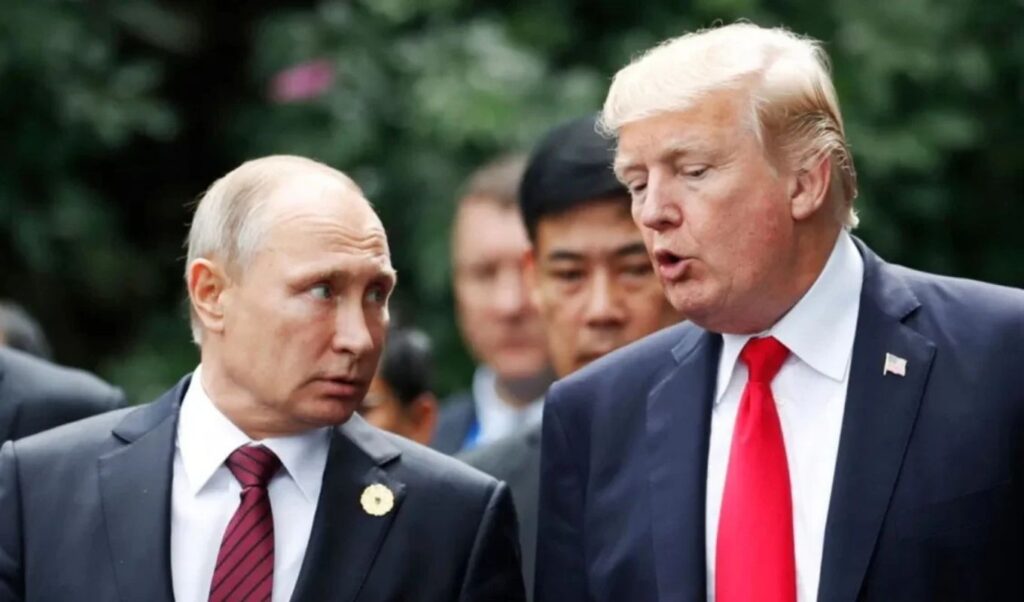
The agreement between Donald Trump and Vladimir Putin over the export of 300 million tonnes of Russian diesel — in exchange for partial sanctions relief — appears to have unleashed a political firestorm, with Europe making clear its firm opposition to the deal. The European Commission has emphasized the continent’s ongoing efforts to de-Russify its energy supply, even as the plan enabling that transition has been largely American-driven. This comes at a particularly sensitive moment, as fuel prices have surged and the U.S. President has claimed they will drop “very quickly.” Meanwhile, the European Union has provided substantial, tangible support to Ukraine — including consecutive loans totaling tens of billions of euros — as Kyiv continues to call for further assistance. Volodymyr Zelensky’s meetings with leaders of the Coalition of the Willing have made it increasingly clear that the situation is deeply complex, particularly as the Trump administration presses European allies on two fronts: their refusal to support strikes on Iran, and their reluctance to commit 3% of GDP to defense spending.
Read more: Axios: Ukrainian strikes on Russian refineries behind the Trump-Putin diesel deal — the full story
European Commission: The “hidden cost” of the Trump-Putin deal
The European Commission has made it unequivocally clear that it will not abandon its policy of weaning itself off Russian fossil fuels, despite Washington’s decision to reopen the door to Russian diesel imports. “Europe is well aware of the hidden cost associated with excessive dependence on Russian hydrocarbons. And it has no desire to fuel Russia’s war against Ukraine,” a Commission spokesperson stated, directly linking energy trade to Moscow’s capacity to finance the ongoing conflict.
While no direct reference was made to Donald Trump, the same spokesperson stressed that the European Union has already significantly reduced its reliance on Russian fuels and “will continue to do so resolutely.” The Commission also reiterated the need for a ceasefire that safeguards global food supplies and protects energy infrastructure in both Ukraine and Russia.
Germany stands firm on maintaining sanctions against Russia
Germany is taking an equally firm — if anything, even more pointed — stance, making clear that the Washington-Moscow agreement changes nothing about Berlin’s position toward Russia. The German government is not only committed to maintaining existing European sanctions but is actively working with its partners to introduce additional restrictive measures.
German government spokesperson Stefan Kornelius confirmed that Berlin had taken note of the American decision, while stressing that Germany’s position — along with that of its European partners — remains unchanged. Germany, he said, will continue to enforce sanctions against Moscow and will cooperate with other European nations to impose new measures.
The German government also reaffirmed its unwavering support for Ukraine, noting that diplomatic efforts to achieve a peace settlement will continue. Berlin’s stance carries particular weight given that Germany is one of Europe’s largest economies and had, for decades, been heavily dependent on Russian energy imports.
UK pledges continued military and economic support for Kyiv
The British government is sending an equally resolute message, signaling that it will continue to provide both military and economic support to Kyiv while maintaining pressure on Moscow. In an official statement, London made clear that it has no intention of easing its sanctions regime, despite the U.S.-Russia agreement.
“The United Kingdom’s position could not be clearer,” the British government stated, stressing that it will continue to work closely with international partners to ensure Ukraine has the military and economic assistance it needs to defend itself.
London also reiterated that it will maintain pressure on Russia through what it describes as the most stringent sanctions regime it has ever imposed, with the explicit aim of raising the cost of Russian aggression.
The British government holds Moscow directly responsible for the continuation of hostilities, arguing that Ukraine has repeatedly demonstrated its willingness to pursue peace, while Russia has rejected proposals for a full or partial ceasefire. “Russia could end this war today,” the statement reads, with London reaffirming its commitment to supporting Kyiv for as long as it takes.
The momentum behind the deal
Donald Trump’s agreement with Vladimir Putin was driven by a range of motivations, not all of which relate to lowering fuel prices. A drop in energy costs on the American domestic market could, however, give his approval ratings a meaningful boost ahead of the midterm elections — a political calculation that also appears to factor in a potential ceasefire with Iran. For Russia’s part, the deal hands Moscow yet another strong card at the negotiating table regarding Ukraine, even as Ukrainian negotiators have resumed talks in Miami with Trump’s special envoys.
For its part, London has been careful to separate its disagreement over energy trade from its broader cooperation with Washington on the Ukraine file. The British government stresses that it continues to fully support American efforts to achieve a just and lasting peace, and that it remains in close contact with the United States, Ukraine, and other allied partners.