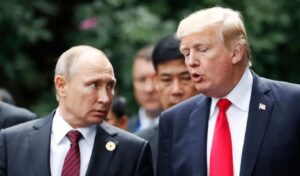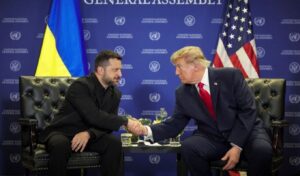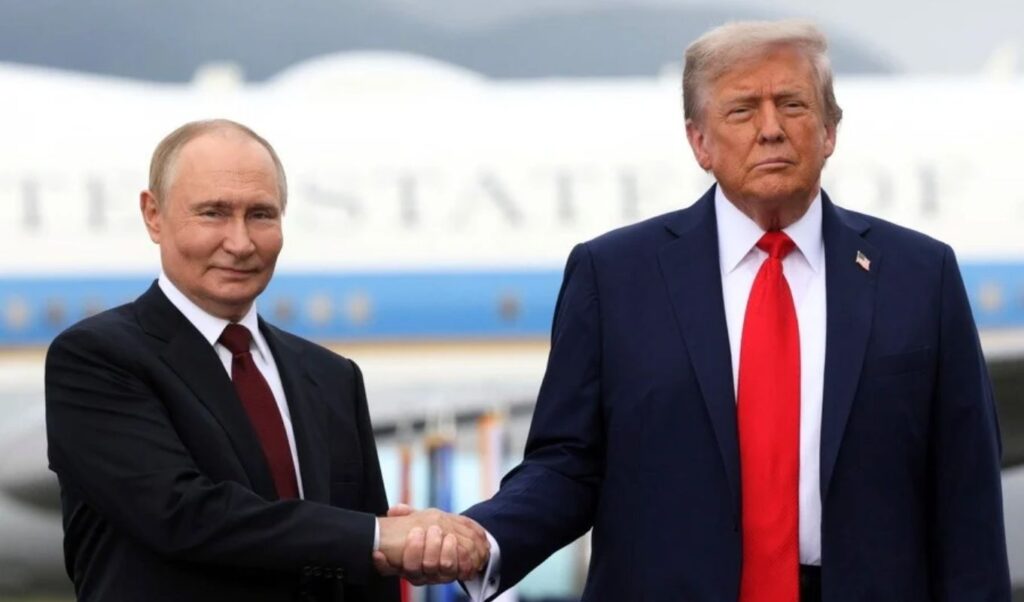
A new area of cooperation between the United States and Russia appears to have opened in recent hours following an announcement by Donald Trump, who — after a phone call with Vladimir Putin — revealed that a deal had been reached to channel millions of tons of Russian diesel into American and international markets. The announcement was accompanied by a US government license authorizing related transactions, and has drawn sharp reactions from Ukraine and members of Congress.
At the heart of the deal is Donald Trump’s promise of rapid price relief at the pump. However, critical details regarding delivery schedules and commercial terms remain absent. Energy analysts are cautious: additional supply may offer some relief, but is unlikely to deliver the dramatic price drop the White House is signaling. According to Trump’s post on Truth Social, Russia has agreed to immediately make available more than 300,000 tons of diesel.
US & Russia: What Trump’s diesel deal actually entails
The agreement also envisions an additional 500,000 tons to be delivered in November, followed by one million tons shortly thereafter. Trump further announced three million additional tons within a short timeframe, though he linked that figure to the operational status of Russian refineries. If all announced quantities are delivered, the total exceeds 4.8 million tons. The announcement covers both the American and global markets, without specifying how much fuel will be directed to each destination. It also does not provide precise delivery dates for all future shipments. As a result, the total figures represent an announced supply plan — one whose actual implementation remains to be seen.
Who Trump highlighted as the main beneficiaries
Trump placed particular emphasis on farmers, ranchers, and truck drivers, framing the reduction in energy costs as one of his top priorities. He also linked the Russian fuel supply to his claims regarding American control over the Strait of Hormuz, and reiterated his position that Iran will not be allowed to acquire a nuclear weapon. These references place the energy announcement within the broader context of developments in the Middle East.
Washington’s immediate move
Washington’s immediate follow-through came in the form of General License 135, issued by the Office of Foreign Assets Control (OFAC) at the US Treasury Department. The official document, dated October 9, authorizes transactions related to the sale, delivery, offloading, and importation of Russian-origin diesel — including imports into the United States — through April 7, 2027.
This constitutes a specific, temporary exemption within the existing US sanctions framework. The license covers diesel fuel and the transactions described within its text. It also stipulates that no debits may be made to accounts held by the Russian Central Bank, the National Wealth Fund, or the Russian Ministry of Finance at American financial institutions.
The development carries significant political weight, as the US had banned Russian oil imports following the 2022 invasion of Ukraine. As the Associated Press notes, this new move also comes just weeks after legislation was signed to tighten sanctions against Moscow. The announcement arrives less than a month before the US midterm elections on November 3.
What Reuters reported
According to Reuters, the average diesel price had reached $6.28 per gallon on October 8, having surged approximately 70% since the start of the war with Iran on February 28. Following the announcement, US diesel futures fell by nearly 5%. However, Reuters cautions that this initial market reaction does not guarantee a sustained and equivalent drop at the pump.
The key question
The central question concerns Russia’s actual production capacity. S&P Global reports that, as of late September, nearly half of Russia’s refining capacity remained offline. Ukrainian drone strikes have damaged facilities, constraining production capacity and complicating any recovery in export volumes. The same analysis notes that ongoing attacks and elevated domestic demand during the harvest season are creating further obstacles to restoring exports to pre-war levels.
As early as October 2, Russian Deputy Prime Minister Alexander Novak had linked any partial reopening of diesel exports to the reemergence of a production surplus. At that point, according to S&P Global, Russia’s diesel export ban remained in effect through the end of October — with longer restrictions applying to certain categories of traders. Meeting domestic market demand was, therefore, a prerequisite for resuming exports.
Russia’s positive stance
The Russian side responded positively to the opening. Putin’s special envoy Kirill Dmitriev argued that energy cooperation between Russia and the US would benefit the world, and that economic collaboration between the two countries would continue. The Kremlin confirmed Russia’s willingness to supply both American and global markets with oil and petroleum products. However, as S&P Global points out, the Russian announcement did not confirm the specific 4.8 million ton figure cited by Trump, nor did it provide a detailed delivery schedule.
Why experts remain skeptical
Expert skepticism centers on whether the deal actually adds meaningful new fuel to the global market. Michael Lynch of the Energy Policy Research Foundation explained to the Associated Press that redirecting Russian cargoes to the US may simply force other buyers to seek supplies elsewhere. Daniel Sternoff of the Columbia Center on Global Energy Policy suggested that additional exports could ease pressure somewhat, without eliminating the supply problems tied to Hormuz-related disruptions.
The economic terms also remain unclear. According to the Associated Press, the White House did not immediately respond to questions about who will pay for the shipments and when they will be available, while Yuri Ushakov did not clarify whether any American concessions were offered in return.
Ukraine’s reaction
For Kyiv, the deal represents a loosening of economic pressure on Russia at a time when the war continues unabated. Volodymyr Zelensky warned that enabling Russia to sell more petroleum products would provide Moscow with the resources to prolong its military operations. “Gifts to Putin will not bring peace,” he wrote in a post, rejecting the notion that energy concessions alone can lead to de-escalation.
What Zelensky proposed instead
The Ukrainian president put forward a reciprocal approach focused on protecting energy infrastructure. He stated that Ukraine is prepared to halt strikes on Russian refineries, provided Russia stops destroying Ukrainian energy facilities. In his view, this would represent a genuine de-escalation agreement — one grounded in mutual reciprocity and achievable with American involvement.
Which senators pushed back
Democratic Senators Chuck Schumer, Jeanne Shaheen, and Elizabeth Warren also reacted forcefully. In a joint statement, they described the six-month facilitation of Russian diesel purchases as a betrayal of Ukraine, European allies, and American national security. They argued that the administration is turning to Moscow to bring down energy costs that Americans have been burdened with since the war with Iran began — while simultaneously providing revenue to the Russian war machine.
The three senators also raised the issue of policy consistency, pointing out that Congress had only recently approved measures aimed at limiting Russian energy revenues. The backlash highlights the dilemma the deal creates for Washington: the pursuit of lower energy prices comes at the cost of relaxing one of its primary tools of economic pressure against Moscow.