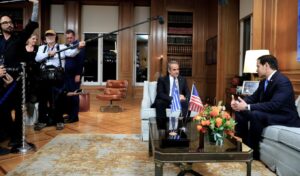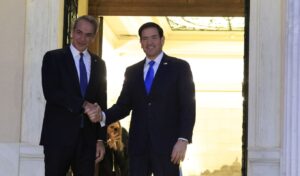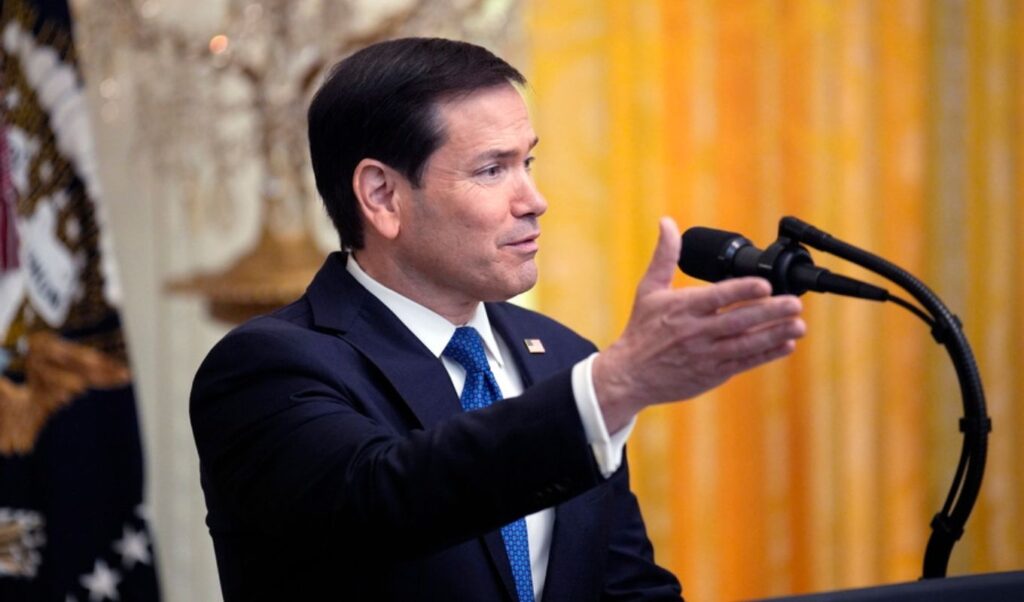
U.S. Secretary of State Marco Rubio arrives in Athens tonight for a high-stakes visit, with energy, defense cooperation, and Eastern Mediterranean security topping the agenda. Greek diplomacy is treating Rubio’s visit as a substantial confirmation of the strategic nature of Greek-American relations. Senior diplomatic sources noted that “Secretary of State Marco Rubio’s visit to Athens at this particular juncture, and the convening of the 6th Round of the Strategic Dialogue, confirm the highest level and strategic depth of the Greece-U.S. relationship, as well as the shared commitment to further deepening bilateral cooperation across an ever-expanding range of sectors. In a period of heightened geopolitical challenges, instability, and realignment, Greece’s pivotal role as a stable and reliable strategic partner of the United States is brought to the fore — a pillar of stability and security provider in Southeastern Europe, the Eastern Mediterranean, and the broader region.”
Read also: What Athens seeks from Rubio’s visit: GSI, F-35s, energy and defense on the table with Mitsotakis and Gerapetritis — the messages to Ankara
Ankara rattled by Rubio’s Athens visit
Shortly before departing the United States, Rubio spoke warmly about Greece. “Greece is a very strong ally of the United States — a country where we maintain not only a military presence but also strong economic ties. This trip is therefore an opportunity to go there and meet with Greek officials,” he said. Meanwhile, in Turkey, pro-government media have reacted with visible irritation. Most outlets reference the GSI undersea cable, the F-35s, and the Greek-U.S. defense agreements expected to be at the center of discussions in Athens. Particular attention has been paid to the cable project, with commentators noting that Rubio’s visit will give Athens an opportunity to seek American diplomatic backing for advancing the project in the Eastern Mediterranean — with Washington’s support for the Greece-Cyprus-Israel electricity interconnection already well established.
This visit comes at a particularly fraught moment for Greek-Turkish relations and lends the talks intense geopolitical significance, with the central flashpoint being the planned resumption of surveys for the Greece-Cyprus electricity interconnection project (GSI). Athens and Paris are currently coordinating their efforts to arrive at a formula that would allow cable-laying operations to proceed while minimizing the risk of any incident with Turkey. Under the most likely scenario, French company Meridiam — after formally requesting a Navtex from Athens — is expected to notify Ankara of planned seabed surveys in international waters east of Kasos and Karpathos, within October. All of this is unfolding against the backdrop of warnings from Turkey’s Defense Ministry, which has stated it will not permit any unauthorized activity on the continental shelf it claims, citing its agreements with the Turkish-backed administration in northern Cyprus and the Turkish-Libyan maritime memorandum.
As retired Ambassador Michalis Stavrinos told parapolitika.gr, “the presence of the U.S. Secretary of State has the potential to unlock many issues in Greek-Turkish relations.” Placing particular emphasis on the fact that Rubio will not be visiting Turkey, he noted: “This move sends a message that U.S. attention is shifting elsewhere — away from Turkey. It signals that recent military and strategic realignments are diminishing Turkey’s role as a U.S. ally while steadily and significantly elevating Greece and Cyprus. Taken together, I believe all of this will also act as a lever of pressure on Turkey not to provoke any hot incident.”
“Greece must demonstrate resolve and will”
According to the diplomat, “Greece must demonstrate resolve and will. What I mean is that once the French vessel — or whichever ship is laying the cable — begins its operations, it must be escorted by Greek Navy vessels. In that case, I can assure you that Turkey will not dare to create a hot incident. However, if Greece fails to provide a naval escort and a repeat of what happened near Kasos occurs, that will mark the beginning of the end for any realistic prospect of the cable project.” The geopolitical dimension remains exceedingly complex for Greek diplomacy, given that U.S. President Donald Trump maintains an exceptionally warm relationship with Turkish President Recep Tayyip Erdoğan.