Greece’s Government Council for Foreign Affairs and Defence (KYSEA) has decided to extend the presence of the Greek Force in Saudi Arabia (ELDYSA) for one additional month, following a session held yesterday under Prime Minister Kyriakos Mitsotakis. The Greek Patriot missile battery has been stationed in Saudi Arabia since the autumn of 2021, tasked with protecting the country’s critical energy infrastructure. The continued presence of ELDYSA at this juncture strengthens Athens’ strategic relations with the Arab world and the Gulf states, while simultaneously serving as a counterbalance to Turkish influence in the region.
Behind the scenes at the KYSEA meeting: Patriot deployment in Saudi Arabia extended
The latest international developments were placed on the table, with Foreign Minister Giorgos Gerapetritis delivering a comprehensive briefing to the council. Discussions centered on the Eastern Mediterranean, the Middle East, and the ongoing war in Ukraine — three fronts that continue to rank high on Greece’s foreign policy agenda. The Foreign Minister also briefed the council on Greece’s agenda for its presidency of the United Nations Security Council, which officially commenced on Thursday. Following the conclusion of the session, Defence Minister Nikos Dendias signaled that the Greek Patriot batteries would remain in Saudi Arabia for one additional month, noting that upon the expiration of that period, KYSEA would conduct a fresh reassessment of the Greek battery’s presence. The deployment has been subject to regular review and is renewed on a monthly basis by KYSEA decision.
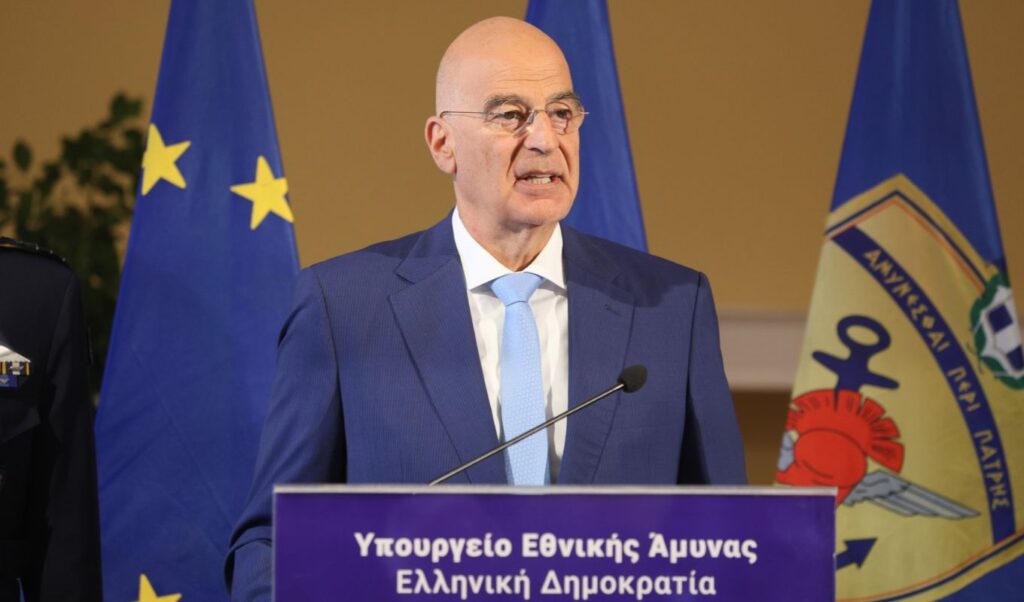
Speaking as he departed the Maximos Mansion, the Defence Minister commented on the one-month extension of the Patriot deployment in Saudi Arabia. “We will grant a one-month extension. I believe the matter with Saudi Arabia will be resolved,” he stated, referring in all likelihood to the terms, maintenance and transportation costs, as well as the timeline for the battery’s continued stay or potential return. It is worth noting that Kyriakos Mitsotakis is scheduled to travel to Riyadh on October 24th for the EU-Gulf Cooperation Council Summit, during which he is expected to hold bilateral talks with the Crown Prince. Among the topics to be discussed will be the continued stationing of the battery, against the backdrop of Saudi Arabia’s participation in the Mecca Agreement.
Defence procurement programs take center stage
The session also addressed a range of defence procurement programs and broader matters relating to the deployment of Greek forces in fulfilment of the country’s international commitments. The green light was given for contracts related to the development of the “modern soldier” concept — a comprehensive upgrade of the Greek Army’s infantry equipment. The program includes new helmets, ballistic vests, camouflage materials, night-vision goggles, and next-generation radio systems with battlefield networking capabilities. KYSEA also approved a series of procurement programs covering transport aircraft, unmanned systems, and the submarine fleet. Among these are support contracts for C-130 and C-27J Spartan transport aircraft, the support and upgrade of HERON-1 unmanned aerial vehicles, and maintenance work on Type 214 and Type 209 submarines. The approvals address a diverse range of operational needs across the Greek Armed Forces.
For the Hellenic Air Force, the focus falls on the availability and technical support of the C-130 and C-27J Spartan aircraft, as well as the HERON-1 drones. For the Hellenic Navy, the approved work includes maintenance and restoration operations on the Type 214 submarines, as well as maintenance and repair of the Type 209 “OKEANOS.” With regard to transport aircraft, the approval of Follow-On Support contracts addresses a longstanding issue of low availability rates within the Air Force fleet, securing spare parts and technical support to ensure the execution of both operational and humanitarian missions. As for the maintenance of the Type 214 submarines (the “Papanikolis” class) and the upgraded Type 209 “OKEANOS,” these approvals are designed to guarantee the preservation of Greece’s underwater superiority in the Aegean Sea and the Eastern Mediterranean.