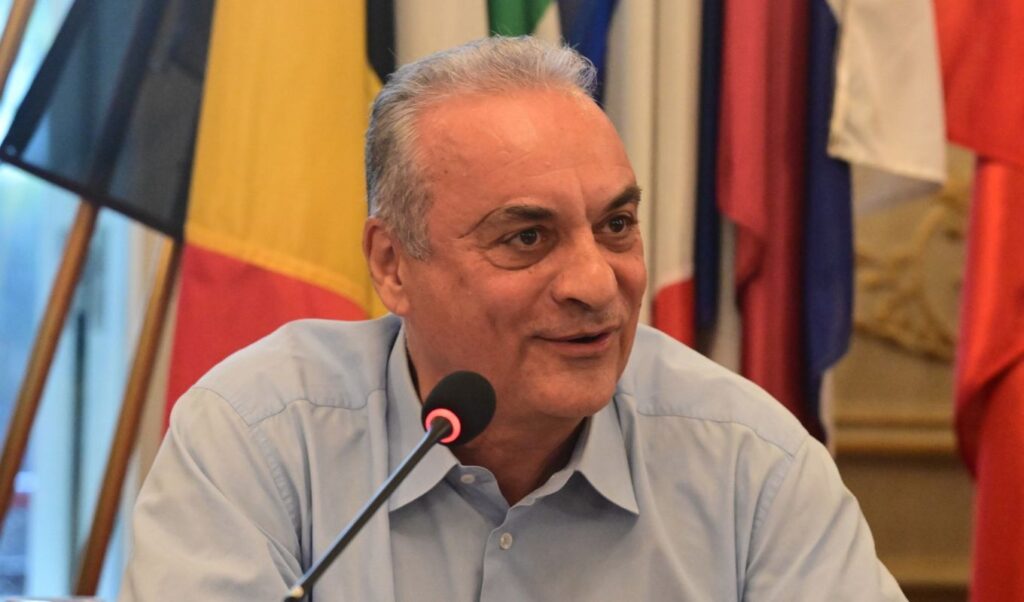
While Turkey continues to delay the electrical interconnection project between Greece and Cyprus — citing the extension of the undersea cable through what it claims is “its continental shelf” — its provocations are once again being brought to the forefront at the European Parliament. Specifically, the “escalation in the Eastern Mediterranean and the Aegean caused by ongoing Turkish provocations” is set to be the topic of discussion at the European Parliament’s Plenary Session in Strasbourg on Thursday, October 8. The motion was put forward by the President of the EU-Turkey Joint Parliamentary Committee, Manolis Kefalogiannis, and the Head of the Cypriot Delegation to the EPP, Loukas Fourlas. Coordinated interventions by the New Democracy MEP group during EPP meetings and the Conference of Presidents of the European Parliament also played a significant role.
European Parliament: The Kefalogiannis and Fourlas motion
“Recent developments in the Eastern Mediterranean and the ongoing tensions involving Greece and Cyprus raise serious concerns about regional stability. Provocative actions and rhetoric directed against Greece and Cyprus risk escalating tensions and undermining efforts to maintain peace and security in the region,” the two MEPs state in their motion.
“Greece and Cyprus, as EU member states, have a legitimate interest in protecting their sovereignty, security, and territorial rights. Any escalation against Greece or Cyprus must be treated as a matter of immediate concern for the European Union as a whole,” they add, stressing that “the continued use of threats of force, the questioning of sovereignty over Greek islands, attempts to impose unilateral claims in the Aegean and the Eastern Mediterranean, and actions challenging the Republic of Cyprus are incompatible with International Law, the United Nations Charter, and the principles of good neighbourly relations.”
“Provocative actions and rhetoric directed against Greece and Cyprus risk escalating tensions, undermining efforts to maintain peace and security in the region, and weakening ongoing efforts to find a comprehensive and viable solution to the Cyprus issue,” they clarify, also reminding that “the maintenance of the threat of war (casus belli) against Greece is particularly unacceptable and has no place in relations with an EU member state.”
They go on to add in their motion: “Dialogue is always preferable to conflict. However, dialogue cannot mean acceptance of threats. Peace cannot be achieved by challenging the sovereignty and sovereign rights of EU member states. Respect for international law is not optional, and solidarity among member states cannot be selective. Greece and Cyprus will continue to firmly defend peace, dialogue, and International Law. But peace requires respect. And respect begins with the unequivocal recognition of the sovereignty and sovereign rights of every EU member state.”