Today, all of Greece celebrates the Virgin Mary. Churches fill with people, bells ring, and people travel from one end of the country to the other to monasteries and pilgrimage sites to honor her. But have you ever wondered what we are truly celebrating on this day?
We celebrate the Dormition of the Theotokos, and it’s worth paying attention to the word itself: we don’t simply say “the death of the Virgin Mary,” we say Dormition. This is because, for the Church, death, after the Resurrection of Christ, is no longer the final end. It is a passage — a sleep from which humanity awaits the Resurrection.
The Tradition of the Apostles
According to Church tradition, when the end of the Virgin Mary’s earthly life drew near, the Apostles were miraculously gathered around her. She did not face her final hour with despair, but surrendered her soul to her Son — to Christ, whom she once held as an infant in her arms, and who now comes Himself to receive His Mother.
The Empty Tomb
Church tradition also speaks of the translation of the Theotokos, for when the Apostle Thomas arrived later and asked to venerate her body, the tomb was found empty.
This is why the Dormition is not a day of sorrow, but a celebration of hope, which the people named the “Easter of summer.” Because in the midst of August, the Church speaks to us once again of the great mystery of life: that the tomb does not have the last word.
The Mother of Us All
This is why, on August 15, we do not simply bid farewell to the Mother of Christ; we feel her even closer to us, and we call her the Mother of us all — because in the Virgin Mary, humanity finds the maternal embrace that listens to pain without many words.
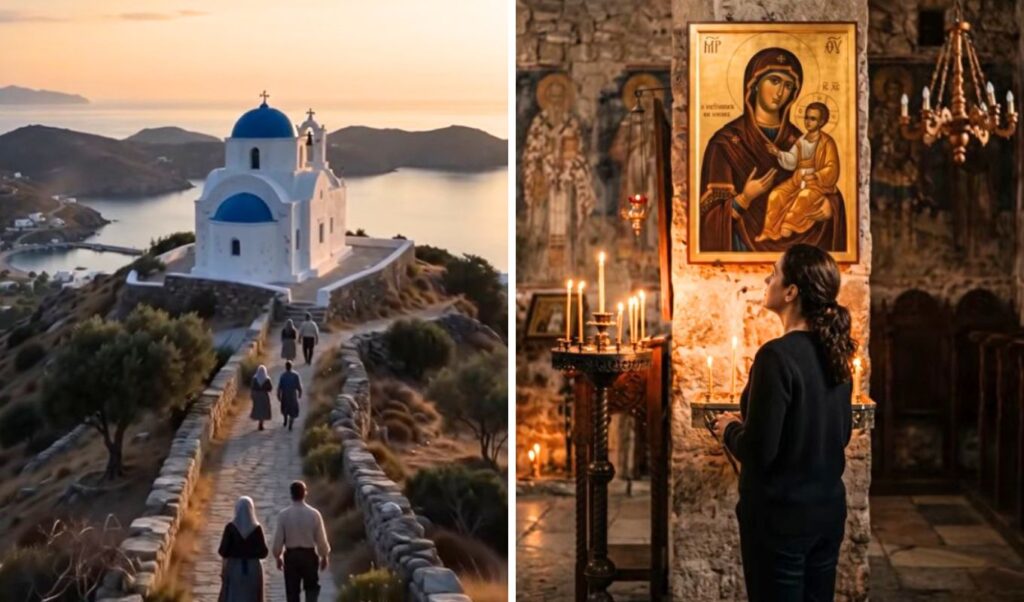
And if these days you find yourself before an icon of her, don’t just light a candle out of habit. Stop for a moment. And tell her what truly hurts you. What you fear. What you cannot easily say to anyone.
The Virgin Mary is a Mother, and she can do anything.