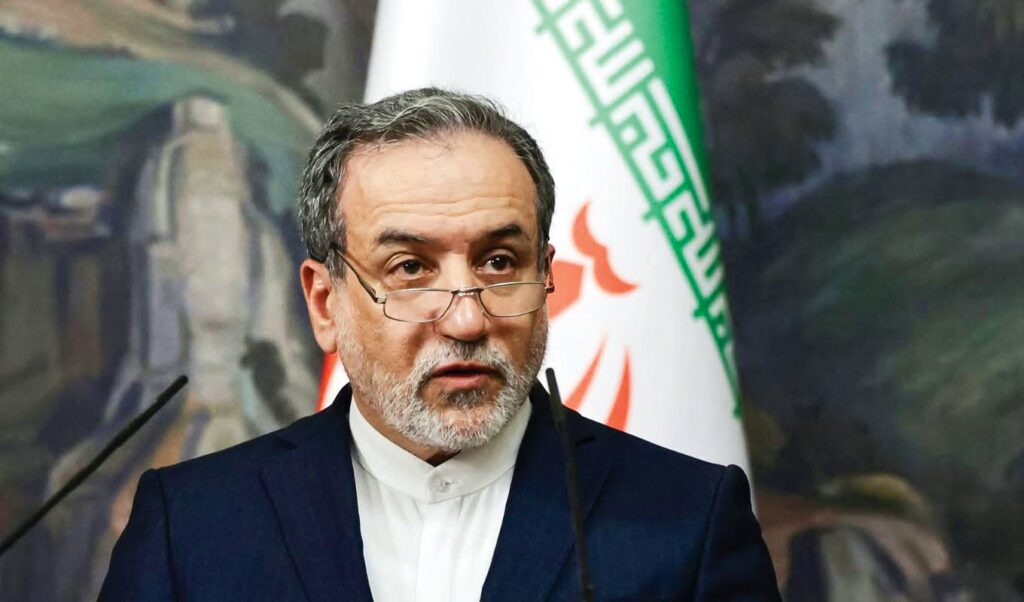
Abbas Araghchi declared victory on both the battlefield and the diplomatic front, claiming that the United States is now negotiating on Iran’s terms — not the other way around. The Iranian Foreign Minister made the remarks, as broadcast by SKAI, on Tuesday, August 18. In what amounted to a sweeping assessment of the situation, Araghchi stated that Iran had forced the US to negotiate according to its own conditions, even as Washington had been pressuring Tehran to capitulate just months earlier. “We will not surrender,” he said pointedly, according to Iran’s ISNA news agency, adding that the course of military operations had upended Washington’s original plans.
Read also: Donald Trump posts map of the Strait of Hormuz as “US territory” — after Iran threatened to “break his legs”
Araghchi: Only one condition favors the US
Araghchi reportedly went further, stating that “America is now begging to negotiate with us on our own terms.” He essentially reiterated a pattern he had established in recent days, emphasizing that Iran did not immediately accept a ceasefire but instead continued military operations. This, he argued, compelled its adversaries to accept the ceasefire and enter negotiations based on Tehran’s conditions. He also claimed that the memorandum of understanding already agreed upon between Iran and the US — with Israel, he noted, actively trying to undermine its implementation — contains 13 provisions favorable to Tehran and only one favorable to the American side.
His remarks carry an element of surprise, given that Washington and Tehran appear to be watching the end of the war from a distance. There are no direct talks between the two sides — a fact that Iran’s Foreign Minister attributes to a deliberate decision by his own government. Nevertheless, for Araghchi, the conclusion is clear: “We won the war and we won the diplomacy.” He argued that Iran’s military strength was precisely what gave its diplomacy the necessary leverage.
“We fought with strength and we negotiated with strength,” he had stated characteristically, conveying the message that Tehran views its military capabilities as the essential foundation for the diplomatic developments that followed. Washington, of course, disagrees — with Trump touting a resounding triumph and a virtual walkover, citing the blockade of Iranian ports and control over the Strait of Hormuz.