The US elections and the shifting political landscape in America are shaping a complex environment for Greece’s national interests, with both direct and indirect implications at the geostrategic, bilateral, and economic levels.
Read:
Greek-American relations remain stable despite US political shifts
According to seasoned Greek-American diplomat and former US Ambassador to Qatar Patrick Theros, the changing balance of power in Congress and Trump’s setback in the midterm elections are not expected to bring radical changes to the direct relationship between Greece and the United States. A Congress under Democratic control is considered slightly more favorable toward Greece, particularly given the close personal relationship Donald Trump has cultivated with Recep Tayyip Erdoğan. As Theros puts it, “I don’t believe Trump will pay particular attention to Turkey, either positively or negatively.”
The Middle East and the energy crisis at the center of Greek concerns
For Theros, Athens’ primary concerns stem from the collateral consequences of American foreign policy decisions. “If Trump pursues a ‘victory’ over Iran by launching large-scale military strikes against Iranian territory and energy infrastructure, Iran is expected to retaliate by targeting facilities in Gulf Cooperation Council (GCC) states. Such a development would cause a severe reduction in the global availability of oil and natural gas that could last a decade or more — however long it takes to rebuild Gulf infrastructure. From this perspective, it becomes vital for Greece that its recently discovered domestic natural gas reserves begin producing soon.” Theros also expresses concern about escalating hostilities in the Middle East, warning that it “carries the risk of drawing Ankara into the conflict, indirectly worsening Greek-Turkish relations. A potential attempt by Netanyahu to provoke a confrontation with Turkey in order to pull Trump to his side could further heighten tensions between Greece and Turkey. Widespread instability in the region represents a serious threat to Greece both economically and geostrategically,” he concludes.
Zeменidis: The new Congress can check Trump’s initiatives
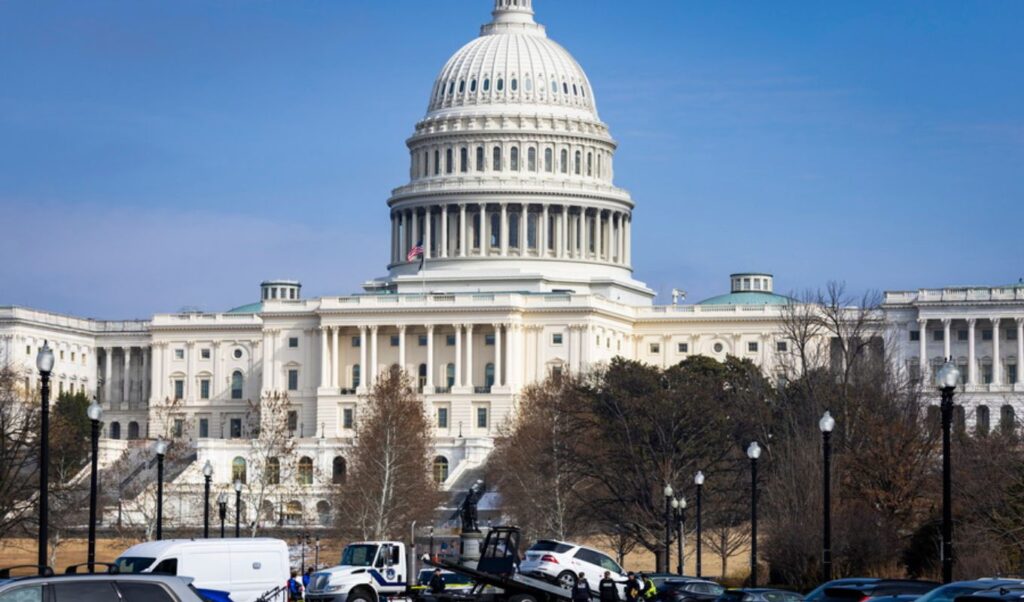
For his part, Endy Zemenides, Executive Director of the Hellenic American Leadership Council (HALC), argues in his interview with parapolitika.gr that the new balance of power in the US Congress will serve as a check on Donald Trump’s more extreme initiatives. Since Congress controls the budget, it is not expected to approve funding for prolonging or expanding a war with Iran, and it will limit the President’s ability to act without restraint. “I think that over time, President Trump will not be able to continue the war in Iran, because he needs money to do it. And Congress will not approve the funds. Period,” he says emphatically.
Increased pressure on Turkey through the US Congress
Furthermore, according to Zemenides, as a result of the shifts in Congress, Turkey will face consequences if it engages in provocative actions, as pressure from American lawmakers will be significantly greater. He attributes this to the expanded role that Chris Pappas will now play in the Senate in championing Greek positions and defending national issues. As he characteristically states, “We have a senator who is not simply of Greek descent. He is someone who has played a leading role in our national issues for many years. He was chair of the Congressional Caucus on Hellenic Issues. People in Greece may not fully grasp this, but those who follow us need to understand that a US senator wields enormous power in the American political system. Every politician, every elected official, every senator has a specific amount of political capital that they deploy for their priorities. Chris Pappas can now influence both the Senate and the House.”
The role of Chris Pappas and the balance of power in the Eastern Mediterranean
At the same time, the strong Democratic presence in Congress is expected, according to Zemenides, to significantly curtail Turkey’s “games” in the Eastern Mediterranean, because “there will be greater pressure from Congress.” As he argues, “Congress cannot send frigates, it cannot deploy troops, but I believe that the Turks — because of Ambassador Thomas Barrack in Ankara, and because they saw that no Republican had the courage to tell Trump ‘you’re wrong’ or to criticize him — were emboldened to provoke Greece. That kind of dynamic will no longer exist in Congress.”
What is certain is that while direct relations between Athens and Washington remain stable, US elections do affect Greece’s national interests — primarily through regional instability in the Middle East and pressures on global energy markets — with Congress playing a pivotal balancing role.