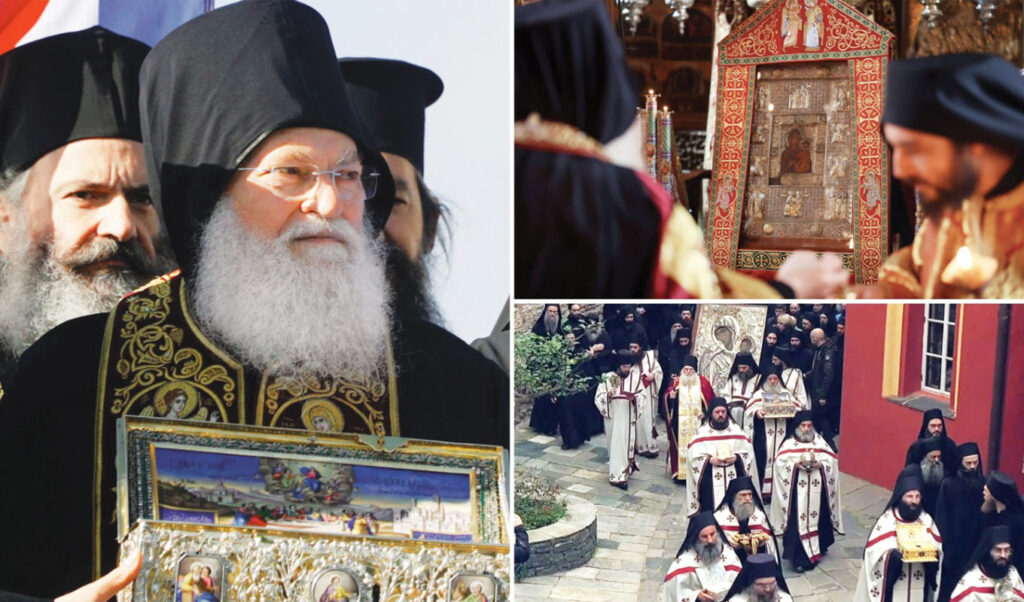
As the Orthodox Church honors the Dormition of the Most Holy Theotokos, the figure of the Virgin Mary stands at the very heart of the faith and devotion of millions of believers. Across the Orthodox world, the faithful gather in churches and monasteries, venerate her sacred and miracle-working icons, pray and call upon her, seeking comfort, strength, and hope. The Virgin Mary holds a place of particular significance on Mount Athos — where monastic life is entirely devoted to prayer and spiritual discipline, and where the monks call her the Abbess of her Garden, affirming her unique presence and protection over the Holy Mountain.
Read: August 15: The Dormition of the Theotokos — “The Pascha of Summer” and a feast of hope (Video)
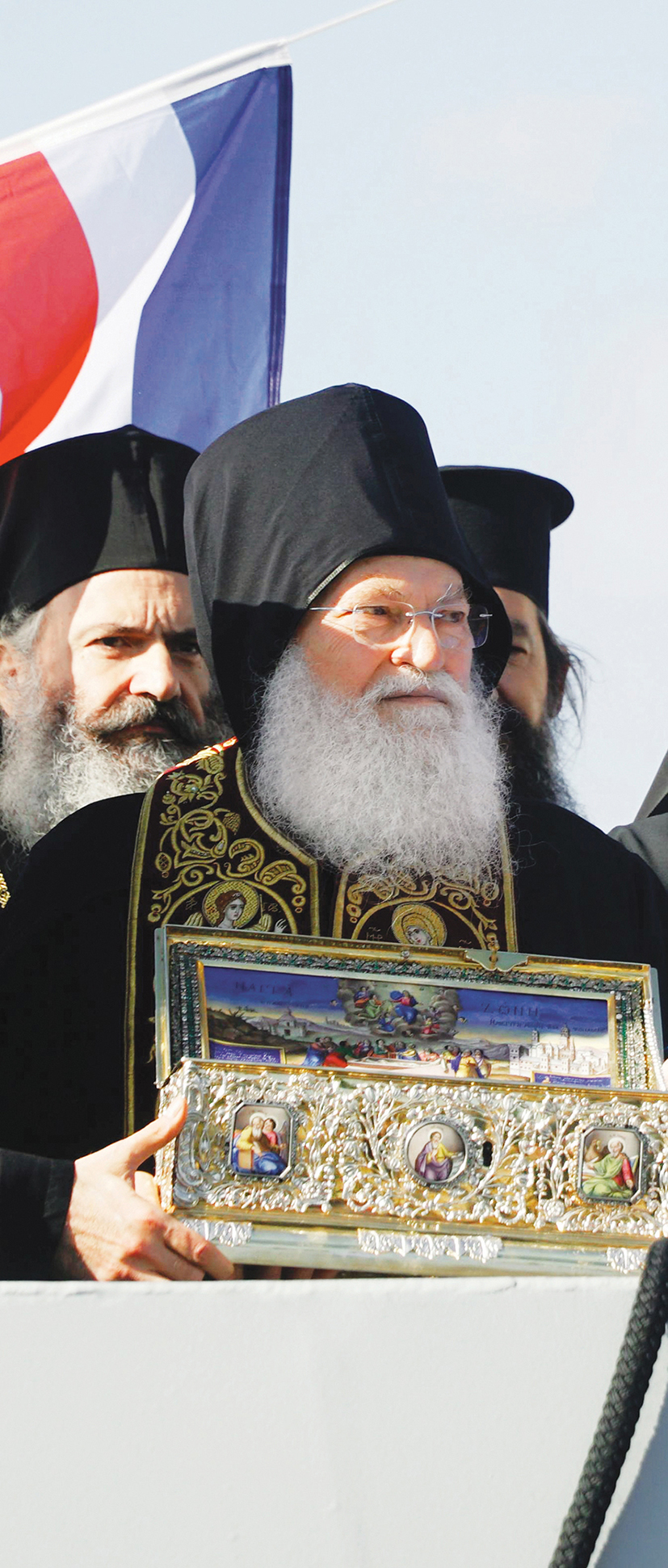
The Abbot of the Holy and Great Monastery of Vatopedi on Mount Athos, Elder Ephraim, speaks to Parapolitika about the person of the Mother of the entire world, her enduring presence in the lives of humanity, and her significance for the Orthodox faith. As he characteristically emphasizes, “it is because of the Virgin Mary’s obedience that we are worthy to receive, even today, the most precious Body and Blood of Christ.”
The Abbess of Mount Athos
For Elder Ephraim, the Virgin Mary’s relationship with Mount Athos is far more than symbolic. The entire Athonite tradition is permeated by her presence, and the Elder explains: “Mount Athos was given as her own inheritance, because she is truly the first after the One, and she is the person who, as the Holy Fathers have said, received the depth and breadth and height of spiritual knowledge as no other person on earth. That is why the Mother of God — our Mother — knows what monasticism means, what asceticism means, what hesychasm means; but she also knows what pain means, what temptation means, what it means for every fallen human being to face hardship. And that is why, as she herself prophesied, ‘behold, from henceforth all generations shall call me blessed.'”
The Virgin Mary, as Elder Ephraim describes her, is thus close to each person not only in moments of joy, but above all in difficult hours — when pain, anguish, and the sense of a way forward seem impossible to find.
“Ready to listen”
Turning to the Virgin Mary in prayer is, according to Elder Ephraim, an expression of the deepest trust. Praying before her icon becomes a personal dialogue — a moment in which a person sets aside whatever burdens them and lays their pain before her.
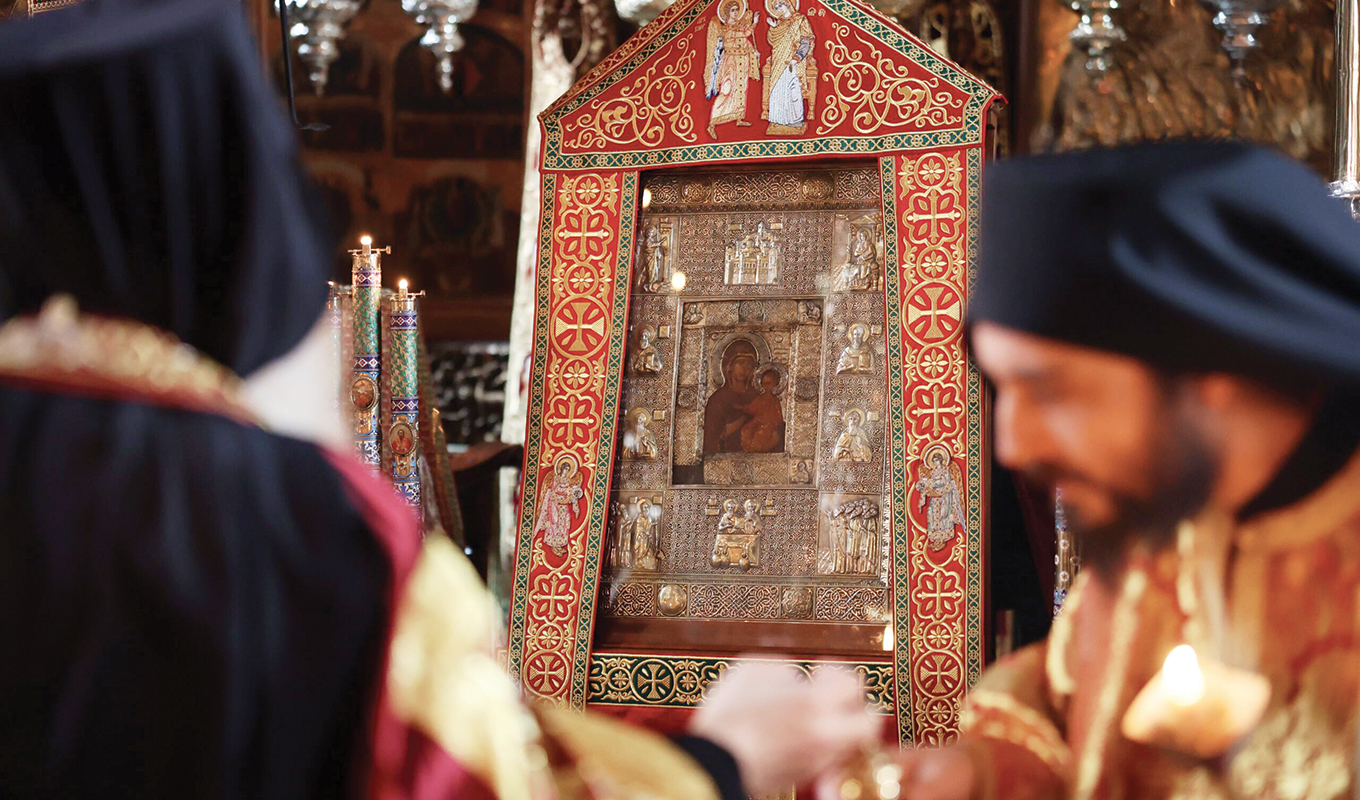
“The Virgin Mary receives today the honor we offer her, our reverence, our devotion to her person, because she is ready to hear our sighs, to see our tears, to feel our pain, to see our troubles and the obstacles we face in our lives — even to understand the various mockeries of malicious people, who are themselves, unknowingly, instruments of Divine Providence. Today, in order to honor the person of the Virgin Mary, whom they venerate so deeply, people venerate her sacred and miracle-working icons, where they speak their pain and leave, in a paradoxical way, lighter, at peace, healed, and somehow transformed. For our prayer before an icon — before the face of the Virgin Mary — strengthens us, because the Virgin Mary is not just any person; she is the Mother of God, the one who gave birth to the Son of God, the second person of the Holy Trinity, who became man and came to meet us. And so all of us today, because of the obedience of this Woman, this young Girl, are made worthy to receive his most precious Body and Blood as provision for eternal life.” Through these words, the central place of the Virgin Mary in the faith of the Church is brought into sharp relief: her obedience is directly bound to the Incarnation and, by extension, to the possibility for humanity to receive Holy Communion.
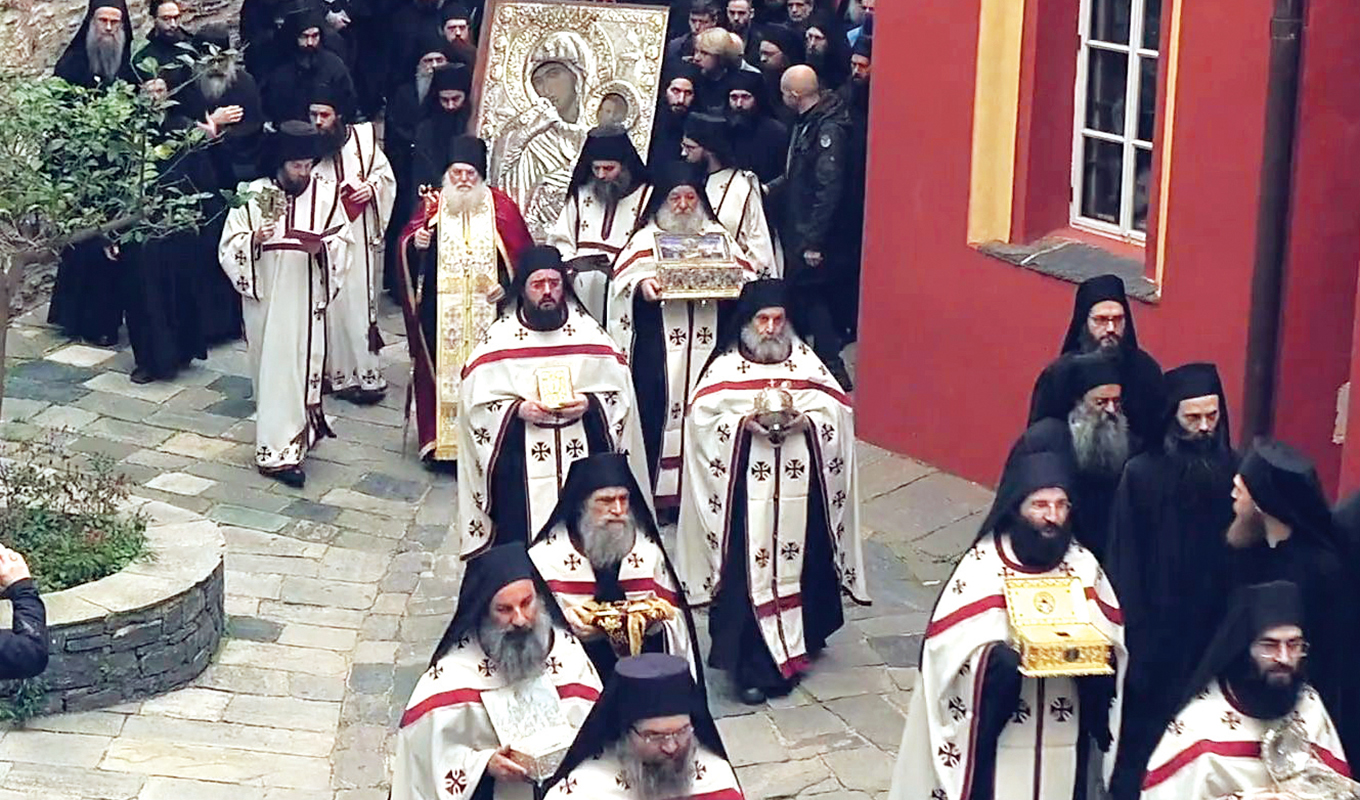
“A firefly in the darkness”
On Mount Athos, where the daily life of the monks is woven together with prayer, ascetic discipline, and the search for Divine Grace, the presence of the Virgin Mary becomes, as Elder Ephraim describes it, a continuous spiritual experience.
“For us who live on Mount Athos and who constantly listen for the streams of grace flowing within us, there arises what is called illumination. The mind is opened, as the Lord says, ‘to understand the scriptures,’ and then, in those virtuous men at whose feet we live here on the Holy Mountain, the mind is opened and they see and are illumined, and Grace reveals to them the magnitude of Christ’s self-emptying and the great and ineffable contribution of the Lady Theotokos. The Virgin Mary, possessing the great gifts she has received from God, comes and dwells in the hearts not only of the devout, but even of the irreverent, who merely utter her name and feel a consolation, feel a relief. Within the hymnology of the Church, we see how the Holy Fathers felt and expressed the ever-wakeful, motherly presence of the Virgin Mary — and how many times, within the hymns to the Virgin Mary, we praise her and beseech her, because she is our hope, she is our unfailing hope, which is why we say, ‘I place all my hope in you, Mother of God.’ I believe that each of us has experienced, in our own way, the signs of her presence, and in the hour when we think everything is dark, in the hour when we think our problems are unsolvable, she comes like a firefly in the darkness of our own passions and our own negligence and says to us, ‘do not be afraid, I am here,’ and in a way that is beyond explanation — a way even we ourselves cannot explain — she either restores our health, or gives us back our hope, or grants us the strength from on high that we all need to face our trials. For this reason, precisely, the greatest gift of God to the world, as the Holy Fathers have said, is this: the Lady Theotokos. Because she truly comes, as a real Mother, and dwells in our hearts, comes and dwells within our very being, within our soul, takes hold of it — and then we long for her Son.” The image Elder Ephraim uses — the Virgin Mary as “a firefly in the darkness” — captures in a striking way this sense of her motherly presence: where a person sees no way forward, where hope seems to be slipping away, the Virgin Mary becomes a point of consolation and strength.
She is ready to hear our sighs, to see our tears, to feel our pain, to see our troubles and the obstacles we face in our lives.
Icons and the sacred girdle
The tradition of the Holy and Great Monastery of Vatopedi is inseparably bound to the Virgin Mary. The monastery houses seven of her miracle-working icons, while a place of singular importance belongs to the Holy Girdle — the only personal object from the earthly life of the Theotokos, which is kept at the monastery.
According to Elder Ephraim: “The Virgin Mary, the Mother of God, is always with the people of God, consoling them and strengthening them. This is made evident whenever we come before her, whenever we kneel before her most venerable person and call out to her and speak to her our pain — and she, in a miraculous way, gives us joy; not a psychological state, as some may think, but a fruit of the Holy Spirit given from Heaven. Here, in our monastery, we have seven miracle-working icons of our Virgin Mary, and each one is connected to wondrous events that she herself permitted to be revealed, for the help and strengthening of the monks and the faithful, all of which are recorded in the history of the monastery. Here, too, is kept the only personal object from her earthly life — her Holy Girdle. And this sacred relic is connected to many miraculous interventions of our Virgin Mary in the lives of people, which have likewise been documented. The Virgin Mary makes her presence felt in the life of the monks in various ways, and we glorify her and serve her. Saint Gregory Palamas says that ‘not only invoking the Virgin Mary, but simply remembering her acquires within a person a certain power, a certain sovereignty, a certain spiritual gravity.’ The Virgin Mary is the refuge of Christians, and I pray that her Grace may shelter us all.”
And so, through the Athonite tradition and the personal experience of the people of the Church, the Virgin Mary remains a figure deeply bound to hope, consolation, and spiritual strength. For Elder Ephraim, and for the Orthodox tradition as a whole, her presence is not confined to a memory of the past. It is a living relationship — a motherly protection and a constant recourse of humanity to the one who, as he so characteristically affirms, is “God’s greatest gift” to the world.
Published in the newspaper Parapolitika.