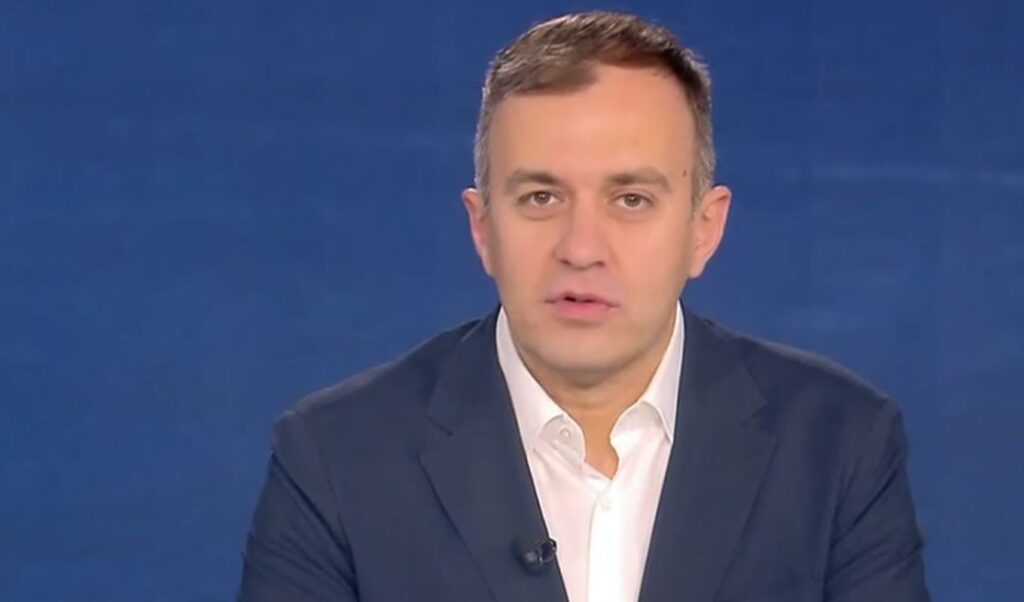
Greece’s Deputy Foreign Minister, Tasos Hatzivassiliou, spoke on Thursday (6/8) about the agreement signed at Maximos Mansion in the presence of Prime Minister Kyriakos Mitsotakis, marking the entry of the French investment group Meridiam into the electricity interconnection project linking Greece, Cyprus, and Israel. He also addressed the strategic agreement between ADMIE, GSI, and Nexans.
A project of strategic importance
Speaking in an interview with SKAI, Tasos Hatzivassiliou stressed that “Meridiam’s commercial entry into the Great Sea Interconnector gives the project a major boost and represents a strong vote of confidence in Greece, ADMIE, and the government’s energy policy.”
He underlined the project’s strategic significance, noting that the Mitsotakis government’s goal is to establish a European energy corridor across the Mediterranean — one that will connect Europe, through Greece, to the Middle East while helping end Cyprus’s energy isolation. “A giant is coming, bringing expertise, experience, and above all, credibility. We are talking about a company that manages a portfolio worth €100 billion, with 130 projects in every corner of the globe,” he said, adding that “Meridiam’s participation in the GSI means the project is secure.”
The Deputy Foreign Minister further noted that the agreement is part of a broader government strategy to make Greece a genuine energy hub. In this context, he referenced the natural gas infrastructure in Alexandroupolis, the Vertical Corridor, the Greece–Egypt electricity interconnection, and now the Great Sea Interconnector.
Leave the pettiness to the opposition
When asked to respond to criticism from the opposition, Hatzivassiliou pointed out that those who accused the government of neglecting or abandoning the project have been proven wrong by events. “Throughout this period, serious negotiations took place to bring in a credible investor like Meridiam — a move that adds legitimacy and facilitates capital leverage. Let the opposition set aside its pettiness and narrow-mindedness, and acknowledge that the government has achieved a significant and positive development,” he said pointedly.
Preparing for the Greek presidency of the EU Council
Concluding his interview, the Deputy Foreign Minister touched on Greece’s preparations for its presidency of the Council of the European Union in the second half of 2027, outlining clear priorities: defense and security with a 360-degree approach, competitiveness, a Multiannual Financial Framework with balanced funding for both traditional and new policies, EU enlargement, and maritime security grounded in international law. “We are presenting our priorities clearly to our European partners, and in the coming period we will have the opportunity to define them in even greater detail,” he emphasized.