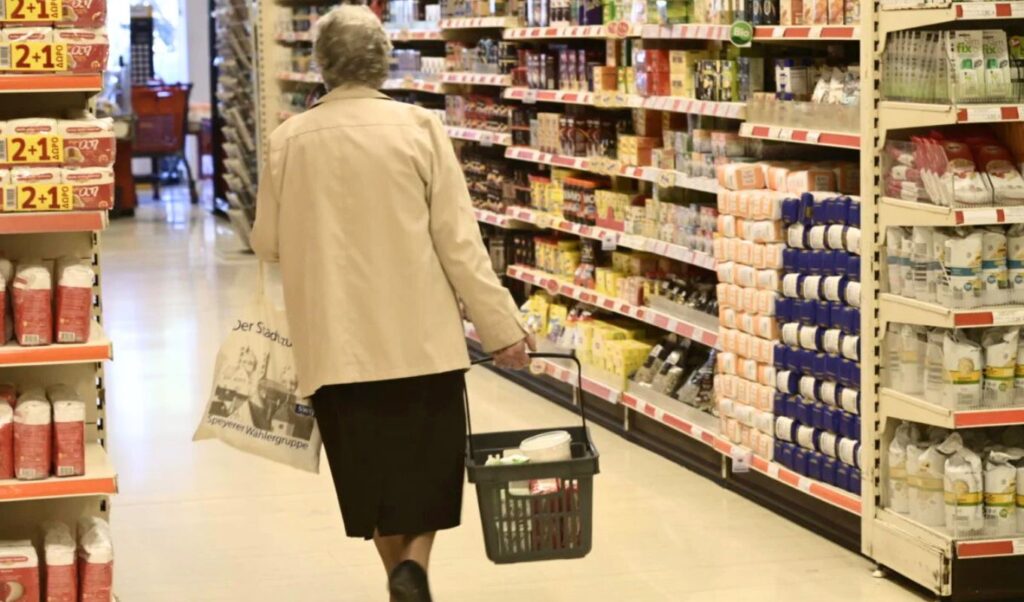
Food inflation turned negative in July, as the expiration of price caps on supermarket products at the end of June does not appear to have triggered a wave of price hikes across the market. The emerging picture suggests that businesses heeded the Ministry of Development’s call to hold prices steady, avoiding significant increases on essential everyday items in consumers’ shopping baskets. Meanwhile, a countdown is underway for a new national initiative launched by the Ministry of Development, aimed at driving down prices on popular product lines.
Read also: Supermarkets: The neighborhood battle heats up — which stores are coming out on top
Eurostat: Where food inflation currently stands
According to data from Eurostat, food inflation in Greece moved into negative territory in July, registering at -0.3%, compared to 2.2% in June. Over the same period, the eurozone recorded figures of 1.2% and 1.5% respectively. The decline is particularly significant when considered against the broader trend: food inflation in Greece stood at 3.7% in March, 3.8% in April, before easing to 2.6% in May. By comparison, the eurozone recorded considerably lower figures during the same months, with inflation at 2.4% in March, and 1.9% in both April and May.
Time for price cuts on essential supermarket products
With ongoing developments in the Middle East continuing to fuel inflationary pressure throughout the supply chain, Development Minister Takis Theodorikakos launched what he described as a national initiative immediately after the expiration of price caps on a range of essential consumer goods and food products. The initiative calls for voluntary price reductions starting August 31, to remain in effect for a minimum of two months.
The primary goal is to achieve price cuts ranging from 5% to 20% per product code on key items that make up the household shopping basket, applied to regular retail prices. Any additional promotional offers would then be calculated on top of the new, lower base price.
As the deadline for businesses to submit their final proposals to the Independent Market Supervision and Consumer Protection Authority approaches — set for August 3 — sources indicate that companies’ intentions regarding both specific product codes and the scale of proposed reductions have already been received.
So far, approximately 30 companies have submitted proposals, with estimates suggesting that the total number of businesses participating in the new price reduction program will exceed 100, while the number of product codes subject to price cuts is expected to surpass 1,000.
At the center of the initiative are fresh meat, dairy products, eggs, pasta, legumes, flour, cooking oils, infant formula, diapers, breakfast foods, soft drinks, detergents, personal hygiene products, and school supplies. It is worth noting that this effort is taking place against a backdrop of rising costs for industry and ongoing uncertainty surrounding energy, transportation, and raw materials.