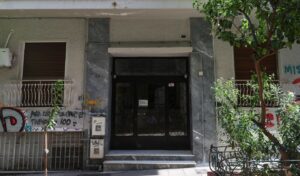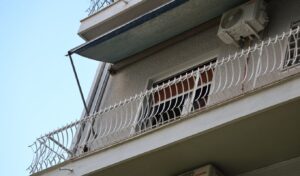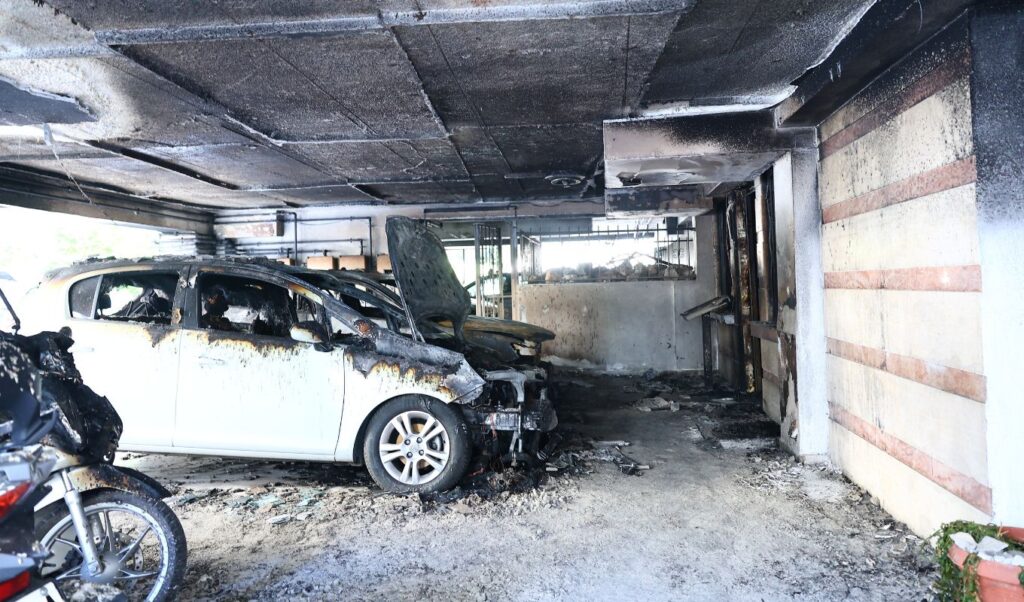
New developments are emerging in the Counter-Terrorism Unit’s investigation into the series of incendiary gas canister attacks on the homes of New Democracy officials and political candidates in Thessaloniki, which tragically claimed the life of Vagia Nestora. Investigators have focused their efforts on analyzing video footage from residential and business security cameras, combing through the recordings frame by frame to track the perpetrators’ movements before and after the three attacks.
According to sources, a small-engine motorcycle captured on camera near the attack sites is now at the center of the investigation. Analysts are working to identify its license plate number while also examining whether the same motorbike had been in the area in the days leading up to the attacks, potentially conducting surveillance of the targeted homes. Several other two-wheelers have also come under the Counter-Terrorism Unit’s scrutiny.
Police have isolated one suspect in the Thessaloniki gas canister attacks
Analysis of the footage indicates that at least three individuals were involved in the attacks. Two young men, riding motorcycles and wearing helmets, are believed to have placed the improvised incendiary devices, while a third person is thought to have acted as a lookout, monitoring the surrounding area. Investigators have managed to isolate an image of one of the suspects, though the individual has not yet been identified. Their goal is to map the perpetrators’ full route — from where they collected the improvised devices to where they went after the attacks — in hopes of identifying the contacts and faces that may lead them to those who planned and directed the operation.
Counter-terrorism officials believe the physical perpetrators are young individuals with limited operational experience, apparently guided by more seasoned figures, all moving within anarchist and anti-establishment circles. The investigation is focusing on individuals who have previously come to the attention of authorities for incidents, building occupations, and anti-establishment activities in Thessaloniki, with police now re-examining case files from past incidents one by one.
Experts have also noted that the incendiary devices used were remarkably simple in their construction and wiring — not necessarily indicative of specialized knowledge, as similar devices have occasionally been used by ordinary criminals. It is worth recalling that all three attacks took place within just 17 minutes. The first explosion struck the home of Zisis Ioakimovitis at 4:18 a.m., followed by an attack on Savvas Anastasiadis’ residence at 4:24 a.m., and a third attack on the home of Afroditi Nestora at 4:35 a.m. When terrified family members rushed downstairs following the blast, they were met with flames — and Vagia Nestora became trapped, losing her life in the fire.
Finally, sources indicate that the Counter-Terrorism Unit does not expect any group to claim responsibility for the attacks, as it is considered unlikely that anyone would wish to publicly admit to such a deadly act. The investigation continues with a primary focus on identifying both the individuals who carried out the attacks and those behind their planning and coordination.