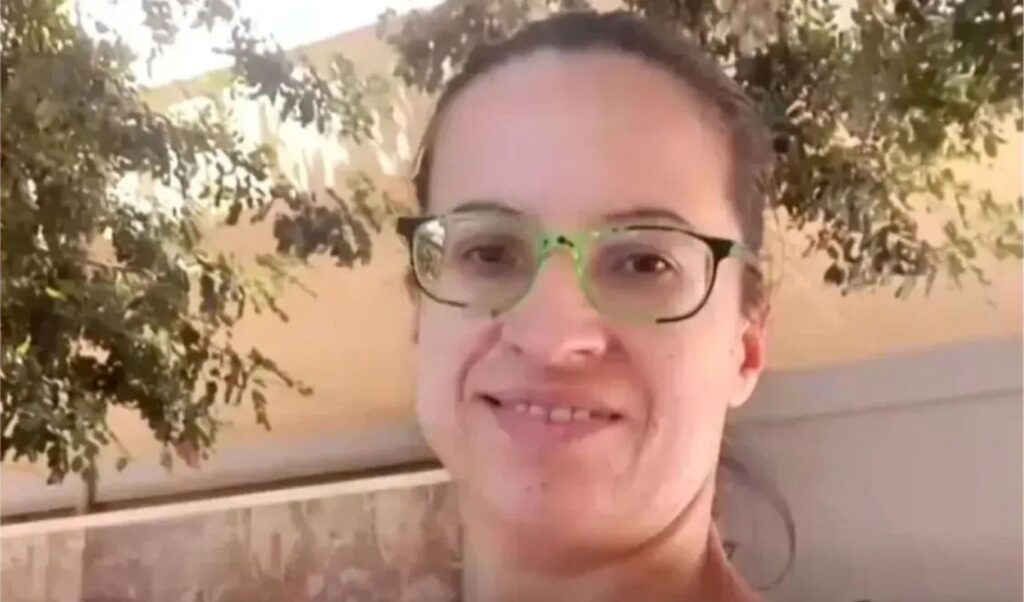
The disappearance that kept the family of 45-year-old Stavroula Leventaki — and the entire country — in anguish for more than three weeks ultimately unraveled as a murder case, with the perpetrator identified as a 43-year-old North Macedonian national who had been renting a property she owned.
On the morning of Sunday, June 21, police officers discovered the woman’s body buried on a privately owned plot of land belonging to the 43-year-old suspect in Vatolakkos, Chania — approximately five kilometers from the house where, according to the investigation, she lost her life. Just hours earlier, the suspect had broken down under the weight of overwhelming evidence and personally directed investigators to the location where he had hidden the body.
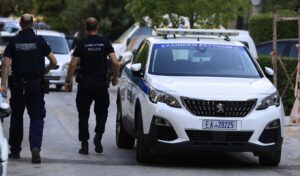
During the press briefing, Chania Police Director, Brigadier Kanellos Nikolaou, described the case as exceptionally difficult. The missing persons report had been filed on June 8, yet the investigation revealed that all trace of the woman had been lost as early as May 30. “In practice, police investigations began approximately ten days after the actual time of disappearance, which created objective difficulties in terms of locating and preserving critical evidence,” Nikolaou stated.
Despite this lost window of time, investigators managed to build a comprehensive body of evidence. They examined the victim’s family, social, and professional circles; analyzed telecommunications data; submitted requests to airline and ferry companies; collected dozens of witness statements; and reviewed a vast amount of footage from security cameras.
The video footage that marked the beginning of the end
The analysis of security camera footage proved pivotal in solving the case. The last recorded image of Stavroula Leventaki came from a camera located just 83 meters from the house in Varypetro where, according to police findings, she was murdered.
The 45-year-old was captured on camera walking toward the residence where the 43-year-old lived as her tenant. From that point on, she vanished without a trace. She entered the house — but was never recorded leaving.
“Processing the recordings allowed for the precise reconstruction of critical movements by both the victim and the suspect, confirming her presence at his residence on the day of her disappearance and revealing significant discrepancies between the factual evidence and the claims made during the course of the investigation,” Nikolaou noted.
At the same time, investigators tracked the movements of the suspect’s vehicle, which evidence suggests was used to transport the body to the field where it was ultimately found buried.
The contradictions that made the 43-year-old the prime suspect
Meanwhile, investigators began meticulously reconstructing the final hours of Stavroula Leventaki’s life. Cross-referencing witness statements with physical evidence, they began to uncover substantial contradictions and inconsistencies in the 43-year-old’s account — a man who had been the last known person to have contact with her.
As the investigation advanced, the evidence consistently failed to support his version of events. On the contrary, the discrepancies multiplied, and he was placed squarely at the center of the inquiry as a person of significant interest to police.
The blood he couldn’t erase and the Bluestar method
The decisive turning point came with the forensic examination of his home and vehicle. With the assistance of a specialized unit from the Forensic Investigations Directorate, investigators conducted an exhaustive search of the premises. Officers used specialized light sources and then applied advanced biological trace detection methods — including the Bluestar reagent — uncovering bloodstains at multiple locations throughout the property.
The findings were collected as evidence and sent to the Hellenic Police laboratories, while DNA samples were simultaneously obtained from relatives of the missing woman. The results proved to be decisive.
“The genetic material isolated from the stains was identified as belonging to a female and, through comparative analysis with samples from the missing woman’s parents, it was established with an exceptionally high degree of certainty that it belonged to Stavroula Leventaki,” the Chania Police Director revealed.
The DNA identification effectively eliminated any remaining room for doubt. The combined use of witness testimony, telecommunications data, DNA results, forensic analysis, and video footage created a fully documented evidentiary framework. Faced with the weight of this evidence, the 43-year-old confessed.
The chilling confession: a step-by-step account of the murder
According to information obtained, the 43-year-old described in disturbing detail what had taken place on May 30. He claimed that Stavroula Leventaki had called him in advance to inform him she would be visiting the house where he lived as her tenant. In his account, when she arrived, he offered her a beer. Shortly afterward, the 45-year-old began inspecting the property — photographing various areas and raising complaints about damage.
He also made claims of a personal relationship with the victim. However, Greek Police spokesperson Konstantia Dimoglidou clarified that, as of that point, the investigation had uncovered no evidence confirming the existence of a romantic relationship between the two.
“Then she started acting like a madwoman. She was screaming at me that she would destroy me. She was raving and threatening to tell my wife — and to say that I had raped her,” the 43-year-old is reported to have stated in his deposition.
According to his account, the woman picked up a wine bottle and moved toward him. “I pushed her away and she came at me again. I grabbed the bottle. We struggled and she fell to the floor, hitting her head. I saw blood. She was screaming and I lost it. I hit her on the head with the bottle, which shattered.”
What followed is deeply disturbing. “She was screaming, so I grabbed a roll of tape, wrapped it around twice, and covered her mouth. She tried to pull it off with her hands. I wrapped it one more time and then she lost consciousness.”
The stab wounds and the fatal blow with a log
The 43-year-old claimed he initially believed the woman was dead. A short time later, however, he realized she was still alive. At that point, according to his testimony, he retrieved a kitchen knife. “I went over to her and stabbed her near the heart twice. I went to the kitchen and washed the knife with soap and vinegar. I don’t remember where I threw it.”
Even then, he claimed, the 45-year-old continued to call out. “I heard her screaming again and again for help, asking if anyone could hear her. I picked up a log from the fireplace and went back into the room. She was covered in blood. I struck her on the head twice and she never spoke again.”
The cover-up
Immediately after the killing, the 43-year-old allegedly began a systematic effort to eliminate every trace of the crime. According to his confession, he found the woman’s bank cards along with their PIN numbers and made cash withdrawals. He claimed his intention was to create the impression that the motive for the crime had been robbery.
He then returned to the house and began cleaning. He used bleach, detergents, and scented products, repeatedly changing the water and mopping for hours in an attempt to erase all traces of blood. He gathered broken glass, items that had been used during the attack, and anything else that could link the crime to that location.
According to his reported testimony, that same evening he even made a video call with his wife before continuing his cleaning efforts. He later discarded the woman’s mobile phone and bank cards, and made a further cash withdrawal.
The grim transportation and burial
In the early hours of the morning, he reportedly decided to move the body. He first bound her hands and feet with plastic zip ties and wrapped her in bags. He then transported her in his vehicle to a privately owned plot of land in Vatolakkos, where he dug a grave among the orange trees. “I started dragging her to my van and drove to the field. I started digging a hole among the orange trees. I got a construction wheelbarrow, put the body in it, took it to the hole and dropped it in. I covered her with soil, went home and cleaned up the blood that had been left from moving her.”
The discovery of the body
Following his confession, the 43-year-old led officers to the exact burial site. A search operation was immediately organized, with a forensic pathologist and specialist teams present. During the excavation, the body of Stavroula Leventaki was found buried in the ground, wrapped in multiple successive bags and bound with plastic ties. The scene that confronted officers fully corroborated the evidence gathered throughout the preliminary investigation and brought a tragic end to the anguish of the 45-year-old’s family.
Forensic findings
According to the forensic pathologist’s report from the post-mortem examination, it was the repeated blows to the head that caused death. Specifically, they resulted in a crushing fracture across a large portion of Stavroula’s skull, causing the victim to suffer extensive hemorrhaging that ultimately proved fatal. The two stab wounds she sustained were not considered life-threatening and did not strike any vital organs. Additionally, no signs of strangulation were found.