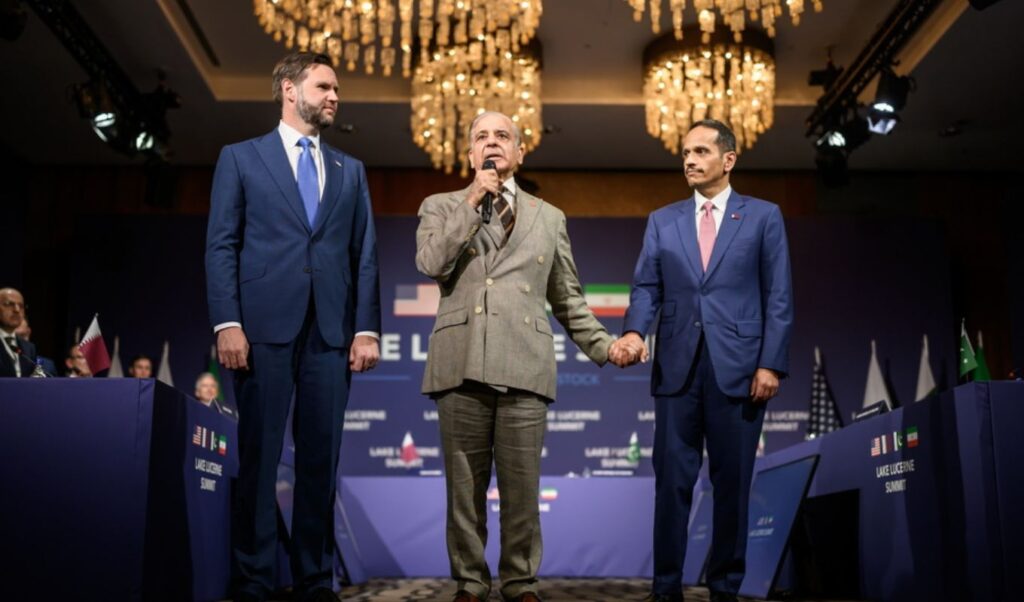
Talks between the United States and Iran concluded in a “positive and constructive atmosphere” with “encouraging progress,” according to a joint statement from mediators Pakistan and Qatar. A 60-day roadmap aimed at reaching a final settlement and establishing new oversight mechanisms was agreed upon in the early hours of Monday, following the first round of US-Iran talks held in Switzerland.
Despite tensions triggered by Donald Trump’s remarks regarding the Strait of Hormuz, as well as temporary difficulties that emerged during the negotiations, both sides reported significant progress on key issues.
According to CNN, the two sides agreed to establish a High-Level Committee that will provide “political oversight” of the mediation process.
The lead negotiators will regularly brief the committee and will head working groups focused on:
- the nuclear program,
- sanctions,
- the monitoring and dispute resolution mechanism,
- and other issues related to the implementation of the memorandum of understanding.
60-day roadmap toward a final agreement
According to the joint statement, a 60-day roadmap has been agreed upon with the goal of reaching a final deal. In parallel, technical talks will continue throughout the week in Switzerland, covering “all issues.”
More specifically, the US and Iranian delegations agreed on a “roadmap” to conclude a final agreement within 60 days — one that would bring an end to the war in the Middle East — during the first session of their negotiations in Switzerland, as announced by mediating countries Pakistan and Qatar.
The two sides “agree on a roadmap with the aim of reaching a final agreement within a 60-day deadline, thereby laying the groundwork for the immediate launch of new technical talks,” which will continue this week in Switzerland, Islamabad and Doha stated in their joint communiqué.
“Conflict prevention cell” for Lebanon
The US and Iran also agreed to establish a “conflict prevention cell” involving Lebanon and facilitated by Qatar and Pakistan, aimed at ensuring a halt to military operations in Lebanon. Clashes between Israel and the Iran-backed Hezbollah organization in Lebanon have continued despite the existing ceasefire agreement.
The mechanism is designed to monitor the security situation and bring military operations to a halt, at a time when fighting between Israel and Hezbollah persists despite ceasefire agreements. “The parties agree to the establishment of a conflict management nucleus, in which the parties and the Republic of Lebanon will participate,” with the mediators playing a role, aimed at “providing guarantees for compliance with the cessation of military operations in Lebanon,” the joint Pakistan-Qatar statement explained.
Iran and US establish “communication line” to guarantee safe passage through the Strait of Hormuz
The US and Iranian delegations agreed to establish a “communication line” to guarantee safe passage through the strategically vital Strait of Hormuz, mediators announced following the two sides’ talks in Switzerland.
“A communication line has been established between the parties (…) to avoid incidents and communication breakdowns, with the aim of guaranteeing the safe passage of commercial vessels through the Strait of Hormuz,” explained Pakistan and Qatar, the countries mediating the ongoing negotiations, in their statement.
Araghchi: significant progress in talks with the US — sanctions relief and resource unfreezing
Iranian Foreign Minister Abbas Araghchi today described “significant progress” in negotiations with the United States, expressing satisfaction over the unfreezing of some Iranian assets held abroad, sanctions exemptions that would allow sales of Iranian oil, and efforts to end the war in Lebanon. “The tireless mediation of Pakistan and Qatar has brought significant progress toward ending the war in Lebanon,” Araghchi wrote on X following the conclusion of the first negotiating session in Switzerland.
“Oil and petrochemical exports are being exempted from sanctions, the blockade is being lifted, some frozen resources are being released, and a major reconstruction and development program for Iran is getting underway,” he added.
Iran’s reaction to Trump’s statements
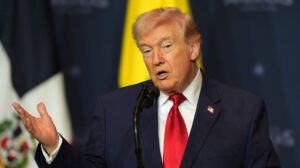
Donald Trump’s remarks suggesting that the US could “control” the Strait of Hormuz or impose tolls if no deal is reached provoked a sharp response from the Iranian side earlier in the day. Trump had also warned of a possible resumption of American strikes and stated that closing the strategic waterway would have serious consequences.
Tehran’s response and temporary suspension of talks
On Iran’s part, Mohammad Bagher Ghalibaf called on the US to exercise caution in its statements, stressing that Iran’s armed forces are prepared to respond. These developments led to a temporary walkout by the Iranian delegation from the talks, with the IRNA news agency attributing the move to the atmosphere that had been created. It was subsequently clarified, however, that the process had not been terminated but merely suspended temporarily.
According to Iranian media, the nuclear program was not discussed during the first round of talks. Instead, the agenda covered the implementation of a previous agreement, the situation in Lebanon, and economic issues.
Oil market reaction
Statements concerning the Strait of Hormuz had an immediate impact on international energy prices. Brent crude rose 1.35% to $81.66 per barrel, while US crude climbed 2.4% to $77.66 per barrel. Market anxiety stems from the prospect of a disruption to oil flows through one of the world’s most critical maritime shipping routes.