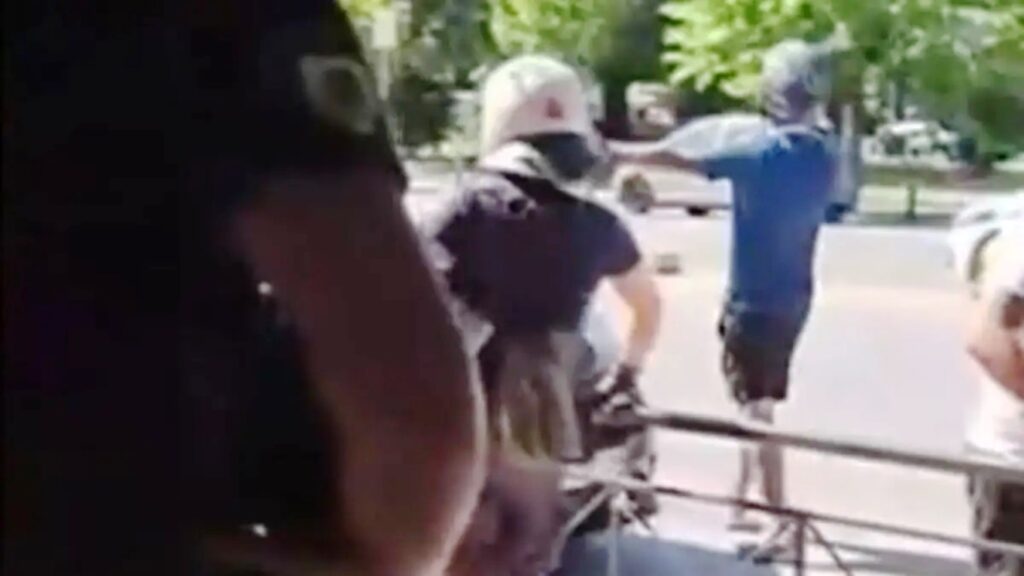
The case of Mario, the 11-year-old boy who lost his life in 2017 after being struck by a stray bullet in Menidi during a school celebration, has returned to the spotlight following dramatic scenes that unfolded outside the Evelpidon courthouse in Athens. The announcement of the verdict in this high-profile case triggered fierce reactions, with the situation spiraling out of control just minutes after the sentence was handed down to the main defendant. The case that had shaken all of Greece nine years ago continues to stir intense emotions, and the events that followed the conclusion of the trial sparked a fresh wave of outrage. Journalists, TV crews, relatives of those involved, and police forces all found themselves at the center of an explosive scene that marked the end of a lengthy legal process.
Read also: Menidi: Justice served after 9 years in the death of 11-year-old Mario — a mother’s sobs crying “my child” and a father’s outburst over the convicted man: “He got what he deserved” (Images & Video)
Menidi: Tensions and clashes erupt after verdict announcement
Shortly after the main defendant was sentenced to life in prison, the atmosphere outside the courthouse became dangerously charged. According to a report by Alpha TV, relatives of the convicted man reacted aggressively to the ruling and verbally attacked journalists and television crews who were on the scene covering the case. During the clashes, damage was caused to broadcasting equipment, and police intervention was required to prevent further escalation.
For a considerable period, tension gripped the area outside Evelpidon courthouse, with shouting, heated arguments, and confrontations that caused distress both to bystanders and to the relatives of the young victim. As reported by the channel, one particular piece of information caused widespread shock — the phrase “We were right to kill him” was reportedly heard, allegedly uttered by someone among the convicted man’s relatives. The remark sparked outrage, as it referred to a child who had lost his life in the most tragic of circumstances during a school event.
The prosecutor’s powerful statement
During his address, the prosecutor placed particular emphasis on the broader social impact of the case and on the collective responsibility he said society as a whole must bear. According to a report by ANT1, he stated pointedly: “The fact that a child was unjustly killed and that a man must spend the rest of his life in prison for it is not cause for applause and celebration — it is proof of the failure of our entire society, and as such, it calls for reflection.” The prosecutor sought to bring the judges back to the scenes that had unfolded on that June afternoon in 2017 in the schoolyard in Menidi. “You need to put yourselves in the position of what was happening at that school — it was a school play, there were parents, there were children, everyone was happy, and then suddenly a child falls and blood is running and nobody can stop it,” he said. His words moved the courtroom deeply, as they brought back the memory of the tragic moments on the day young Mario lost his life.
The verdict and the prosecution’s case
As reported by SKAI, the prosecutor had requested that the first defendant be found guilty of premeditated murder committed in a calm state of mind, while for the second defendant he proposed acquittal on the charge of attempted murder with indirect intent. In his closing argument, he stated that the main defendant had fired indiscriminately and was fully aware that his actions could result in someone’s death. “The defendant fired in all directions, indifferent to the fact that he could kill a person. He knew he could kill someone and he accepted that. He fired indiscriminately,” he stressed.
He also argued against the recognition of any mitigating circumstances, noting that he found no evidence of remorse or respect for the rule of law. The conviction of the defendant closes a significant chapter in the case, yet it does nothing to erase the pain of young Mario’s family, nor does it soften the shock that his death caused to Greek society at large.