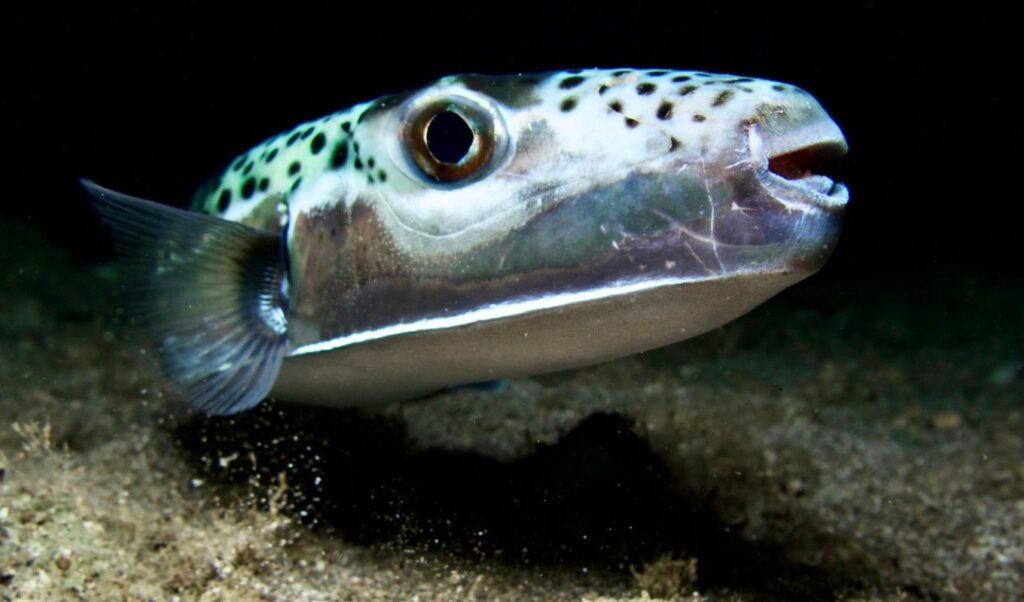
The appearance of pufferfish in Greek waters is becoming a serious problem for both fishermen and swimmers. While the invasion of this alien species into Greek territorial waters has been known since 2013, when it was first detected, what is now causing growing concern among the general public is the increasing number of attacks on swimmers — even in the Attica region.
Read also: Varkiza: The Municipality of Vari-Voula-Vouliagmeni denies pufferfish attack and bite on a woman
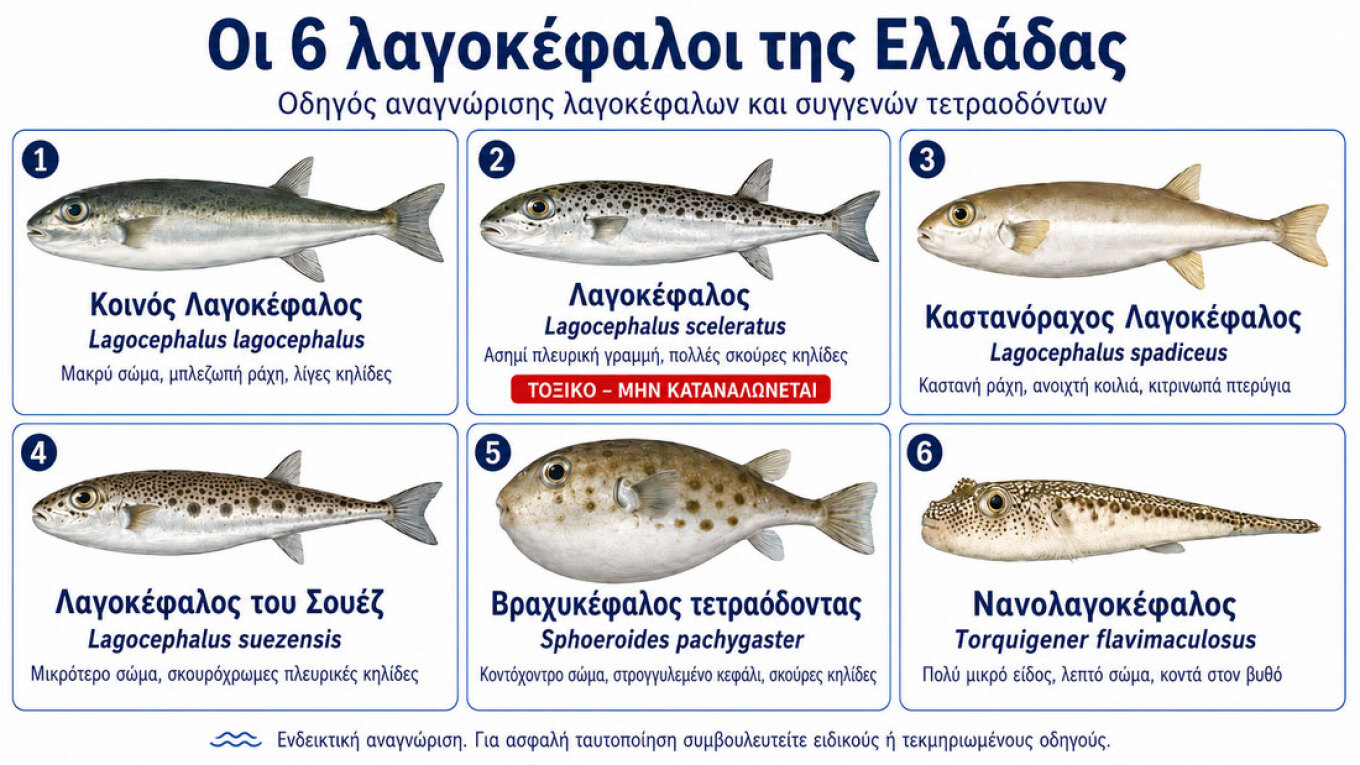
The six pufferfish species found in Greece
A total of 6 pufferfish species have been recorded in Greece, one of which is considered toxic, with a strong public advisory against consuming it.
1. Common pufferfish: This fish has a long body with a blue-toned back and a few scattered spots.
2. Silver-cheeked toadfish (Lagocephalus sceleratus): This is the most common species widely encountered in Greek waters and the one subject to the strongest consumption warning, as it is toxic. It features numerous dark spots and a silver lateral line.
3. Brown-backed pufferfish: Distinguished by its brown back, pale belly, and yellowish fins.
4. Suez pufferfish: Smaller in body size compared to other species, with dark spots along its sides.
5. Shorthead pufferfish (Brachycephalus tetraodon): This species differs notably from the others, featuring a stocky body and a rounded head. Dark spots are also present on this species.
6. Dwarf pufferfish: The smallest of the pufferfish species. It has a particularly slender body and lives close to the seabed.
Below is a visual overview of the six pufferfish species found in Greek waters, their distinguishing characteristics, and which one poses the greatest danger.
Where did the pufferfish come from?
Pufferfish belong to the family Tetraodontidae, internationally known as pufferfish or toadfish. The most well-known and problematic species is the second on our list — Lagocephalus sceleratus. This species entered the Mediterranean through the Suez Canal and has since spread across many areas of Greece.
Its presence is particularly strong in southern and eastern regions of the country and appears to be expanding further.
Why is it dangerous?
According to the Greece Biodiversity Field Guide, pufferfish should not be consumed under any circumstances. Their bodies may contain tetrodotoxin, a potent neurotoxin capable of causing serious poisoning or even death. The toxin is most commonly found in organs such as the liver and gonads, but may also be present in other tissues. Symptoms can include numbness, dizziness, weakness, difficulty speaking or moving, vomiting, diarrhea, paralysis, and in severe cases, respiratory failure or death. Symptoms may appear within minutes to a few hours after consumption.
Sale of pufferfish is illegal
Within the European Union, fishery products derived from toxic fish belonging to the families Tetraodontidae, Molidae, Diodontidae, and Canthigasteridae are prohibited from being placed on the market. Pufferfish belong to the Tetraodontidae family, making their sale illegal across all EU member states.
What fishermen and swimmers should watch out for
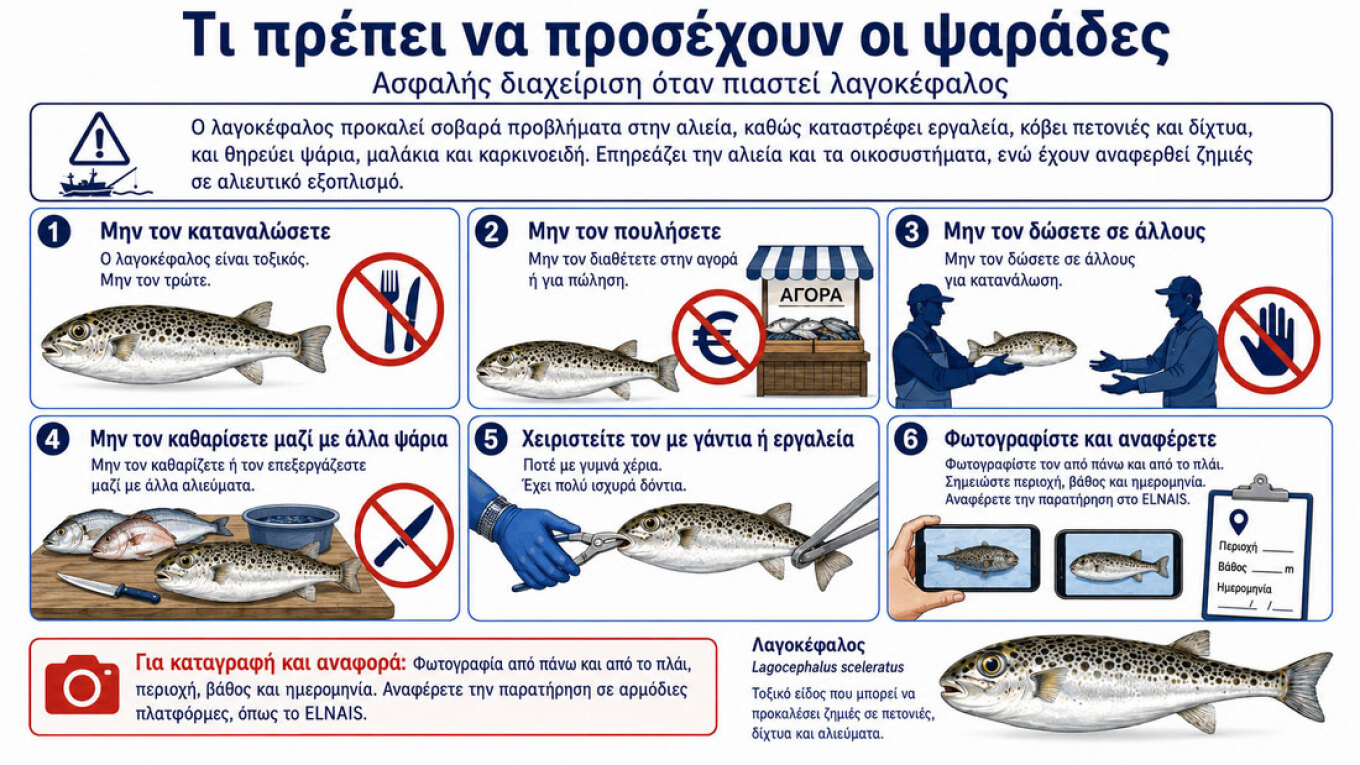
If fishermen encounter a pufferfish, they should follow a number of important safety steps. First and foremost, they must not consume it, as it is toxic. They should also refrain from selling it or giving it to others. Due to the toxin present in its body, it should not be cleaned or processed alongside other catch. Fishermen should avoid handling it with bare hands, as pufferfish have extremely powerful teeth — there are numerous recorded videos showing pufferfish biting clean through aluminum cans. Finally, any sighting should be logged and a photograph submitted to the relevant reporting platforms.
As for swimmers, if they spot a pufferfish in the water, they should not attempt to touch it and should keep a safe distance. If a dead pufferfish is found on a beach, it should be removed from the area without direct contact and relocated to a spot where it cannot be eaten by animals.