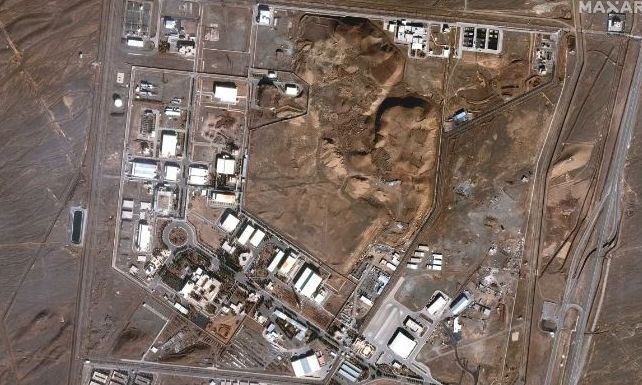
“The Space Force has very powerful cameras placed at Iran’s destroyed nuclear facilities,” said U.S. President Donald Trump, examining any efforts the country might make to extract enriched uranium that is still buried deep underground. “Every inch of this land has cameras. We have about nine cameras, they are activated and we cover it. So if someone approached, we would know what we needed to do,” he added. He further dismissed the idea that the U.S. would immediately send troops to these sites to retrieve the buried nuclear material, saying “we could acquire it now” if he chose to follow that route. “I don’t think [Iran] could stop us if we wanted to, but there’s no reason to do it,” he said.
The U.S. President emphasized that he considered the possibility of sending troops on a covert mission to retrieve the uranium “from the beginning… before we destroyed their entire military.” “There was a moment, right from the start, when we thought about doing this, because they wouldn’t be watching us, but they would have discovered it,” he said.
However, Trump has since assessed that the buried uranium does not pose an immediate threat to the U.S., as the facilities where it is stored are located about 80 to 100 meters below ground, with no obvious ways Iran could acquire it without alerting the Americans.
Trump: Complex process for uranium retrieval
He also explained that releasing the uranium would be a complex and lengthy trial, even for highly trained U.S. special forces. “It’s not like Venezuela, where you go in, you’re there for a few minutes and you leave,” Trump said. “This is different. You have to be there for two weeks, you’ll need huge equipment. You’ll have to transport equipment by air and you know you’re in a war zone.”
The U.S. President stated that such an operation would last “one to two weeks.” “It would start a major construction job,” he said. “We would have taken it, but I said I don’t like the idea. They still had missiles, that means they would spot you and keep launching them and people would have been killed,” he added.
His comments come to light one day after the White House condemned a Bloomberg report, which claimed that Iran was at greater risk of acquiring nuclear weapons than before the 2025 attacks that destroyed Tehran’s nuclear infrastructure, because nuclear energy regulators could no longer inspect them.
“To suggest that Iran can build nuclear weapons with greater capability without functional uranium enrichment facilities or military defense is an indescribably stupid analysis by Bloomberg, which we would have shared if they had contacted us for comment,” White House Deputy Press Secretary Anna Kelly told the New York Post.