
In 2025, Greece recorded the largest reduction in illegal cigarette consumption among the 27 European Union member states, according to a KPMG report, confirming significant progress in recent years in combating illegal trade. At the same time, illegal cigarette consumption in the EU exceeded 10% of total consumption for the first time since 2014, according to the results of the annual KPMG Report, conducted on behalf of Philip Morris International.
KPMG report findings
Specifically, according to the report findings, in Greece in 2025:
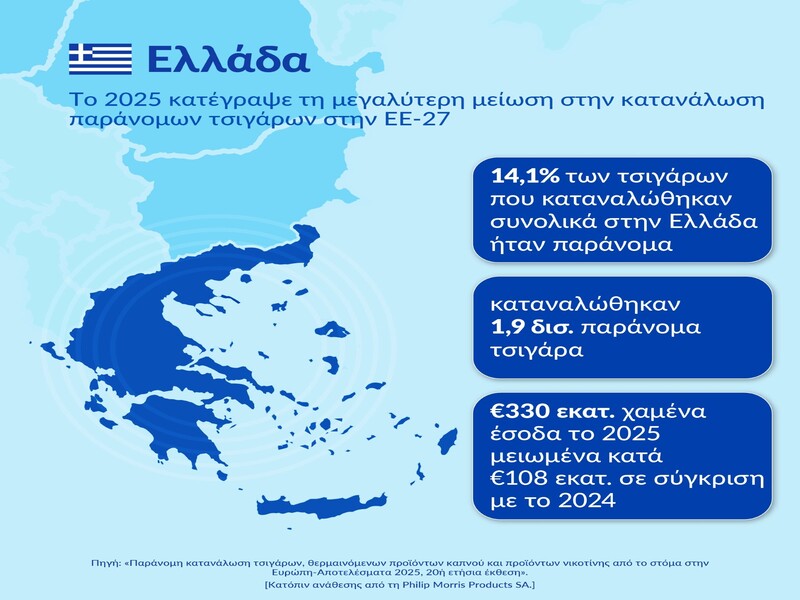
- The illegal cigarette rate is estimated at 14.1% of total cigarette consumption, down 3.4 percentage points compared to 2024.
- In total, 1.9 billion illegal cigarettes were consumed.
- Lost revenue for public coffers is calculated at €330 million for 2025, while in 2024 it amounted to €438 million.
- For the second consecutive year, Greece achieved the largest percentage reduction in illegal cigarette consumption in the EU-27.
Meanwhile, according to the report findings, at the European Union level in 2025:
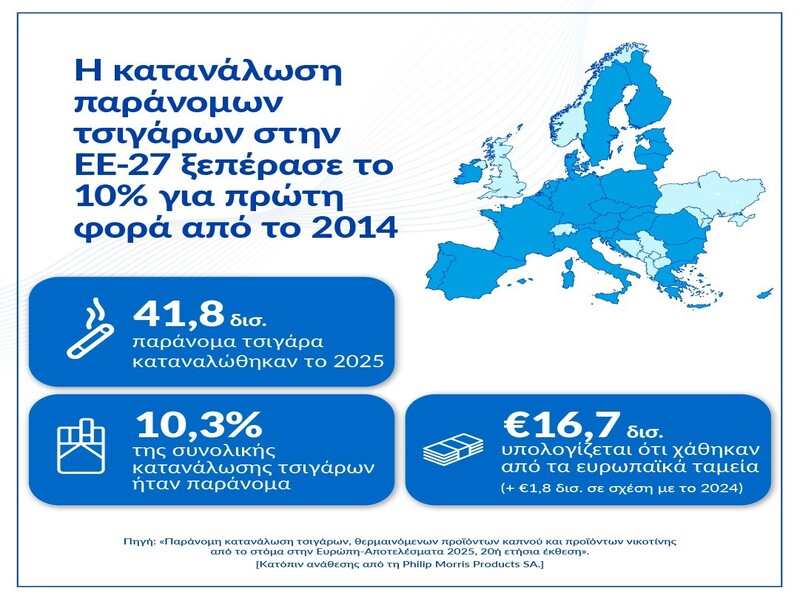
- 41.8 billion illegal cigarettes were consumed, (+7.2% compared to 2024), a percentage corresponding to 10.3% of total consumption while revenue losses for public coffers are calculated at €16.7 billion (+€1.8 billion compared to 2024).
- Negative records in illegal cigarette trade are recorded by:
- France, which maintains first place in illegal cigarette consumption for another year, where the country’s total illegal cigarette consumption reached 41.4%, showing the largest increase compared to all countries relative to 2024.
- Belgium, where illegal cigarette consumption reached almost a quarter (24.8%) of total consumption, with more than 2 billion illegal cigarettes.
- Netherlands, where illegal cigarette consumption exceeded 22%, reaching 2.1 billion illegal cigarettes and returning to levels not seen since 2006.
For the second consecutive year, KPMG’s annual report also evaluated illegal consumption of heated tobacco products in selected European markets. The phenomenon remains limited for now, as illegal trade corresponded to 1.2% of total heated tobacco product consumption, a percentage significantly lower than that of conventional cigarettes.
Statements by Iakovos Kargarotos
Iakovos Kargarotos, Vice President of Papastratos noted: “This year’s KPMG report results confirm that Greece represents the best real example in tackling illegal cigarette smuggling. Our country records the largest reduction in the EU-27, for the 2nd consecutive year, which is not coincidental. It is the result of a stable, realistic, and long-term tax framework, combined with the intensification of law enforcement operations. Tax stability and cooperation between the state and private sector can produce measurable and substantial results.
However, this leaves no room for complacency. Illegal trade remains a constant threat to public revenue, the sustainability of industry and retail, public health, and requires vigilance, cooperation and determination and, above all, not to repeat past mistakes. Particularly at a time when the revision of the European tax directive for tobacco products is being discussed, the report findings remind us that policies taken must be evidence-based, realistic and practically applicable. Horizontal or excessive interventions, which do not take into account the actual market data, lead to the opposite result, strengthening illegal trade and illegal organized networks.”
Statements by Christos Charpantidis
Christos Charpantidis, Group Chief Corporate Affairs Officer of Philip Morris International, referring to the report findings, emphasized: “The data is clear: counterfeit products have become the main driving force of the illegal cigarette market in the EU, supported by criminal supply chains designed to bring fake products to consumers in high-value markets, undermining the European economy and fueling broader illegal activity.
This development also highlights persistent structural weaknesses in regulation, law enforcement and effective judicial follow-up of cases, which create space for the development of illegal trade, at a time when many EU member states are under broader security and economic pressure, from inflation and competitiveness challenges to increasing fiscal needs for security and defense due to geopolitical fragmentation.
Addressing these gaps in Europe requires coordinated action: stronger law enforcement, public-private cooperation and emphasis on regulations that are balanced, data-driven and practically applicable.”