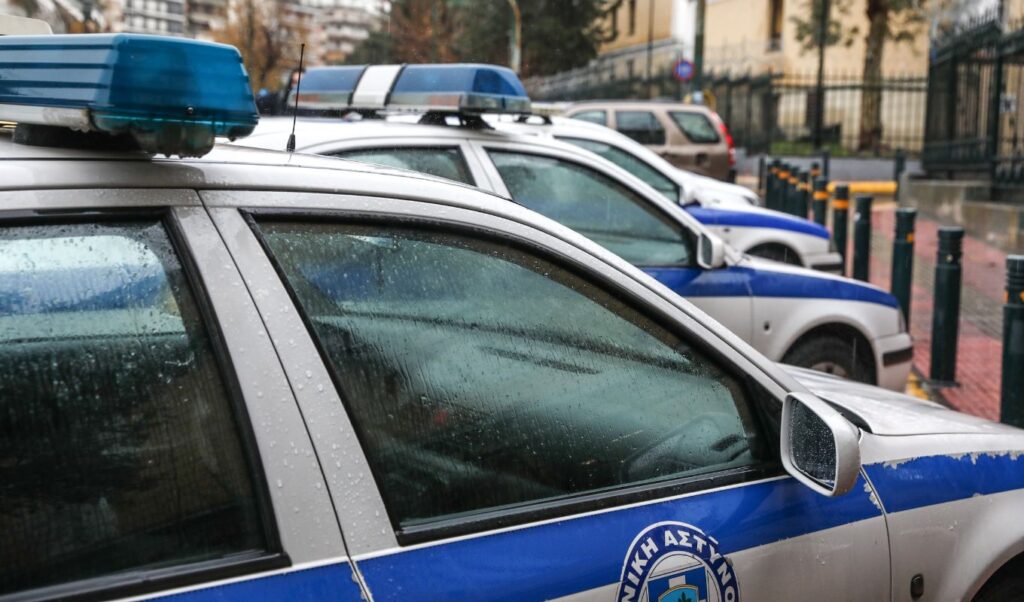
Another major case of illegal agricultural subsidies, the sixth in a series uncovered by investigations from the Directorate for Combating Organized Crime, has exposed how organized criminal networks exploited system loopholes for years, collecting millions of euros from European Union funds. The latest case involves a criminal organization operating mainly in Western Macedonia that, according to Greek police, had developed a fully organized mechanism for submitting false declarations for agricultural land, illegally securing subsidies exceeding €2.46 million.
The police operation, codenamed “HARVEST,” led to the arrest of 14 people in Kozani and Agrinio, including the alleged ringleader and executive coordinator of the organization. The case file includes an additional 23 individuals and four legal entities, while two deceased persons are also mentioned as former members of the group. According to the investigation by the Public Property and European Resources Protection Department of the Economic Crimes Prosecution Sub-Directorate, the network’s activities span at least from 2019 to 2024, with evidence showing that at least one member continued operations into 2025.
The scheme with fields they didn’t own
Police investigations revealed that organization members submitted false Single Payment Applications to the agricultural payment agency, declaring they cultivated or exploited agricultural plots as owned or leased land.
In reality, a large portion of the areas listed in applications didn’t belong to them. Instead, these were lands owned by municipalities, public services, local government organizations, state entities, renewable energy companies, private enterprises, and other institutions.
Meanwhile, network members appeared as supposed lessors of agricultural plots to other members or third-party beneficiaries, despite not owning these specific areas. This created a fake network of leases that gave a legitimate appearance to subsidy applications.
Police also discovered that the illegally declared areas were distributed among numerous individuals with separate applications submitted, both to increase collected amounts and to make fraud detection more difficult for oversight mechanisms.
Relatives, associates and shared application centers
The case file revealed that network members had a common geographical operational core, family and professional relationships among themselves, and used the same or connected Declaration Reception Centers. Submitted applications showed common characteristics, such as identical submission dates, shared centers, the same supposed lessors, and cross-referencing rental relationships.
Two employees of Declaration Reception Centers played significant roles, who according to police not only actively participated in the process of registering and finalizing applications, but also submitted their own false applications for subsidy collection.
The organization reportedly used multiple connected Declaration Reception Centers, choosing different centers each year to hide the common origin of applications and complicate administrative oversight.
The role of companies and cooperatives
The case file includes four legal entities and cooperative schemes that, according to police, functioned as an “umbrella” for the network’s activities. Police say these facilitated recruitment of new individuals, search for beneficiaries for applications, and concealment of the fraud’s true extent, while creating a legitimate business environment around involved persons.
Illegal gains of €2.46 million and tax violations worth €2.7 million
Analysis of payment records showed the criminal organization collected a total of €2,466,179.59 in agricultural subsidies during 2019-2024. Additionally, financial and banking investigations revealed that in at least six cases, subsidies ended up in accounts where the alleged ringleader appeared as co-beneficiary.
Investigators found that part of the money was directly withdrawn by him or transferred to other accounts connected to him, which according to the case file reflects his central role in managing illegal profits. The investigation also uncovered evidence of tax violations worth approximately €2.7 million, with relevant information forwarded to competent tax authorities for further investigation.
What was found in the searches
During searches of homes, vehicles, companies and Declaration Reception Centers, authorities seized:
€16,820 in cash,
five gold sovereigns,
numerous documents related to the case,
bank cards,
mobile phones,
USB storage device,
handwritten notes,
stamps, including one fake stamp with a non-existent tax number,
bank books,
two hunting weapons.
Additionally, one search uncovered:
14 cannabis seedlings,
147.3 grams of cannabis,
jar containing 60.1 grams of raw cannabis,
metal grinder with drug residue.
Regarding the drug case, a relative of one defendant was arrested and a separate case file was created.
This new case file joins other investigated cases surrounding illegal agricultural subsidies and shows, according to police sources, that specific networks had developed common methodology: false area declarations, fictitious leases, exploitation of front persons, use of connected Declaration Reception Centers, and distribution of applications among multiple beneficiaries to fly under the radar of oversight controls.