
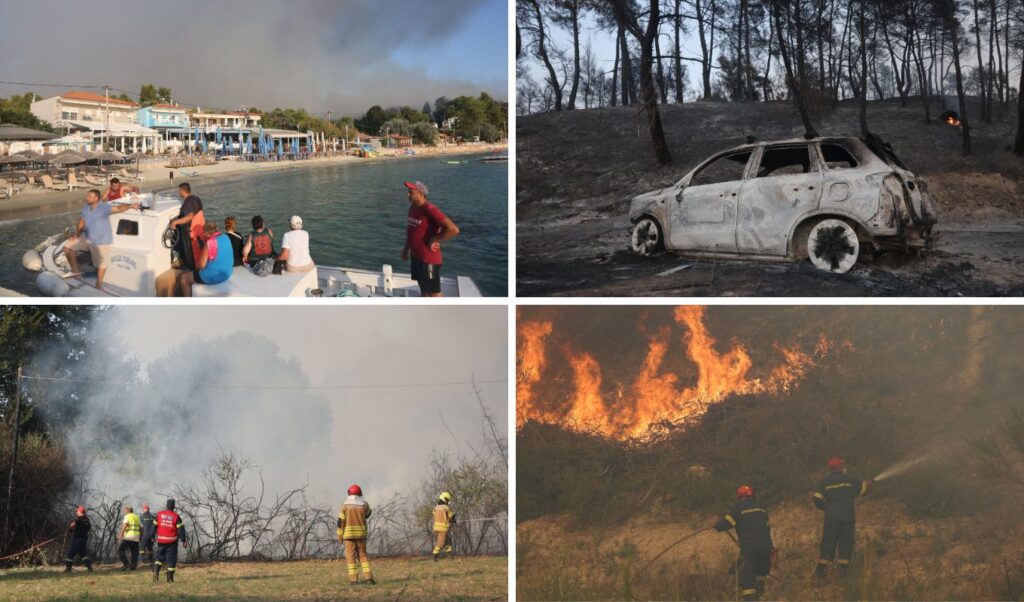
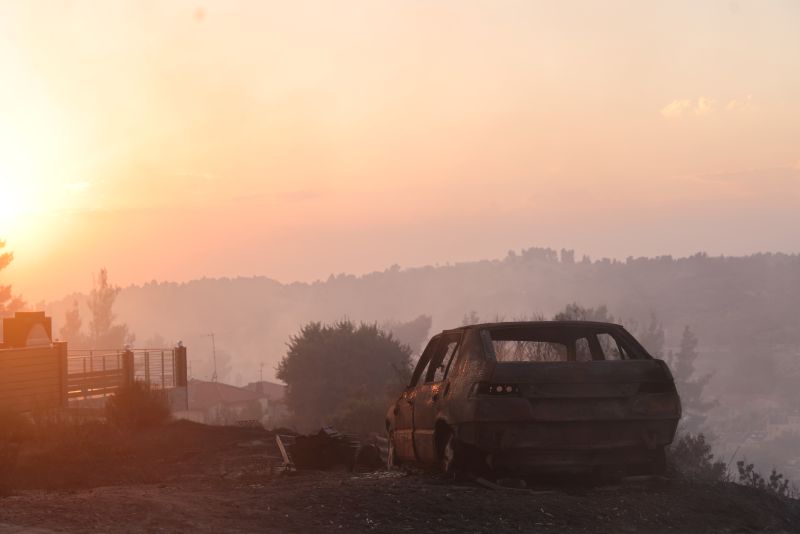
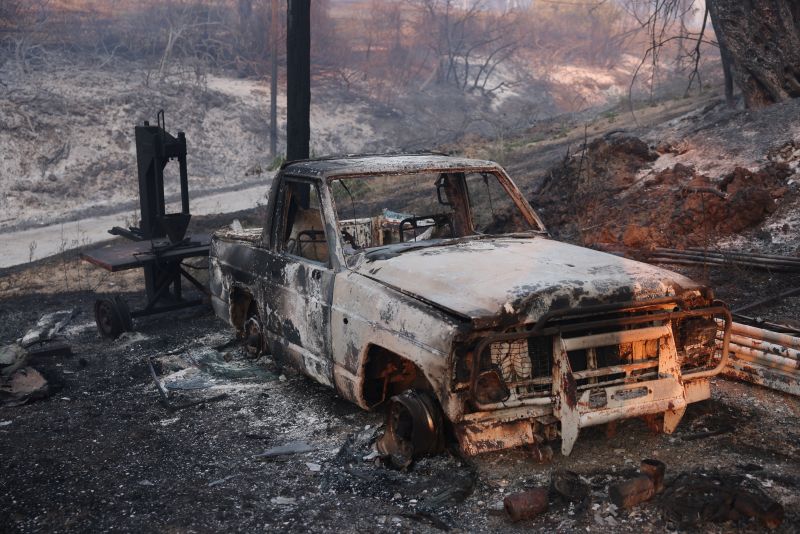
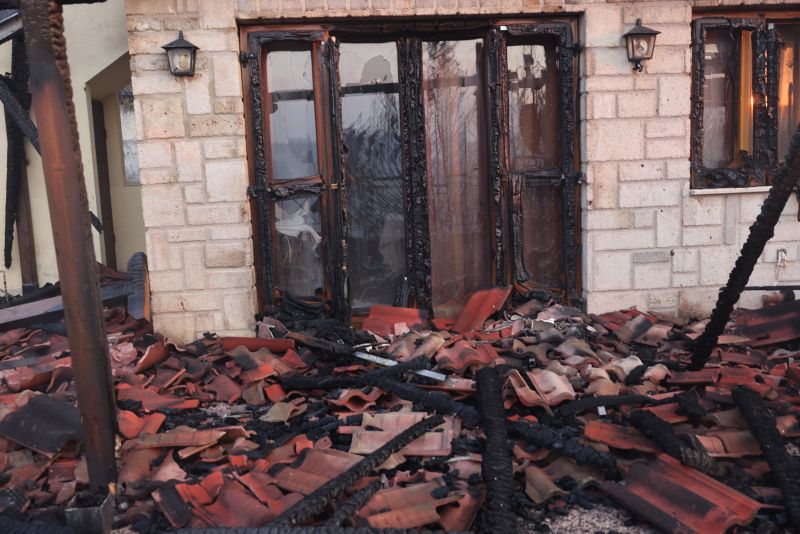
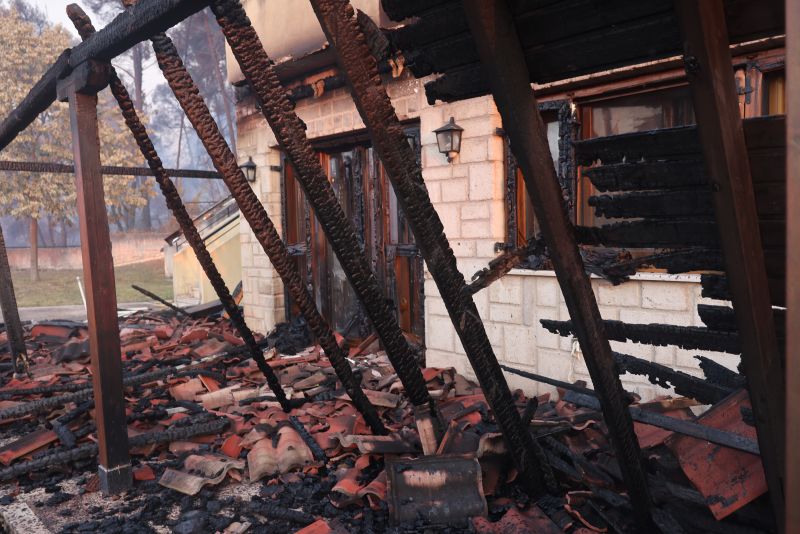
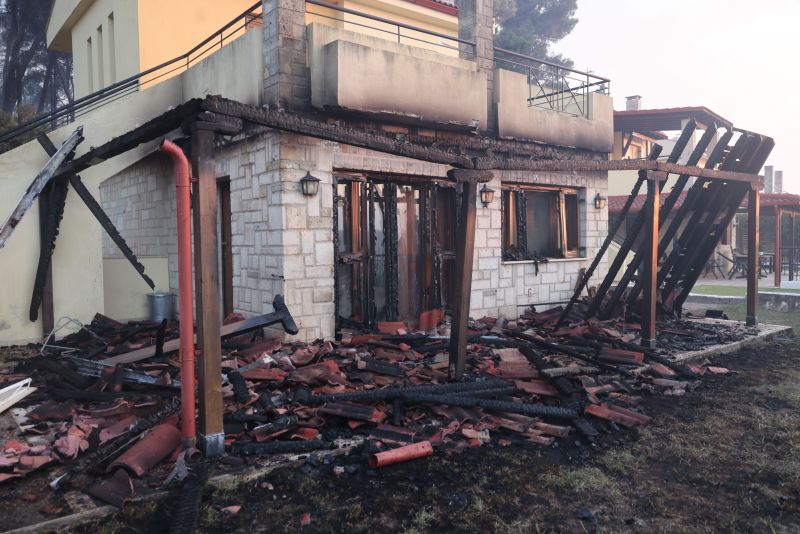
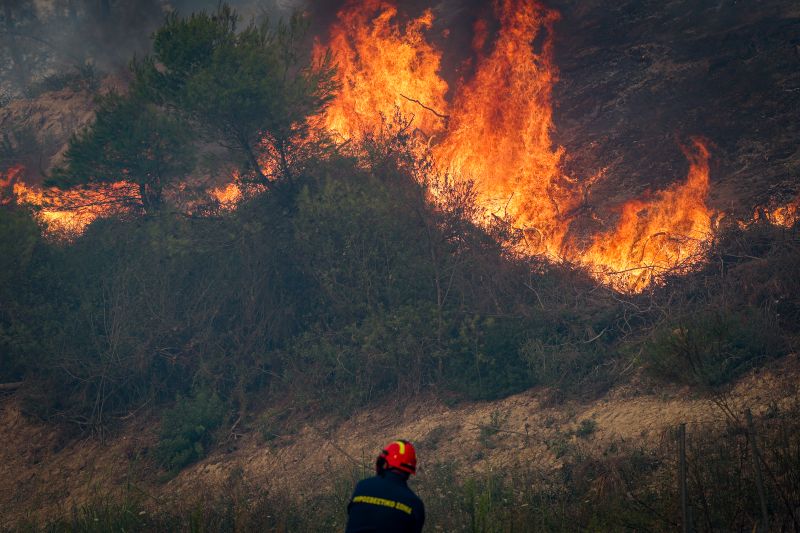
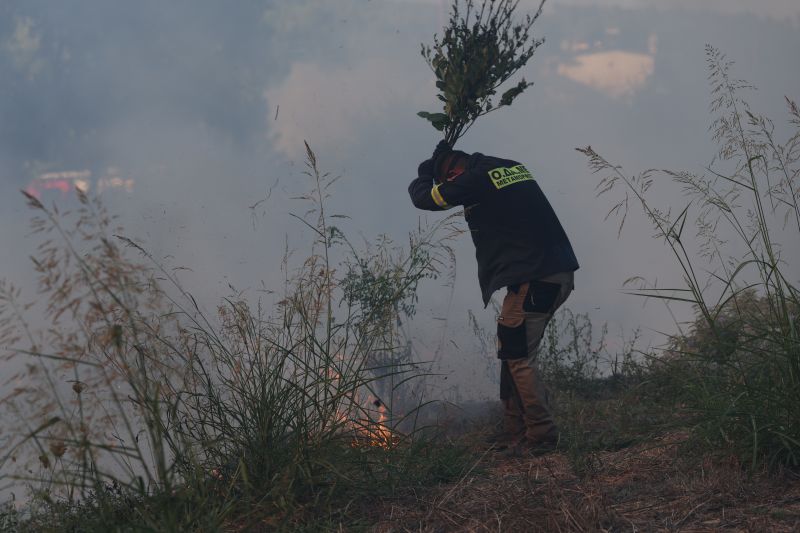
The situation surrounding the large wildfire in Siviri, Chalkidiki, showed significant improvement on Thursday evening, though authorities stressed there was no room for complacency as massive firefighting forces remained deployed on the ground. Up until the evening of Thursday, August 13, one of the largest civilian evacuation operations from the area’s beaches was still underway. The head of Civil Protection for the Central Macedonia Region, Charalampos Stergiades, assessed that by around 8:00 p.m. the situation at the fire front was much better, following hours of intense battle against the flames. The wildfire broke out at approximately 2:00 p.m. in low vegetation in Siviri, and within just a few hours triggered a massive state response, with successive evacuations of settlements and the sea transfer of hundreds of people.
Read also: Chalkidiki wildfire: A devastating blow to the “heart” of green Kassandra in Siviri and Fourka
Chalkidiki wildfire: 155 firefighters at the front, reinforcements arriving from across Greece
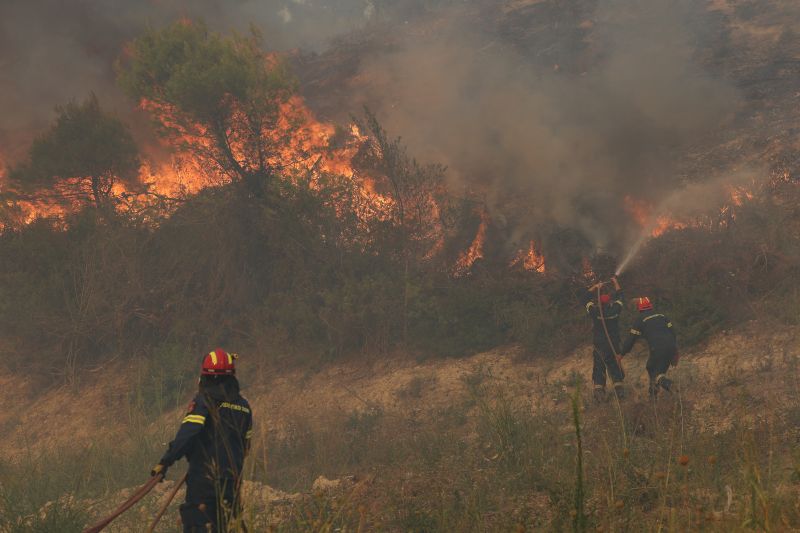
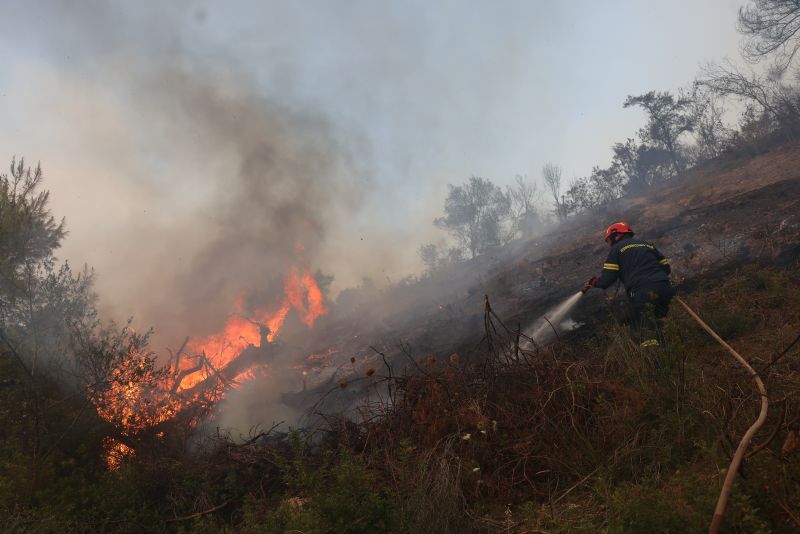
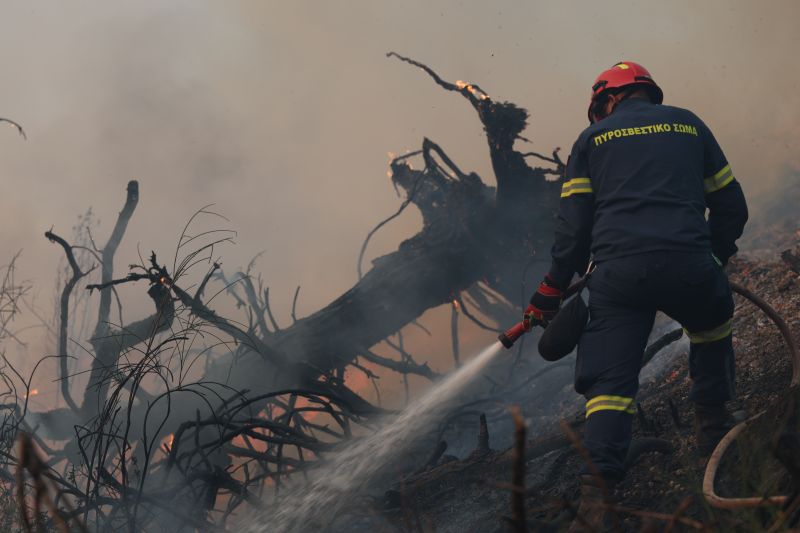
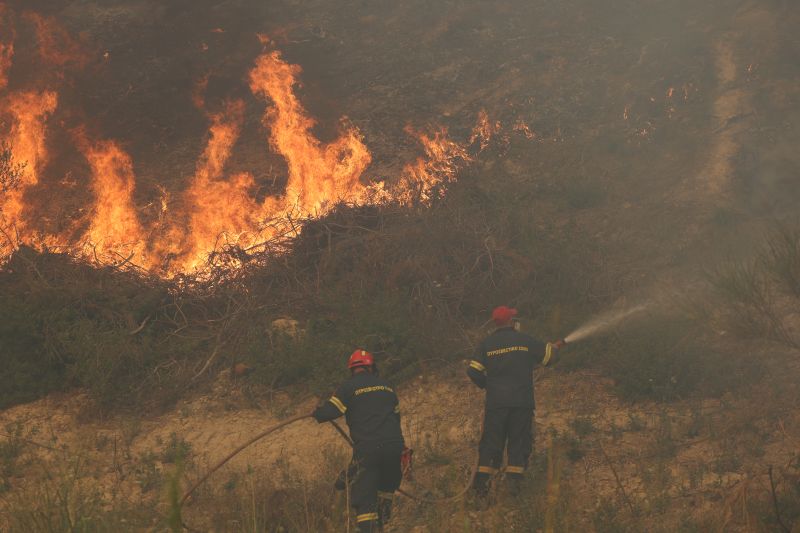
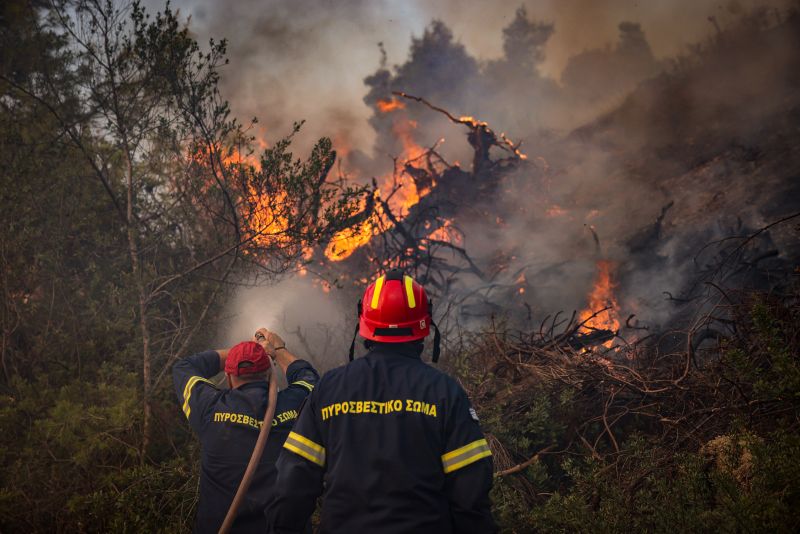
Ground forces have been further reinforced, with 155 firefighters now operating at the fire front, along with four infantry teams from the 2nd EMODE unit and 57 vehicles. Among them are 12 firefighters with three vehicles from Moldova, deployed as part of a European pre-positioning program. Nine aircraft and seven helicopters have been assigned to aerial operations, with one helicopter dedicated to coordinating all airborne assets.
The Deputy Chief of the Fire Service has taken command of firefighting coordination, with the operation being continuously reinforced. Specifically, an additional 40 firefighters from the 1st and 2nd EMODE units are being airlifted from Elefsina aboard a C-27, while further forces are making their way by road to Chalkidiki from Ioannina, Alexandroupolis, Kozani, Volos, and Kavala. Water tankers and heavy machinery from the Municipality of Kassandra, along with two pieces of equipment from DIKAFKA, are also deployed at the scene.
Massive sea evacuation operation: 481 people rescued from Siviri beach
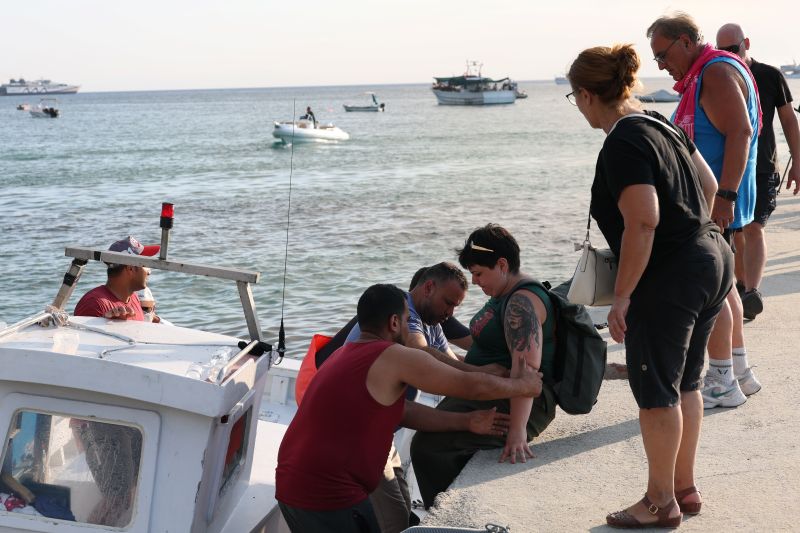
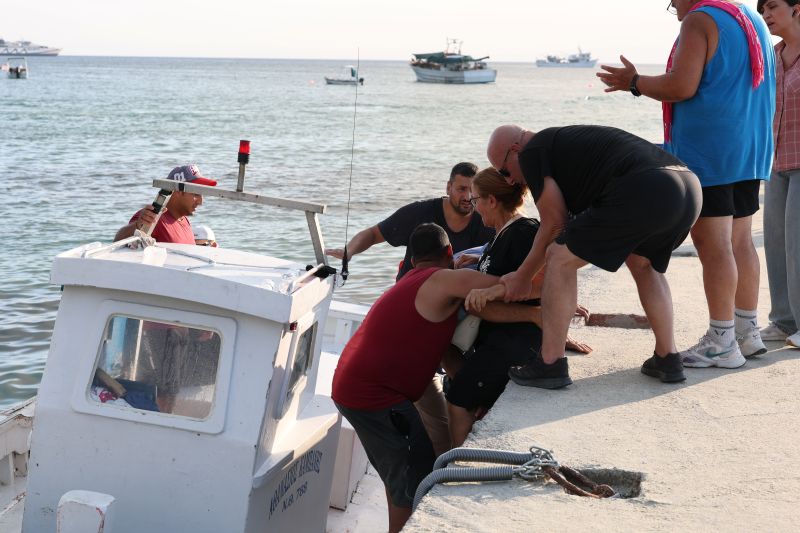
The total number of people evacuated from Siviri beach has now reached 481, as the major Chalkidiki wildfire prompted a large-scale sea rescue operation coordinated by the Coast Guard Operations Centre. The operation involved two Coast Guard vessels, two Fire Service boats, three fishing vessels, private craft, and the high-speed passenger and car ferry “Speedrunner Jet.”
According to the latest official Coast Guard update, of the 481 people evacuated from Siviri beach, 285 were safely transported to Sani Marina. The remaining 196 boarded the “Speedrunner Jet” and were transferred to the port of Thessaloniki. The maritime mobilisation remained in full swing, with three Coast Guard vessels, two Fire Service boats, and private craft still stationed in the area, ready to intervene should further civilian evacuations be necessary.
This operation reflects the full scale of the emergency response triggered by the wildfire, as a sea approach was deemed essential for the safe evacuation of hundreds of residents and holidaymakers from the coastal zone.
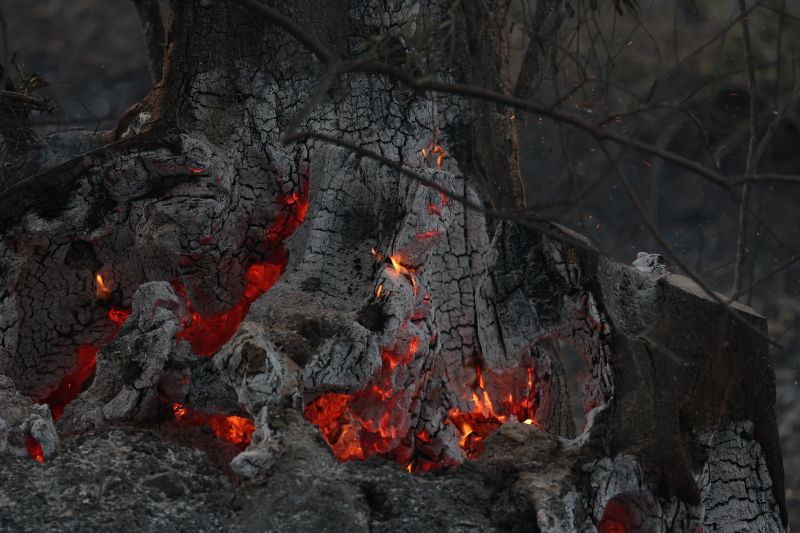
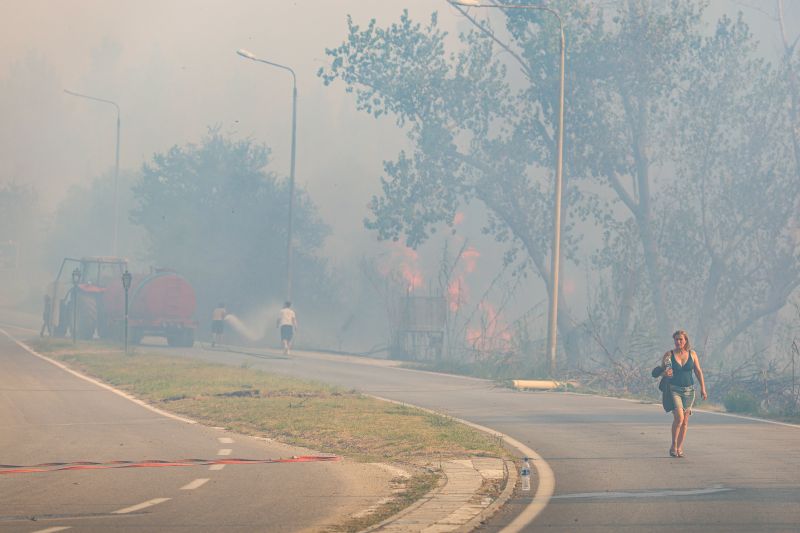
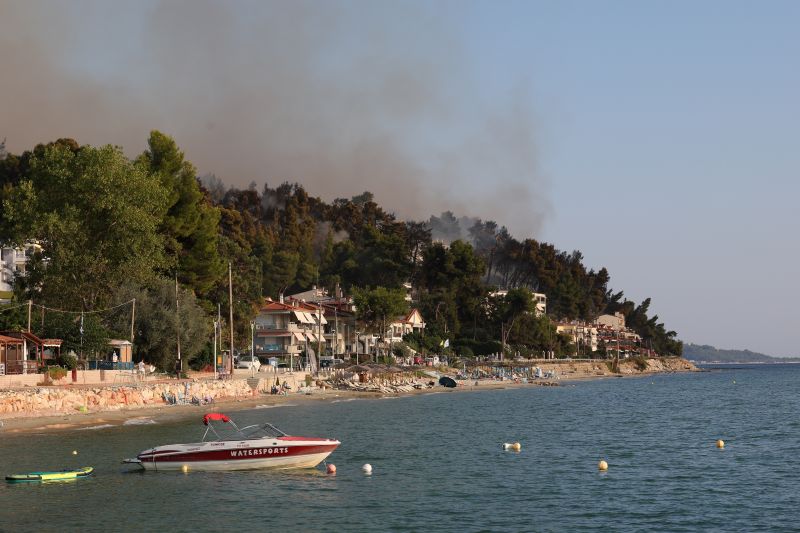
Two firefighters require hospital treatment
The prolonged battle against the flames resulted in two firefighters requiring medical attention. One suffered respiratory problems and was transferred to the Kassandreia Health Centre, while the second sustained a lower limb injury and was taken to Polygyros General Hospital. The National Emergency Medical Service (EKAV) has significantly reinforced its presence in the area, now deploying six ambulances, one Mobile Medical Unit, two light response vehicles, and three rapid-response motorcycles, staffed with paramedics and medical personnel. Polygyros Hospital and nearby health centres were placed on standby from the very outset.
Successive emergency alerts for evacuations
The speed at which the fire developed prompted a series of emergency alerts via the 112 system. Residents and visitors in the wider area were initially instructed to remain on standby, followed shortly by evacuation orders. At 3:09 p.m., those in Siviri were directed to move towards Mola Kalyva, while at 3:48 p.m. two further alerts were issued: the first ordering evacuation from Fourka towards Skioni, and the second directing people from Siviri towards Kassandreia. Police forces were deployed to manage the necessary traffic control measures.
Despite the clear improvement in the situation by around 8:00 p.m., the operation continued with all forces remaining on high alert. The area is classified under a very high fire risk — category 4 — with the focus now shifting to achieving full containment of the fire front and protecting the surrounding settlements.
EKAV’s emergency medical response
The National Emergency Medical Service (EKAV) issued two updates — first at 5:00 p.m. and again at 6:00 p.m. — detailing its own mobilisation in relation to the Siviri Chalkidiki wildfire. The 6:00 p.m. update stated: “Following our previous update (5:00 p.m.), in the context of providing medical coverage for firefighting and evacuation operations due to the ongoing wildfire in the Siviri area of Chalkidiki, an additional firefighter suffering from respiratory problems was collected by an EKAV ambulance and transferred to the Kassandreia Health Centre. It is noted that earlier, a firefighter with a lower limb injury had been transported to Polygyros General Hospital. EKAV forces have been reinforced and are now operating 6 ambulances, 1 Mobile Medical Unit, 2 light response vehicles, and 3 rapid-response motorcycles, staffed with paramedics and medical personnel. EKAV remains on heightened operational readiness to further reinforce its units if required, in coordination with all agencies involved.” From the very beginning, Polygyros Hospital and neighbouring health centres were placed on standby by order of the EKAV Health Operations Centre.
How the Chalkidiki wildfire started
According to a report broadcast by Mega TV, it all began approximately 500 metres from Kassandreia, on the road towards Siviri, in a forested area where residential properties are located. The channel also published photographs from “ground zero.” The Arson Crimes Investigation Directorate was on the scene from the very beginning, conducting its investigation. According to information reported by the television station, initial findings suggest that a tree was brought down by the wind onto a power line, causing sparks. The fire then spread into the pine forest and quickly got out of control, creating a large and rapidly advancing fire front.