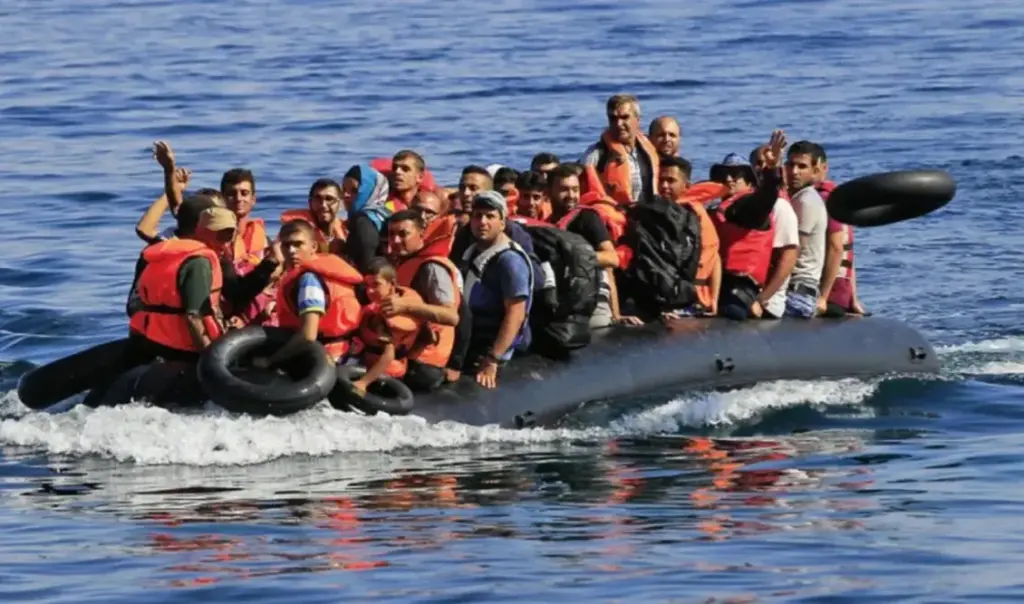
The scenario has changed significantly. Men and women of the Coast Guard are on 24-hour alert, with their gaze turned to the country’s southern maritime borders. Migration flows remain at high levels in this specific sector and thousands of stories of displaced people continue to be written daily over the last two months. Faced with these developments, the Ministry of Shipping and Island Policy as well as the Coast Guard have turned their attention to the problem and “Sunday Afternoon” brings to light the complete plan that will drastically reduce the Tobruk – Heraklion Good Harbors routes.
Migration: blocking departures from Tobruk to Crete and Gavdos
A clear plan to limit migration flows at the southern maritime borders appears to be implemented by both the ministry and the Coast Guard, attempting to “block” departures from Libyan coasts to Crete. Despite the fact that pressure on the southern front remains real, data shows that flows are kept at controlled levels. In April, 20 incidents were recorded with 824 migrants, while in May, up to the 26th of the month, 32 incidents were noted with 1,421 people. The great weight has now fallen on prevention and surveillance. The Coast Guard has significantly strengthened its presence at sea, while the area is covered on a 24-hour basis by national and European assets. Three aircraft and one Frontex drone are already operating, while another aircraft is expected to be added in June. At the same time, Athens is trying to “hit” the problem close to the starting point of the flows. A Coast Guard team traveled to Benghazi for contacts with the Libyan Coast Guard, aiming to strengthen cooperation and better surveillance of Libyan coasts.
Permanent coast guard liaison officer in Benghazi on the table
On the table is also the permanent presence of a Greek liaison officer in Benghazi for immediate information exchange, as well as training of 35 Libyan Coast Guard personnel by the Greek Coast Guard. At the same time, the creation of a Libyan Operations Center is proceeding, with Greece’s assistance, so that there is faster coordination even before boats start heading to Crete. According to the plan, Greece will also provide three vessels to the Libyan Coast Guard for search and rescue operations within Libya’s maritime area of responsibility. Domestically, the competent services appear better organized compared to previous years. Migration arrivals in Crete are now handled more quickly, with shorter stays for people on the island and immediate transfer to mainland facilities, through coordination between the Ministries of Migration, Shipping and the Coast Guard.
On the agenda is the permanent presence of a liaison officer in the African country for information exchange and training of 35 Coast Guard personnel by Greek port authorities, while three vessels will be provided
Minor smugglers under authorities’ microscope – arrests of young Sudanese
An extremely impressive but truly dark point of the problem faced by Crete’s coast guard officials is the fact that lately they are also confronted with minor migrant smugglers. In May alone, more than ten young Sudanese have been arrested, as, according to migrant testimonies, they are the ones who undertake to direct boats from the beaches of Tobruk in Libya either to Kalos Limenes or to Agia Galini or to Ierapetra or to Gavdos. The young people are from 15 to 25 years old, a clear indication that those who control this dark trade do not account for their own lives or those of the migrants.
How enhanced coast guard presence changed dynamics in the Aegean
The picture in the Eastern Aegean shows that while pressure on the country’s eastern borders remains active, the situation appears noticeably improved compared to previous years. Data up to May 26, 2026 records significant de-escalation in migration flows, with the total reduction in sea arrivals exceeding 40% compared to the corresponding period of 2025. The biggest drop is found in the Turkey – Eastern Aegean route. Illegal arrivals fell from 8,082 in 2025 to 3,029 in 2026, showing a decrease of 63%. At the same time, incidents were limited from 330 to just 118.
According to government sources, this picture is attributed to the enhanced presence of the Coast Guard, continuous surveillance of sea passages and faster information exchange with competent authorities. Operational activity in the Eastern Aegean appears to have changed the data, as continuous patrols, more immediate response to incidents and increased surveillance operate as deterrents to smugglers’ routes. Despite the improvement, authorities clarify that pressure has not disappeared and that migration remains a permanent operational challenge for the country, particularly at the Aegean’s maritime borders. The general picture, however, is that the eastern front appears more controlled today, with Greek authorities estimating that strengthened surveillance and continuous presence at sea have contributed decisively to reducing flows.
Published in Parapolitika