At a time when the Eastern Mediterranean is once again becoming a field of intense geopolitical competition, Athens is attempting to “lock in” strategic foundations that far exceed the narrow limits of Greek-Turkish confrontation. While Ankara continues to invest in tension, the Greek side appears to be methodically focusing on creating fait accomplis at energy, diplomatic and investment levels, building a network of international interests that can hardly be ignored anymore.
Energy: Chevron and HELLENiQ ENERGY strengthen cooperation in the Southern Ionian
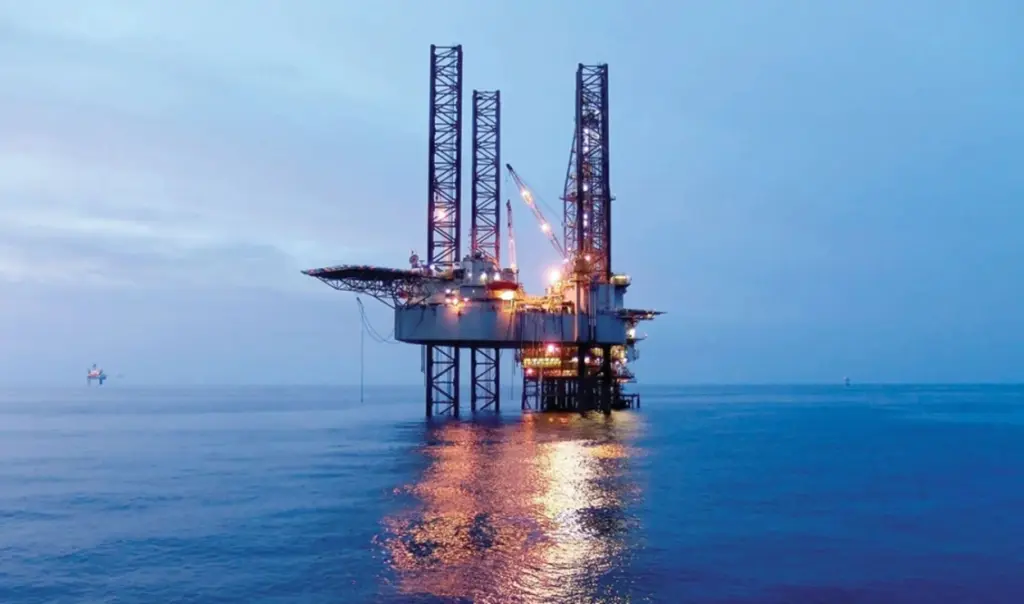
Recently, activity around Greek maritime blocks has intensified. Following ExxonMobil’s dynamic presence and the strong American footprint south and west of Crete, new developments are emerging from the deepening cooperation between Chevron and HELLENiQ ENERGY in Ionian Sea areas.
Energy market sources with knowledge of the deliberations note that American giants’ persistence in investing in Greek maritime zones is far from coincidental. Instead, it reflects the assessment that Greece now has strong potential to develop into a crucial energy hub. Companies Chevron and HELLENiQ ENERGY have submitted an official request for Chevron’s participation in the concession of Area 10 (Block 10), located off the Kyparissiakos Gulf in the Southern Ionian Sea maritime area. Simultaneously, the companies submitted a request to the Hellenic Hydrocarbons and Energy Resources Management Company (HEREMA) for transferring the operator role from HELLENiQ ENERGY to Chevron for the same concession. The agreement provides for Chevron’s acquisition of a 70% stake in the concession, with HELLENiQ ENERGY retaining the remaining 30%. Additionally, Chevron assumes the consortium’s operator role.
Country’s energy projects advance at rapid pace
Meanwhile, HEREMA is considering a request for an 18-month extension of the second exploration phase, allowing the new consortium to comprehensively evaluate data from 2D and 3D seismic surveys, as well as information from neighboring concession areas. Exclusive information from “Kyriakátiki Apogevmatinί” indicates that all the country’s energy projects are advancing at rapid pace. By the end of 2026, seismic surveys south of Crete will begin by Chevron and HELLENiQ ENERGY, while ExxonMobil and Energean’s drilling in the Northwestern Ionian will take place in February 2027. “Exploring and utilizing our underwater wealth is a national matter requiring institutional credibility. With planning, consistency and national confidence, Greece continuously strengthens its position on the Eastern Mediterranean energy map,” declared Energy Minister Stavros Papastavrou.
“Blue Homeland”: Ankara revives tension rhetoric in the Aegean
At the same time, across the Aegean shores, Ankara continues moving on a provocative trajectory. The systematic revival of “blue homeland” theory and its pending legislative ratification, public interventions by Turkish officials regarding demilitarization of Greek islands, and attempts to establish revisionist concepts within Turkey cause concern in Athens. Government sources carefully monitor discussions opening up, even concerning teaching “blue homeland” in schools as an element of national strategy. “The borders of the ‘blue homeland’ should be taught to everyone as normal borders of the homeland,” characteristically proposed Erhan Afyoncu, rector of Turkey’s National Defense University. However, the most ominous statement bore the signature of neighboring country’s Defense Minister Yasar Guler. “Turkish Armed Forces possess the strength and determination to neutralize any threat directed against us,” said Mr. Guler, referring to Greek islands’ armament, which the neighbor considers a new cause for war. “Activities aimed at arming islands with demilitarized status are incompatible with good neighborly relations,” he added. To Ankara’s new, informal casus belli, Athens responded resoundingly. Sources from the Greek Defense Ministry emphasized that our country does not accept revisionist and arbitrary approaches, warning that Greek Armed Forces remain in constant readiness. Nikos Dendias sounded an alarm bell, saying: “There is a threat. And if we sometimes forget it, those across have the kindness to remind us. They tell us clearly. They don’t even imply it. The threat is transmitted.”
Athens’ response to Turkish provocations and revisionism
Diplomatic circles in Athens meaningfully note that Turkish leadership permanently maintains a “live” tension climate, even during periods when there is officially talk of attempts to normalize relations. “Ankara’s rhetoric and tactics have not changed at their core,” characteristically commented an experienced diplomat, noting that Turkey’s strategy continues to be based on creating pressure and disputing sovereign rights. From the informal Foreign Ministers’ Meeting (Gymnich) held in Cyprus, Georgios Gerapetritis conveyed that “we should all articulate a unified, strong voice against any revisionism. Revisionism in an extremely fragile geopolitical environment means much greater concern.” In this environment, the Greek government attempts to balance between maintaining open communication channels to avoid “hot episodes” and the need to strengthen the country’s deterrent power. Continuous contacts with the US, France and regional allies, as well as acceleration of armament programs, are part of this strategy. The Maximos message is that Greece will not slide into tension logic, but will not accept “graying” policies in the Aegean and Eastern Mediterranean either.
Behind the scenes, however, no one ignores that the next two years are considered absolutely critical. If energy explorations yield substantial results, the country will face a completely new reality, both economically and geostrategically. Athens knows that statements or diplomatic assurances alone are not enough, but creating power correlations is necessary. In this equation, energy is developing into one of the country’s most powerful geopolitical cards.
Published in Kyriakátiki Apogevmatinί