The European natural gas market is once again experiencing a period of intense volatility, while Romania finds itself at a critical juncture for its energy security. Recent price increases at the Title Transfer Facility (TTF) hub in Amsterdam have demonstrated how vulnerable Eastern European economies remain to external shocks. Within just a few days, TTF prices increased by more than 70%, and in a single trading session on March 2nd, natural gas prices surged by almost 40%, reaching approximately €44-46/MWh. For the European market, the TTF serves as the absolute benchmark: every significant change there quickly spreads across the entire continent.
For Romania, the impact is immediate. Despite having significant domestic production, its economy is not isolated from the European market. During peak consumption periods – particularly in winter – necessary imports are made precisely at these high prices dictated by the Dutch hub. “This surge puts enormous pressure on energy suppliers and, inevitably, on the economy. The Romanian market, while benefiting from valuable domestic production, is not fully shielded from these external shocks,” according to Frames analysis.
Market liberalization: protection for citizens, pressure for the economy
The situation becomes even more sensitive as the natural gas market enters a new stage of liberalization for the business environment from April 1st. Today, Romania essentially operates with two parallel markets. For households, the state maintains protection mechanisms and price caps to avoid a social crisis. For businesses, however, the reality is much harsher: they are directly exposed to stock market fluctuations. Factories, food producers, or energy-intensive sector companies buy natural gas at prices directly linked to European benchmarks. When these rise sharply, production costs skyrocket.
“The economic impact is inevitable: increases are passed on to final product prices, fueling inflation. Meanwhile, the state cannot support compensation schemes indefinitely, especially in a year where reducing the fiscal deficit is a key objective,” states Adrian Negrescu, Frames director.
Why the natural gas market has become economic roulette “overnight”
For Romanian industry, spot market volatility has become almost impossible to manage. Chemical industries, building materials producers, or the metallurgical industry use natural gas not only as an energy source but also as a basic raw material.
Under these conditions, buying natural gas on the daily market is equivalent to economic roulette. A factory cannot plan its budget, investments, or product prices if it doesn’t know how much energy will cost in a few months. For this reason, energy sector experts believe the realistic solution is transitioning to medium and long-term contracts, lasting from three to ten years, which offer predictability. “These contracts typically use hybrid pricing types: part of the quantities is secured at a fixed price, negotiated directly with producers, while the remainder may be linked to local indices, such as prices on the Romanian Commodity Exchange,” Frames experts note.
Vertical Corridor: the infrastructure that could transform the regional market
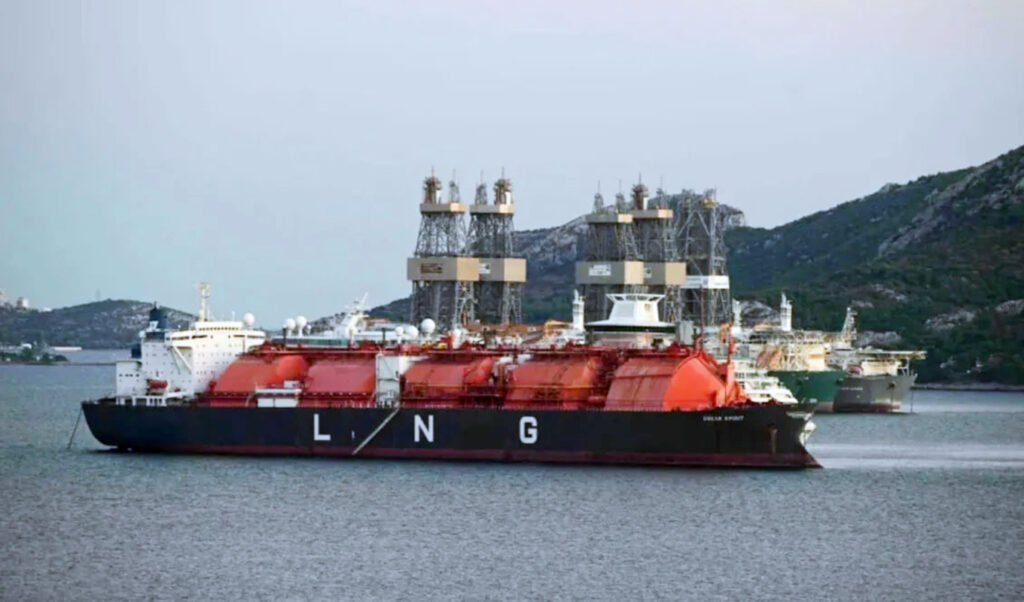
To make these stable contracts feasible, Romania needs real access to diversified natural gas sources. In this context, the Vertical Corridor Natural Gas project becomes crucial. According to Frames analysis, the Vertical Corridor is a natural gas transmission network connecting liquefied natural gas (LNG) terminals in Greece with markets in Bulgaria, Romania, and Hungary. Through this infrastructure, natural gas imported in liquefied form from the United States, Qatar, or the Caspian Sea region could reach Southeast Europe directly, without dependence on traditional routes. Liquefied natural gas is methane that has been cooled, a process that converts it into liquid with much smaller volume.
In this form, it can be transported over very long distances by specialized ships and then re-gasified at port terminals and fed into pipeline networks. For Romania, the benefit would be twofold: access to the global natural gas market and greater competition among suppliers, which would stabilize prices. The Vertical Corridor initiative is supported by the natural gas transmission operators of Greece, Bulgaria, and Romania, as well as the energy authorities of these states. The project has been discussed for several years at European Union level and has been incorporated into the energy source diversification strategy for Southeast Europe. “Romania has a strategic position in this system. Through its extensive pipeline network and large underground storage capabilities, the country can evolve into a regional transit and distribution hub, transporting natural gas further to Central and Southeast Europe,” states Adrian Negrescu, Frames director.
Romania’s strategic role in the new energy map
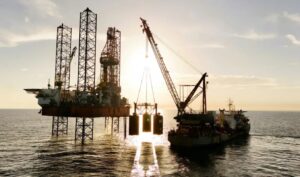
Romania’s geographical position and existing infrastructure offer the country the opportunity to transform into a regional natural gas distribution hub. The transmission network, large storage capabilities, and domestic production create the conditions for natural gas imported through the Vertical Corridor to be redistributed throughout the region. Additionally, development of Black Sea deposits could transform Romania into a significant energy player in Central and Southeast Europe. The combination of Black Sea natural gas with liquefied natural gas imported through Greece could create a much more stable and competitive regional market, reducing dependence on limited sources and European stock exchange volatility. Energy security can no longer depend on stock market volatility. The dramatic price increases in Amsterdam clearly show that the European natural gas market remains extremely sensitive to geopolitical events and supply disruptions.
“For Romania, the lesson is simple: dependence on daily market fluctuations cannot constitute an energy strategy,” Negrescu emphasizes. Securing natural gas quantities through long-term contracts, source diversification, and connection to global flows through the Vertical Corridor represent, at this moment, the most realistic solution for market stabilization and ensuring fair natural gas prices for the economy. Without this infrastructure, Romania risks remaining hostage to an unstable regional market, where every international crisis immediately transforms into a new domestic economic shock.