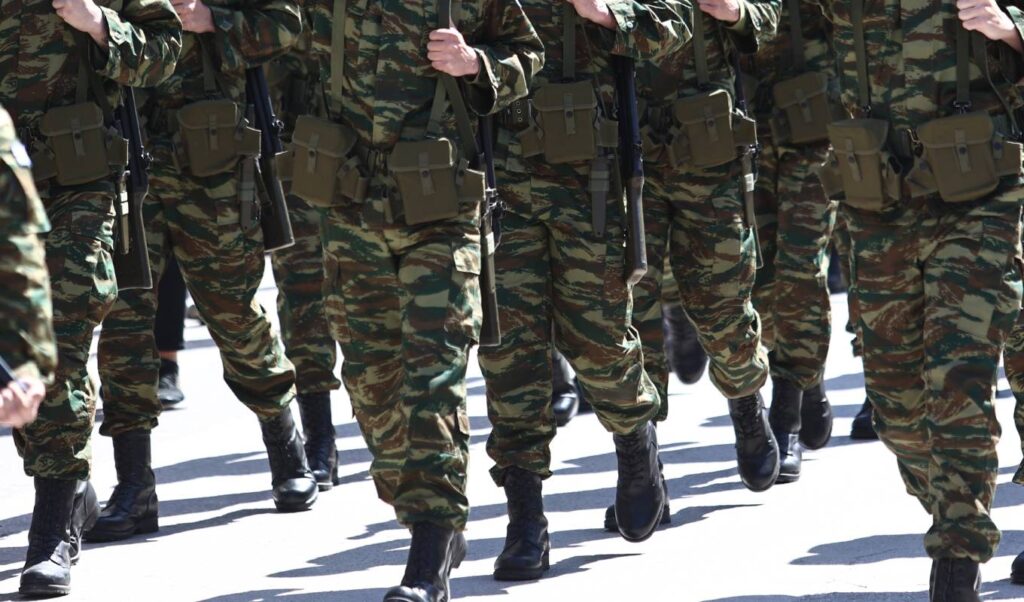
The geopolitical developments in the Eastern Mediterranean and the escalating tensions in the Middle East have brought back to the forefront questions that concern Greek citizens regarding military mobilization. Who is exempt in case of mobilization, what are the age criteria for calling up reservists, and how does the National Defense mobilization mechanism work? Despite appearing as a remote possibility for the average citizen, military mobilization has a clear legislative framework with predetermined procedures and specific application criteria.
Read more: When was the most recent mobilization declared in Greece and why
What military mobilization means and how it works
After completing military service, soldiers are transferred to the reserves while maintaining their Special Service Record. This document determines the military unit they will join in case of mobilization. Military mobilization is an organized process of transitioning from peacetime conditions to heightened operational readiness with three main objectives: strengthening existing military formations, creating new units, and mobilizing human resources and material assets. The State can proceed with partial or full mobilization when there is a serious threat, crisis, or military conflict.
Who is exempt from military mobilization: Age limits
The graduated process of calling up reservists follows specific age criteria. In the first phase, men up to 41 years old are mobilized, while in the second phase, men from 41 to 45 years old are called. Citizen categories over 45 years old are exempt from mobilization, unless circumstances require a different decision from political and military leadership. The color of the Special Service Record plays an important role: the green SSR covers critical specialties with immediate call-up priority, while the white SSR corresponds to secondary specialties. In case of generalized threat or war, age and medical criteria can be expanded according to military regulations, calling all those deemed capable of bearing arms.
Partial and general mobilization: The differences
Under conditions of heightened tension, partial mobilization is activated, known as “orange alert,” where specific categories of reservists are called. Notification is carried out through Individual Call-up Forms delivered at any time by police or military authorities. Time limits for reporting range from 2 to 4 hours in border zones, while in urban centers the deadline depends on the unit’s distance. Transportation is covered by the state through special tickets. General mobilization or “red alert” is activated in case of war, where citizen categories called up are significantly expanded.
Notification procedures and required documents
Calling up reservists is carried out through multiple methods: announcements in media with special codes or color indicators, delivery of Individual Call-up Forms by competent authorities, and public announcements in central locations or local media. The process is strictly organized and requires immediate compliance. Each reservist must bring their police identity card, Special Service Record, Individual Call-up Form if delivered, Individual Training Booklet, driver’s license if available, as well as a backpack with basic personal items and dry food for two days.
Historical mobilizations in Greece
Military mobilization is not a theoretical scenario but has been implemented repeatedly in modern Greek history. In 1897, the first organized mobilization took place amid Greek-Turkish tensions. In 1912, Eleftherios Venizelos signed the mobilization for the First Balkan War. In 1940, after the Italian ultimatum, the mobilization plan was fully implemented with approximately 300,000 men mobilized. In 1974, during the Turkish invasion of Cyprus, about 200,000 men were mobilized. In 1987, during the Aegean crisis with Turkish research vessels, partial mobilization was ordered. The last partial mobilization took place in 1996 due to the Imia crisis.
Why the issue resurfaces today
Geopolitical instability, Middle East developments, and continuous reshuffling in the Eastern Mediterranean create legitimate concern among citizens. However, activating mobilization is a political decision connected to specific prerequisites and is not taken lightly. Understanding procedures and obligations should not fuel panic but enhance the sense of preparedness. Citizen categories exempt from military mobilization are clearly defined by the legal framework, with age limits being the main criterion. Military mobilization remains a defensive tool activated exclusively when circumstances absolutely require it.