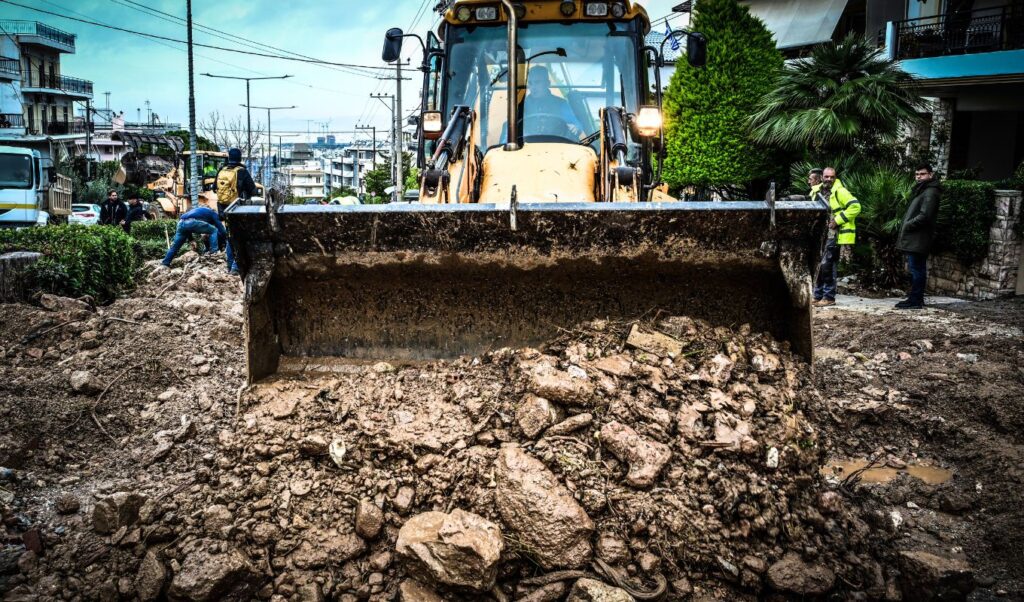
The mayor of Glyfada, Georgios Papanikolaou, described unprecedented conditions in the city’s history and massive amounts of debris that came down from the mountains. Yesterday’s severe weather caused torrents and streams to overflow, flooded streets and left behind extensive damage, while a woman in Upper Glyfada lost her life when she was swept away by the rushing waters and trapped under a car.
Read: Tsatrafyllias on severe weather: His explanation for the floods – ‘Climate or criminal crisis?’
According to meteorologist Nikoleta Ziakopoulou, Athens “experienced a storm of historic proportions,” which approached “70-year records.” As she emphasized, the amounts of water that fell were exceptionally large for a densely built urban area. “The rainfall levels were incomprehensible and practically impossible for a city like Athens to manage, especially in areas with chronic problems, such as filled-in streams,” she noted characteristically.
Severe weather: Areas with the highest water volumes recorded
The meteorologist then presented indicative data for the areas around Mount Hymettus, where serious problems were recorded, showing the water quantities per acre:
- Papagou: 174 tons of water per acre
- Vyronas: 145 tons of water per acre
- Ilioupoli: 142 tons of water per acre
As she explained, these are rainfall levels that correspond to almost half a year and were recorded in just one day. “These are quantities that no city can easily manage. How can it withstand this?” she wondered.
Nikoleta Ziakopoulou added that the continuous rainfall from the morning hours had already saturated the soil in many areas of Athens, a fact that worsened the situation before the severe storms and torrential phenomena followed.
For today, according to her, local showers are expected in Athens, mainly during the afternoon and evening hours, without however ruling out temporary intensification of the phenomena.