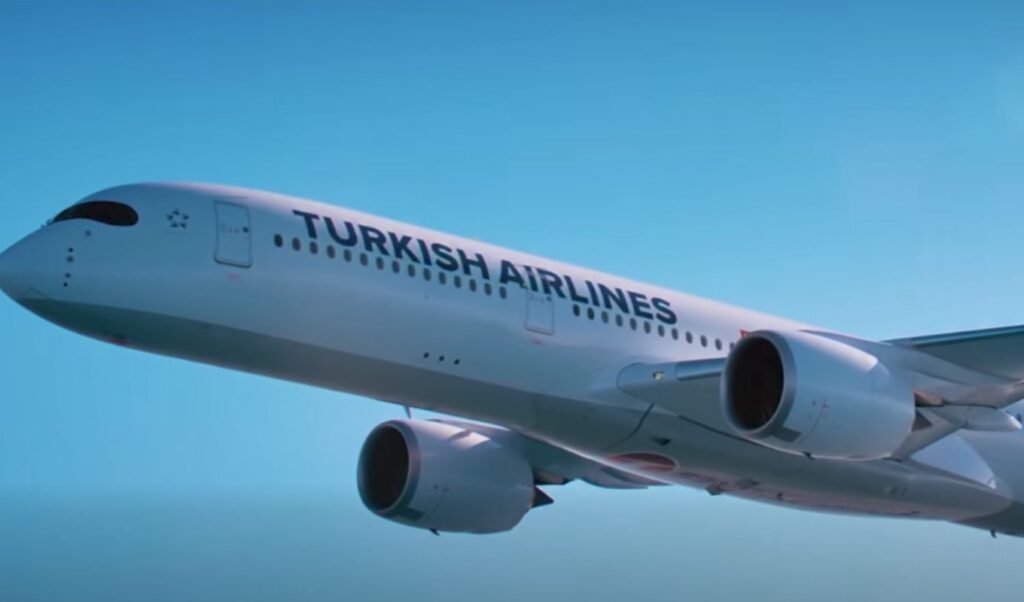
Turkish Airlines has signed an order with Boeing for 150 aircraft worth up to $20 billion in New York, in the presence of Recep Tayyip Erdoğan. This ranks among the largest single-aisle aircraft orders the Turkish carrier has ever placed with the American manufacturer. Specifically, Turkish Airlines reached an agreement with Boeing to acquire up to 150 Boeing 737 MAX aircraft.
Turkish Airlines buys 150 Boeing 737 MAX jets
The deal, negotiations for which began in 2025, was finalized in New York in the presence of Turkish President Recep Tayyip Erdoğan. Turkish Airlines is placing a firm order for 100 Boeing 737-8 aircraft, while also securing options to acquire an additional 50 jets from the 737 MAX family.
The larger Boeing 737-10 also on the table
As part of the agreement, the airline also gains the option to select the Boeing 737-10, the largest variant in the 737 MAX family.
This will allow Turkish Airlines to adjust its fleet capacity with greater flexibility, depending on demand and operational requirements. According to the company, the new aircraft are intended primarily to strengthen short- and medium-haul domestic and international routes, where high demand has been recorded. Turkish Airlines also highlighted the advantages of the Boeing 737-8 in terms of range and passenger capacity.
Furthermore, according to the announcement, the addition of the new aircraft to the fleet is expected to deliver a 20% reduction in both fuel consumption and emissions.
Turkish Airlines & AJet: More than 200 Boeing aircraft in today’s fleet
Turkish Airlines and AJet currently operate a combined total of more than 200 Boeing aircraft. These include the 737 MAX, 737 Next Generation, 787 Dreamliner, 777, and 777 Freighter variants.
The new agreement follows the order for 75 Boeing 787 Dreamliner aircraft, which was announced in 2025.
Turkish Airlines and Boeing also signed a strategic memorandum of understanding this year in the field of industrial participation.
The partnership covers knowledge development, technology and expertise exchange, workforce development support, sustainability initiatives, and the creation of new industrial cooperation opportunities.