The Strait of Hormuz, now the most critical flashpoint of the Middle East war, will remain closed as long as Washington refuses to accept “all” of the conditions set by Iran, the Revolutionary Guards insisted over the weekend — effectively dashing any hopes of a swift resolution to the conflict.
Downplaying Iran’s demands, U.S. President Donald Trump said in an interview with news outlet Axios on Sunday that the United States is staying “discreet” and limiting itself to “watching Iran with its galloping inflation” and its economy in “very bad shape” — so bad, he suggested, that Tehran may struggle to pay its military personnel.
The U.S. reimposed a blockade on Iranian ports in the Gulf in July which, according to Trump, has deepened the economic crisis gripping Iran.
“It will work. It always works,” the Republican president said, after making a series of contradictory statements about the war. “It’s like a game of chess,” he added.
The Revolutionary Guards’ message on Hormuz
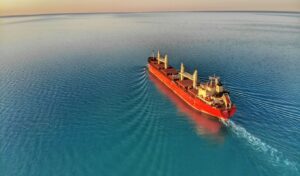
At the heart of the conflict now lies the Strait of Hormuz, which Tehran has closed. The powerful Revolutionary Guards have made clear they consider it “a theater of war, not merely a maritime route.”
“Our current strategy is to keep this strait closed until the enemy accepts all of our terms,” they stated bluntly.
Well above even the issues of Iran’s nuclear program and its missile arsenal — cited among the justifications when the U.S.-Israeli offensive was launched at the end of February — reopening this passage, vital to international hydrocarbon trade, has become Donald Trump’s number one priority.
In recent days, he has repeatedly claimed that alleged negotiations over the strait were going very well and that it would reopen imminently.
However, the terms laid out by Tehran on Saturday point toward a new standoff: the U.S. must “permanently end the war and aggression” against Iran and its allies, including those in Yemen and Iraq; lift the blockade on Iranian ports; remove economic sanctions; and release frozen Iranian assets “unconditionally.”
Many of these provisions were already included in the memorandum of understanding signed by the presidents of both countries in mid-June, which was supposed to pave the way for broader negotiations. It had briefly allowed the strait to reopen for a few days, sending oil prices lower — before the process went off the rails.
While disagreements between the U.S. and Israel within the context of the war have come to light, Israeli Prime Minister Benjamin Netanyahu insisted on Sunday on the nuclear dimension, declaring that “with or without a deal,” the Islamic Republic — sworn enemy of the Jewish state — “will not acquire nuclear weapons.”
“We’re half-negotiating with them,” Trump said
Denying once again that formal negotiations are underway with Washington — as the U.S. president has repeatedly claimed — Iran’s foreign minister described the process on Sunday as an “exchange of messages through intermediaries.”
“I would not call it negotiation. I would call it an exchange of messages,” said Abbas Araghchi. He ruled out any continuation of talks for as long as “American violations” of the preliminary agreement — the so-called Islamabad memorandum of understanding — continue.
Iran says it is only engaging in dialogue with Oman, the sultanate on the opposite shore of the Hormuz strait, to define future shipping routes through the waterway. Those talks are in their “final phase,” Araghchi reiterated.
“We’re half-negotiating with them,” Donald Trump told Axios in his interview.
Tehran is refusing to return to the pre-war status quo and intends to impose transit fees for use of the Hormuz strait, despite explicit U.S. opposition.
The Houthis enter the equation
U.S. airstrikes have been suspended for more than a week; however, Donald Trump had set as a precondition for that suspension the reaching of a “deal” to reopen the strait — and “quickly.”
On another front of the war that has just reignited, the Yemeni movement Ansarallah — also known by the family name of its leaders, the Houthis — announced on Sunday that it had struck an ARAMCO oil refinery in the Red Sea using drones.
Riyadh, which backs the internationally recognized Yemeni government in the war against the rebels, said a fire — whose cause it did not specify — had been brought under control on site.
The Houthis also launched ballistic missiles and sent drones against “Saudi enemy forces and weapons depots in the area of Mokha,” a port in southern Yemen. According to a medical source, at least 11 people were killed, including both military personnel and civilians.
After four years of relative calm, hostilities resumed in July, opening a new chapter in the regional conflagration that followed the war launched by the U.S. and Israel against Iran on February 28.
The Houthis subsequently announced a blockade of Saudi ships and ports in the Red Sea — a waterway that has taken on even greater importance for hydrocarbon trade since the paralysis of the Hormuz strait. They have also repeatedly struck the Sunni kingdom, for the first time since the UN-brokered ceasefire of 2022, which had held despite having technically expired.
Saudi Arabia, a U.S. ally that has repeatedly been in Iran’s crosshairs throughout the war, signed an agreement on Friday with Pakistan and Turkey providing for mutual defense.
AFP