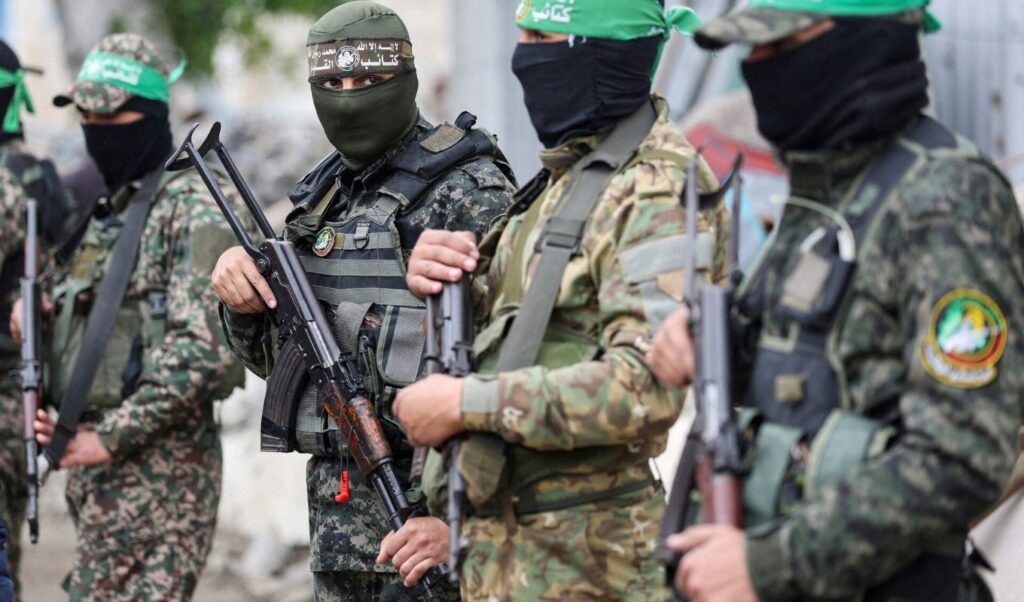
Donald Trump‘s Peace Council today (31/7) released the agreement for implementing the second phase of the Gaza ceasefire plan, which includes a series of key provisions for the region’s future. According to the plan, the central pillars of the agreement are the disarmament of Hamas and the gradual withdrawal of Israeli military forces from Palestinian territory.
Read: Gaza: Agreement reached on Hamas disarmament — All the key points and next steps for implementation
Hamas announced that it accepts the agreement, which serves as a 15-point “roadmap” for implementing the second phase of the ceasefire and establishing the framework for the period ahead. Israel has not yet issued an official statement on the agreement’s content. However, the country’s far-right National Security Minister, Itamar Ben Gvir, expressed his opposition, calling it “unacceptable.”
The roadmap points for Gaza
The key points of the plan are as follows:
– Both Israel and Hamas will cease their military operations.
– The timeline and implementation mechanisms of the roadmap will be determined within 14 days — a period that may be extended — following approval of the plan by all parties.
– The National Committee for the Administration of Gaza (NCAG), a Palestinian technocratic body, will enter the Gaza Strip and assume its responsibilities.
– The transition from one phase to the next will depend on the fulfillment of commitments made in the previous phase.
– Implementation of the plan will be monitored by an International Verification Committee (IVC), which will also oversee any violations of the agreement by either side.
– The Gaza Strip will be governed under the principle of “one authority, one law, and one weapon.” The NCAG will operate in accordance with Palestinian law and international standards.
– Trained police officers will be integrated into existing police units after all personnel undergo thorough vetting. Those who are excluded will be offered alternative positions in the public sector. All police weapons will be placed under the authority of the NCAG.
– A process of Hamas disarmament will begin, including the storage of its heavy weapons, and the dismantling of military production facilities, weapons depots, and tunnels.
– This process will be carried out gradually by the NCAG, in accordance with an agreed-upon timeline.
– This process is linked to the gradual withdrawal of Israeli forces from the zones they still control in Gaza, as well as the dissolution of armed organizations.
– No weapons will be handed over to Israel or to non-Palestinian organizations.
– Once the process is complete, only the NCAG will be permitted to possess, store, or control weapons in Gaza.
– A “social peace” agreement will be signed to put an end to intra-Palestinian conflicts and prevent reprisals, shows of force, or armed demonstrations.
– A temporary International Stabilization Force (ISF) will be deployed in the Gaza Strip to serve as a buffer between Israeli forces and the zones under NCAG control.
– The ISF will monitor the ceasefire, train Palestinian police, guarantee the protection and delivery of humanitarian aid and food supplies into the Gaza Strip, and provide support to the NCAG.
– The ISF will have no policing duties, nor any operational mandate directed at Palestinian civilian society.