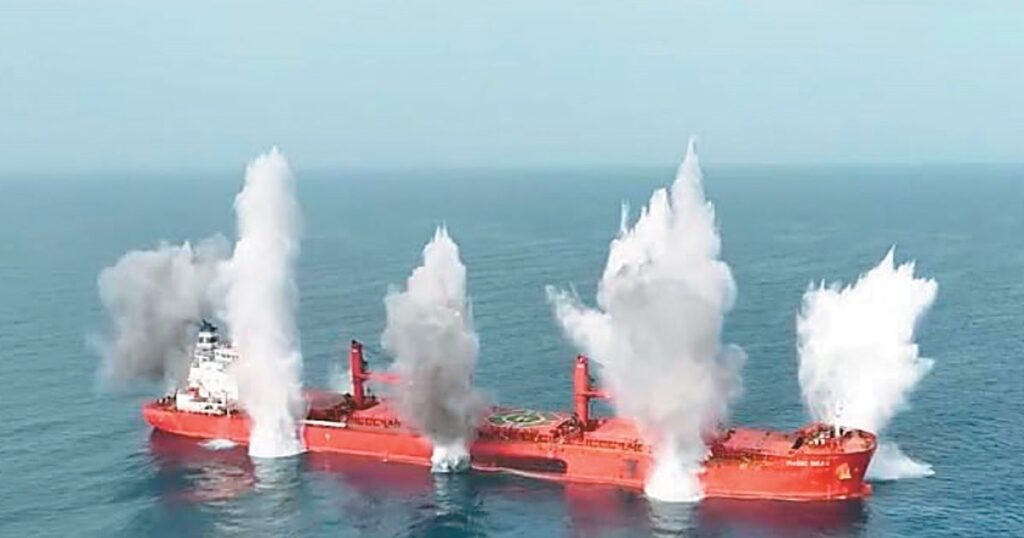
The European naval operation “Aspides” has been placed on heightened alert as new threats from the Houthis reignite concerns over maritime security in the Red Sea and the Gulf of Aden. At the operation’s headquarters in Larissa, Greece, the Iran-backed rebels’ announcement of a “maritime embargo” against Saudi Arabia is being treated as a significant escalation. According to assessments made at the base, this development broadens the range of potential targets and heightens the risk of new attacks on one of the world’s most critical shipping lanes.
Red Sea: The Houthis’ new message
The July 20th announcement of a “maritime embargo” against Riyadh is being interpreted as a tool of political, military, and economic pressure on Saudi Arabia.
The Houthis’ demands include, among other things, the opening of ports and airports under their control, the payment of salaries, the implementation of humanitarian measures, and a prisoner exchange.
Initially, the scope of the embargo remained unclear. However, a subsequent directive from the Houthi Humanitarian Operations Coordination Center made it clear that the ban applies to vessels loading or unloading cargo at any Saudi Arabian port.
The targeting, therefore, does not appear to be limited to a ship’s flag or ownership, but extends to any commercial activity linked to Saudi Arabia.
Analysts at the operation’s headquarters assess that similar past announcements by the Houthis have served as a precursor to hostile actions.
For this reason, the threat level has been revised to medium for the northern and southern Red Sea, the Bab el-Mandeb Strait, and the Gulf of Aden.
Informed sources do not rule out the use of anti-ship missiles, drones, unmanned surface vessels, and fast attack craft in the event of further escalation.
Recommendations for commercial vessels
The European operation is advising commercial vessels with Israeli, American, or Saudi Arabian ties to avoid transiting the Red Sea and the Gulf of Aden until the threat de-escalates.
For vessels that must operate in the area, the operation recommends heightened surveillance, continuous security updates, and close coordination with the relevant naval authorities.
At the same time, Operation Aspides continues its monitoring and escort missions for commercial shipping, with the goal of preserving freedom of navigation along these critical maritime routes.