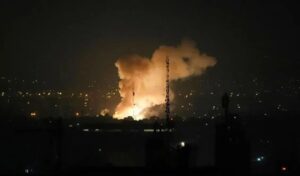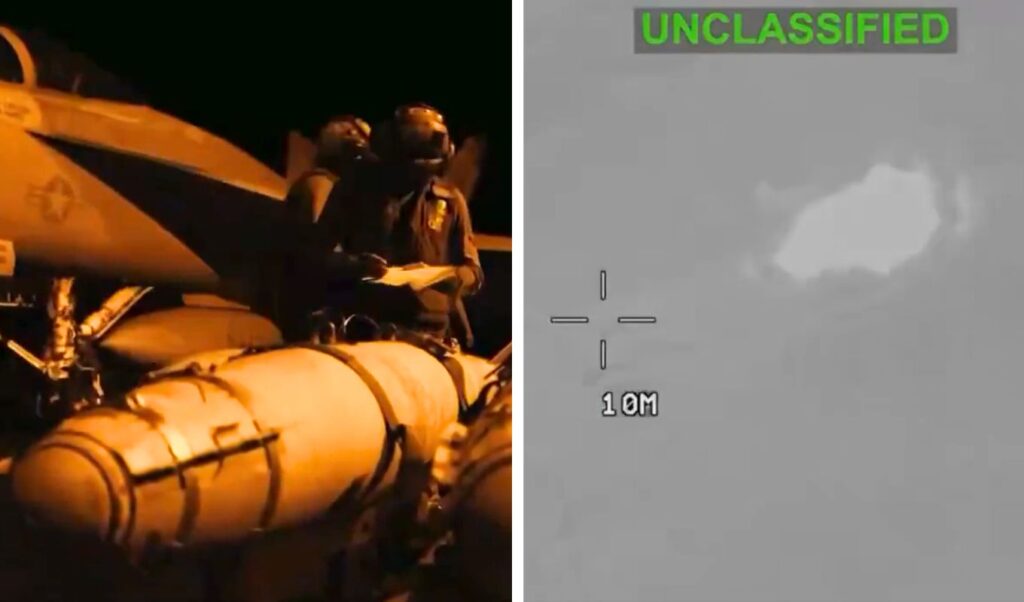
The U.S. military completed its eighth consecutive night of strikes against Iran, as announced by U.S. Central Command (CENTCOM), targeting Iranian coastal surveillance installations and air defense systems.
Iran: A new wave of American strikes
U.S. Central Command (CENTCOM) stated in an official release that the strikes were carried out under the direct order of President Donald Trump. “These operations are designed to further degrade Iran’s ability to threaten commercial shipping in the Strait of Hormuz and swiftly punish Islamic Revolutionary Guard Corps forces that launched attacks against U.S. military personnel in Jordan,” the statement read. According to CENTCOM, the American strikes hit Iranian military coastal surveillance and air defense installations.
JUST IN: U.S. Central Command (CENTCOM) completed another round of strikes against Iran on July 18 at 11:30 p.m. ET, at the Commander in Chief's direction. More than 50,000 U.S. men and women in uniform are operating across the Middle East. They remain highly vigilant, focused,… pic.twitter.com/ajxNoToIOs
— snipy.in (@snipy_in) July 19, 2026
The U.S. military also targeted Islamic Revolutionary Guard Corps forces that launched attacks against American military personnel in Jordan on July 17, according to a CENTCOM statement.
Today at 6 p.m. ET, U.S. forces began launching new airstrikes against Iran at the Commander in Chief’s direction. The strikes are designed to further degrade Iran’s ability to threaten commercial shipping in the Strait of Hormuz and swiftly punish Islamic Revolutionary Guard…
— U.S. Central Command (@CENTCOM) July 18, 2026
Iran’s Mehr news agency reported that U.S. forces struck an area near Sirik in southern Iran, adding that no casualties or infrastructure damage had been reported. The Tasnim news agency reported that U.S. forces also struck a location near Shadegan, close to Iran’s border with Iraq.
Iranian drone strikes on air bases in Kuwait
Tehran responded swiftly, with the Iranian military launching drone strikes targeting U.S. military installations and equipment at Camp Al-Adiri and Ali Al Salem Air Base in Kuwait, according to Iranian state television. Both bases have been consistent targets of Iranian strikes against U.S. forces and their Gulf allies since last week.
CENTCOM confirmed that two American service members were killed on Friday, while a third remains missing in action. With this latest loss, the total number of U.S. military fatalities since the start of hostilities has risen to 16, with more than 420 wounded. U.S. Defense Secretary Pete Hegseth posted on the platform “X”: “Their sacrifice strengthens our resolve.”
On Saturday, Iran widened its campaign of retaliation — in response to American airstrikes on Iranian bridges, power plants, and other infrastructure — extending its targeting to Saudi Arabia, other U.S. allies in the Gulf, and Jordan.
Mojtaba Khamenei: “Unforgettable lessons for the U.S.”
In a written statement broadcast by state television, Iran’s Supreme Leader Mojtaba Khamenei declared: “Now that the enemy seeks to restart the war, it must know that the beloved Iranian nation and the resistance front will teach it unforgettable lessons.” He accused the American side of “repeated violations” of the Islamabad Memorandum of Understanding — the preliminary ceasefire agreement signed by the leaders of both countries on June 17. He argued that these violations “once again demonstrated that the American president’s signature holds no value.” Khamenei also warned the United States of “even heavier costs and further humiliation.”
Severe destruction
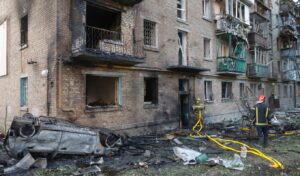
Tehran announced on Saturday that it had struck a U.S.-used air base in Jordan, as well as military installations and civilian infrastructure in Kuwait. Bahrain — home to the U.S. Fifth Fleet headquarters and critical military infrastructure — was also targeted. According to Kuwaiti authorities, Iranian strikes caused severe damage to a vital oil facility, while also knocking out a water desalination and electricity generation plant. It was the second such plant to be struck within 48 hours in the emirate. With temperatures reaching 47°C (117°F), the targeting of what the Gulf Cooperation Council described as “essential infrastructure” was widely condemned.
The Gulf Cooperation Council (GCC), the regional body of Gulf monarchies, denounced the strikes as “war crimes.” Deep public anxiety over the widening of the conflict is also mounting. “Fear of a widespread blackout is everywhere — there are constant calls to reduce consumption and shut off any non-essential appliances,” Ali Mahmoud, a 46-year-old Egyptian working for an electricity company in Kuwait, told AFP. Meanwhile, inside Iran, authorities in Hormozgan Province announced that American airstrikes had “completely destroyed” a seawater pumping station and an electrical transformer at one of their own desalination facilities.
Incidents in the Strait of Hormuz
Alongside the airstrikes, maritime incidents in the Strait of Hormuz continue to escalate. Keeping the strait open was the primary achievement of the June 17 agreement, but commercial shipping traffic has once again ground nearly to a halt. The Revolutionary Guards — the ideological army of the Islamic Republic — warned that their strikes would “continue” until “calm is restored to the southern (Iranian) coastline and the Strait of Hormuz.” Prior to the conflict, roughly one-fifth of the world’s hydrocarbon supply passed through the strait. Following its renewed closure, the United States reimposed a blockade on Iranian ports as a retaliatory measure, just days after lifting it under the terms of the memorandum of understanding.