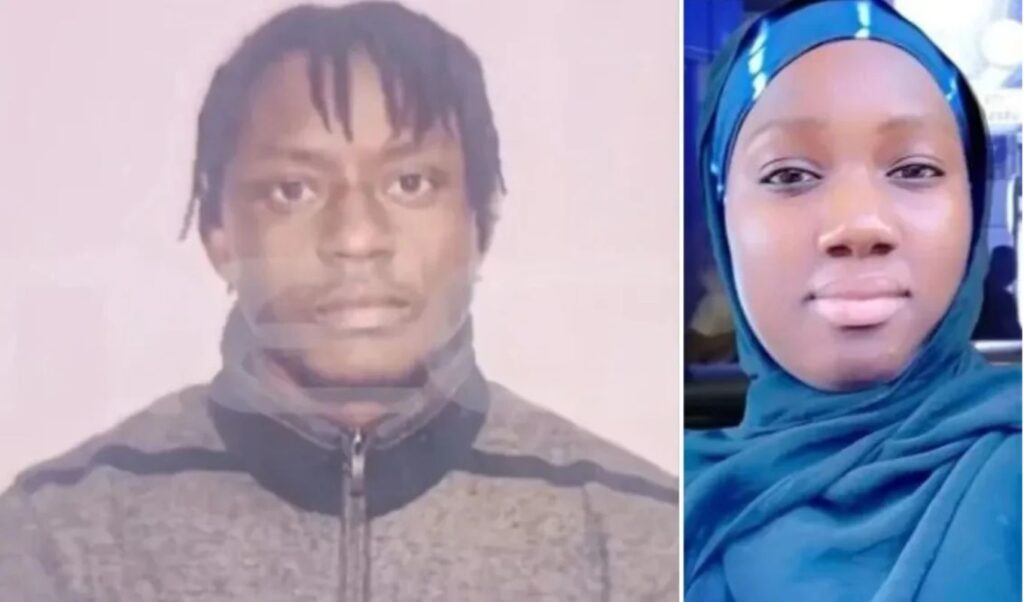
A single fingerprint — recovered through an extraordinarily difficult laboratory process — proved to be the decisive piece of evidence that led to the issuance of a European Arrest Warrant against a 20-year-old man from Guinea, who was arrested in Strasbourg in connection with the death of a 24-year-old woman from Burkina Faso. The young woman had been found dead inside a suitcase on a street in the Agios Panteleimonas neighborhood of Athens on November 8. The discovery proved especially significant, as homicide detectives faced two major obstacles: the advanced decomposition of the body, which had severely hampered the use of physical evidence, and the fact that the forensic examination was unable to conclusively determine the cause of the 24-year-old’s death.
Read also: Agios Panteleimonas: Prime suspect in the suitcase murder of 24-year-old woman arrested in Strasbourg
How the fingerprint was found inside the decomposition fluid
The process of recovering the fingerprint was anything but straightforward. When investigators examined the evidence collected from the suitcase, they found that its condition made laboratory analysis extremely challenging.
The victim’s body had been placed inside multiple layers of plastic bags, which were then sealed within the suitcase. Due to the amount of time that had passed before the body was discovered, both the bags and the other pieces of evidence had been extensively contaminated by bodily decomposition fluids.
Despite these difficulties, through the application of a series of specialized laboratory techniques, forensic investigators were able to develop and photograph a usable fingerprint on the surface of a black plastic bag — one that had been used to wrap the body. The print was matched to the 20-year-old suspect from Guinea, providing investigators with a critical piece of objective evidence directly linking him to the handling and concealment of the body.
According to well-informed sources, without this discovery, efforts to obtain a European Arrest Warrant could have encountered serious legal obstacles. Despite the circumstantial evidence already gathered, investigators faced a fundamental gap in the case: the precise mechanism of the 24-year-old’s death had not been established by the forensic examination.
The fingerprint therefore became one of the strongest pieces of evidence in the case file, corroborated by witness testimony and video surveillance footage that had also been collected during the investigation.
The roommate’s testimony that exposed the 20-year-old suspect
Equally significant was the effort by homicide unit investigators to extract critical information from the suspect’s roommate. Identifying the 20-year-old involved a painstaking intelligence-gathering process, with particular weight placed on the informal questioning of his roommate — who, initially, had not revealed everything he knew. According to sources, homicide detectives employed specialized interrogation techniques and a series of carefully structured questions to secure a highly significant testimony.
The roommate reportedly admitted that the 20-year-old had personally confided in him that he had killed the young woman. While this testimony relates to what the suspect allegedly told a third party, it substantially reinforced the picture investigators had already formed.
Another key factor working against the suspect was his sudden and hurried departure to France. His abrupt exit from Greece was assessed as suspicious behavior, further strengthening the evidence against him when considered alongside the other findings in the case.
The case file heads to Strasbourg — how the extradition will be decided
The 20-year-old was arrested on the afternoon of Wednesday, November 18, in Strasbourg by French police, acting on the European Arrest Warrant that had been issued against him. On Thursday morning, Greek prosecutorial authorities received official notification confirming the execution of the warrant.
According to well-informed sources, attention has now turned to the process of extraditing the young man to Greek authorities, a procedure that could be set in motion within the coming days.
The competent prosecutorial authorities in Strasbourg are expected to receive the necessary case file documents through the established European judicial cooperation channels, which include the SIRENE network. Once the material has been reviewed, an expedited judicial procedure will follow to determine whether the conditions for extraditing the 20-year-old to Greece have been met.
French judges will be called upon to examine the lawfulness of the European Arrest Warrant’s execution, as well as any issues relating to the protection of the detainee’s fundamental rights, including potential concerns regarding the right to a fair trial.
Provided no legal obstacles or delays arise, the process could be concluded swiftly, paving the way for the suspect’s transfer to Greece.
His appearance before Greek judicial authorities is considered critically important for the continuation of the investigation. The central question remains unanswered: exactly how did the 24-year-old lose her life, and what happened between the moment she disappeared and the discovery of her body inside a suitcase in Agios Panteleimonas.