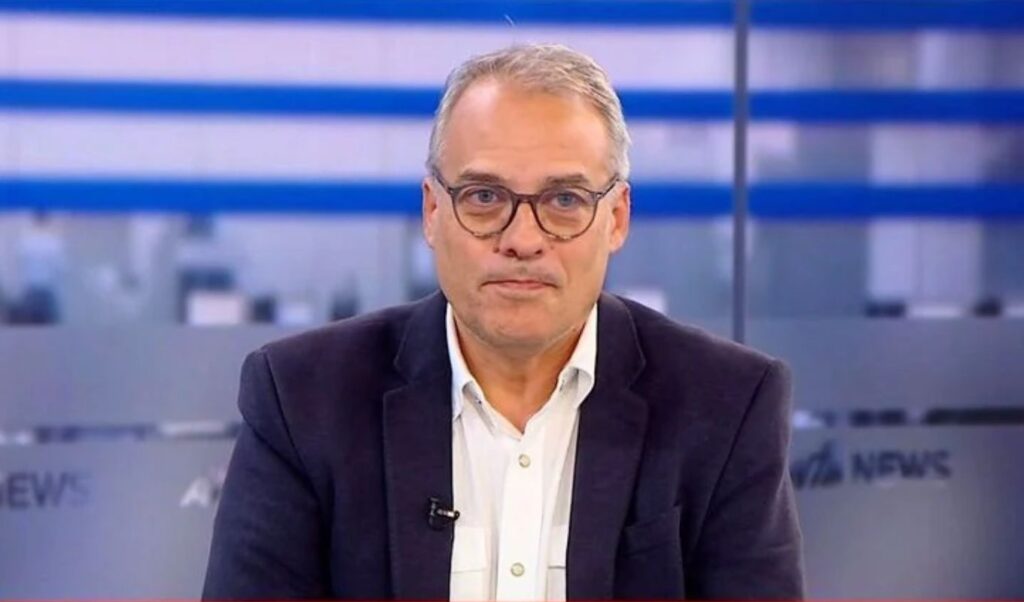
The Director of the National Cybersecurity Authority, Michalis Bletsas, addressed the growing issue of cyberattacks during an interview on ANT1’s main evening news bulletin, warning that the threat is becoming increasingly frequent.
Mr. Bletsas began by commenting on the likelihood of a major cyberattack hitting Greece: “We face cyberattacks every single day — and a great many of them. Any service disruption will be felt by citizens. If we look at what’s happening abroad, especially in the United States in recent days, we’ll soon see something similar here.”
Read also: Digital alarm in the US and Europe: NSA, Nvidia and Equinor targeted by cyberattacks
Cyberattacks: The Microsoft blackout and the danger of unpatched vulnerabilities
Bletsas used the recent Microsoft global outage as a cautionary example: “We need to apply security updates and patches as quickly as possible… There’s no time to spare. That’s exactly what happened with Microsoft. An update didn’t go as planned, and the result was a massive service outage.” He added: “We don’t have the luxury of thoroughly testing every update. Some outages will be intentional, and some will be accidental.”
Artificial intelligence and the risks to national security
Referencing a recent artificial intelligence-assisted attack on the European Commission, Bletsas highlighted the broader national security implications: “National security issues can arise from these attacks. We’ve seen similar incidents in Greece too. You have to remain constantly vigilant — when vulnerabilities emerge, you need to patch them immediately,” he emphasized.
He also offered practical survival tips in the event of a large-scale cyberattack in Greece: “Beyond digital backups on your phone, it’s a good idea to keep some paper copies as well — a printed bank statement showing your account balance, for example. And store a digital copy on a USB drive or flash drive. I consider it dangerous not to have a backup at all.”
How long can a cyberattack last?
When asked how long a cyberattack could last, Bletsas replied: “It depends on the infrastructure and the nature of the attack. The response so far has been fast, but attacks are increasing in frequency. We will learn to build more secure systems.”
Wrapping up the interview, he described the Microsoft outage as unusually prolonged for a provider of that scale, noting that in most cases, disruptions tend to be much shorter.