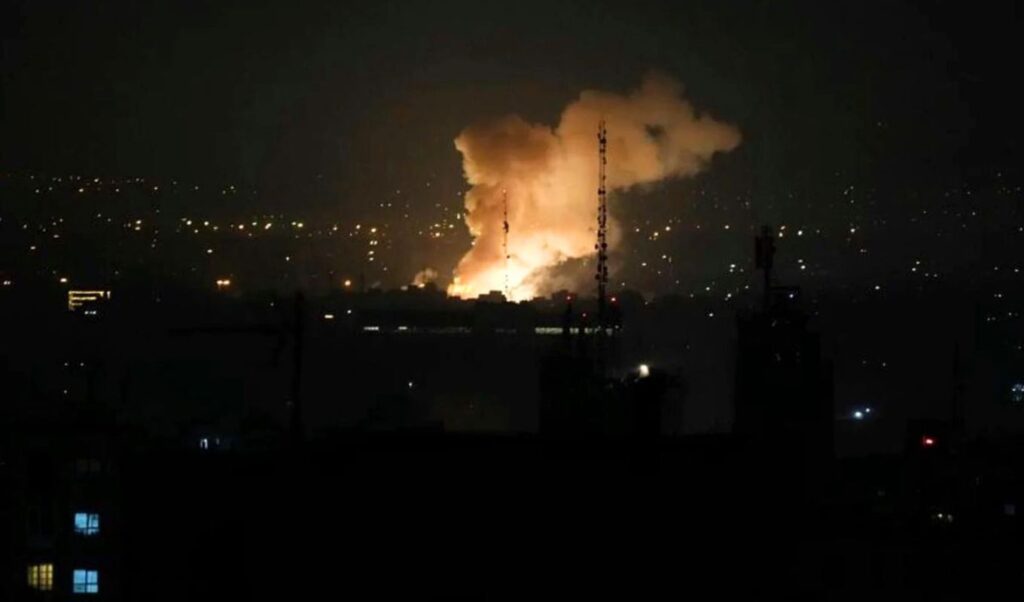
The U.S. military has launched a second wave of strikes against Iran. U.S. Central Command (CENTCOM) announced on Wednesday that it had launched a new wave of airstrikes against targets in Iran, this time focusing on Greater Tunb Island. The island is considered one of the most strategically significant points in the Persian Gulf, as it controls access to the Strait of Hormuz. According to a statement from CENTCOM, the strikes were aimed at degrading the military capabilities that Iranian forces use to attack commercial shipping in the region. The operation, the statement emphasized, is part of ongoing U.S. efforts to ensure free and safe navigation through the Strait of Hormuz.
At 3 p.m. ET, U.S. forces launched operations for a second wave of strikes today against Iran. The strikes are targeting Iranian military capabilities used to threaten vessels freely transiting through the Strait of Hormuz, an international waterway vital to global commerce. The…
— U.S. Central Command (@CENTCOM) July 15, 2026
According to Iran’s Mehr News Agency, explosions were heard in the cities of Ahvaz and Chabahar. Reports indicate that American missiles struck a naval observation post in the Iranian city of Chabahar — a civilian facility used for maritime security and search-and-rescue operations for fishermen.
Airlines cancel Middle East flights amid escalating US-Iran tensions
As reported by Al Jazeera, Aegean Airlines, Air Canada, and Air France-KLM have all suspended scheduled flights to Dubai, Tel Aviv, and other destinations in the region. Air Canada cancelled flights to Tel Aviv and Dubai through October 24. Greece’s largest airline, Aegean Airlines, cancelled flights to Dubai through August 31, and to Erbil and Baghdad through September 30. Air France suspended its flights to Beirut until August 2, while KLM suspended flights to Riyadh, Dammam, and Dubai until July 15. Hong Kong-based Cathay Pacific is planning to resume its flights to Dubai and Riyadh from September 1.
Trump: “I don’t like giving deadlines, but they know how it goes”
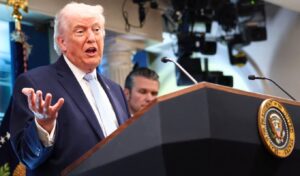
Earlier, U.S. President Donald Trump said he does not like giving deadlines when reporters asked him what timeline Iran has before American forces begin bombing bridges. “I don’t like giving deadlines, but they know well, they know how it goes… They’d better behave,” Trump said. On Tuesday, the U.S. president had signaled in a Fox News interview that he would order the bombing of power plants and bridges in Iran starting next week if Tehran fails to reach a “deal.” “Things will go really badly for them,” he warned, adding that “next week the power plants will be next” and the following week “the bridges will be next” if the Iranians “don’t sit down and negotiate,” Trump told the network.
Vance: Israel is losing the battle of public opinion in the US
U.S. Vice President J.D. Vance says “Israel is losing the battle of public opinion in the United States.” Speaking to American podcaster Joe Rogan, Vance acknowledged that Israel is an ally but admitted that the country is trying to influence U.S. policy. “Are they trying to influence American policy? Yes,” Vance said. “Israel is certainly more effective at that than most.“
Ghalibaf: Tehran has no reason to honor a deal with the US if it gains nothing from it
Iran’s chief nuclear negotiator and parliament speaker Mohammad Bagher Ghalibaf said today that if Tehran does not benefit from the Memorandum of Understanding with the United States, “there is no reason to adhere to such an agreement.” Iran’s national security depends on maintaining “Iranian arrangements” in the Strait of Hormuz, Ghalibaf added in a lengthy post on Telegram. According to the Iranian politician, Iran’s approach to its conflict with the U.S. and negotiations to end it should be grounded in national interests, national security, and a long-term perspective. Tehran has no choice but to rely on its own strength, he explained. At the same time, however, Ghalibaf did not rule out the possibility of negotiations with the United States. “Negotiating at this stage does not equate to compromise but, together with war, is part of the strategy of resistance and the protection of national interests,” he said, according to Reuters. “Separating and choosing either negotiation or war as the only solution is a strategic mistake,” he added.