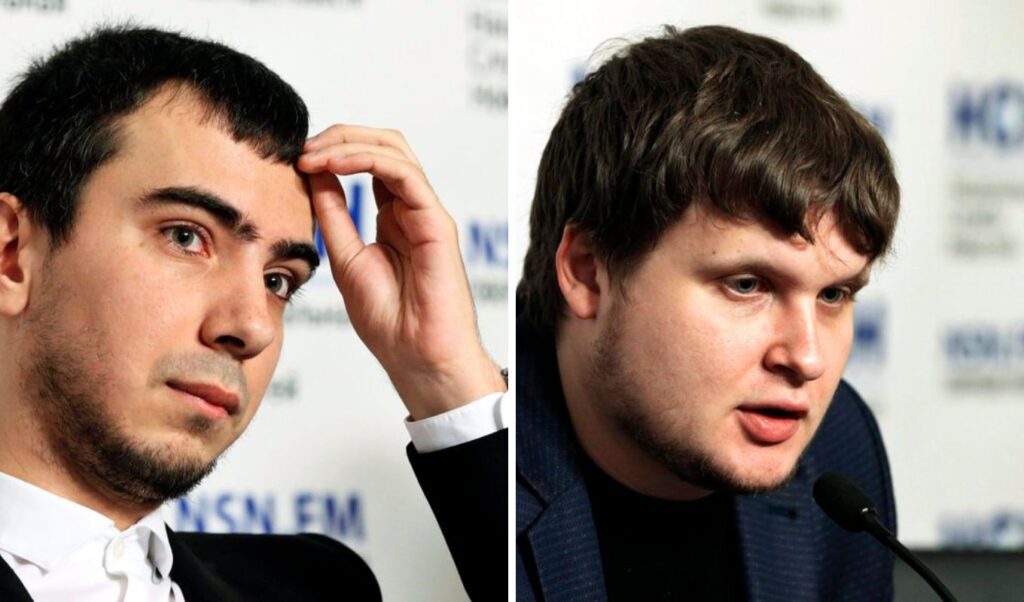
A massive scandal and intense political controversy have erupted following the revelation that world-famous Russian pranksters Vovan and Lexus successfully deceived Thanos Dokos, Greece’s Secretary General of National Security. The duo, posing as senior Ukrainian officials, made contact with the Prime Minister’s close aide and extracted statements on highly sensitive diplomatic and military matters.
The incident has triggered a political storm, with opposition parties calling it an unprecedented security failure and demanding the immediate resignation of Mr. Dokos, while the government attempts to downplay the severity of the breach.
“Just an email and a bit of makeup” — how the Zoom trap was set for Thanos Dokos
Speaking on the program Developments Now, the two Russians described with disarming candor just how simple it was to pull off the operation — exposing glaring weaknesses in Greek security protocols. As they explained, the Greek advisor was not a carefully premeditated or specially selected target; his name came up randomly from a list while they were filming segments for their television show.
“We are not the KGB — we simply sent an email and used some makeup,” they said bluntly. Perhaps the most alarming detail is that the official video meeting via Zoom was arranged using nothing more than a standard, free Gmail account, without raising any suspicion whatsoever.
The communication began in mid-June 2026, and during the video call, the pranksters managed to steer the conversation toward critical and classified topics, including maritime security and the use of naval drones.
How Thanos Dokos was selected — the untold story behind the Russians’ email
The pranksters explained that everything happened entirely by chance, as part of a show they were producing at the time. As they put it: “We didn’t choose him deliberately. He was simply a name on a list and, to be honest, we had no intention of pranking him specifically. We were actually filming a TV show in which we pranked various national security advisors in Baltic and Balkan countries.
After speaking with national security advisors from the Baltic states and a senior Romanian official, we thought: ‘Why not call the Greek national security advisor? Why not?’ So we decided to give it a try. At first we forgot about it — but maybe he genuinely wanted to appear on our show… Eventually his office responded, we did the prank, and then forgot about it. We were very surprised to see how big a deal it became in your country, because for us he was just another person among many — nothing special, someone we spoke to and then forgot about.”
The sting required no sophisticated technology or hacking whatsoever, as verification procedures on the Greek side appeared to be severely lacking. The duo described in detail the straightforward method they used:
“It would be better if he described what procedures he followed himself, because all we did was send an email from a Gmail account to the Prime Minister’s general office — and then forgot about it. If I’m not mistaken, they got back to us about a week later. Honestly, this particular conversation might never have happened at all, because we had another appointment scheduled at the same time.
“It was just a Gmail email — nothing special. We suggested speaking over Zoom and he agreed. We talked about what we had to say, nothing more. You know what was really interesting? That the reaction from Greece only came on the third day after the conversation was published. In Russia it had already been out for four days — since Wednesday.”
According to information brought to light by the program Developments Now, the first written communication took place on June 18, 2026. The Russians presented themselves as representatives of the office of Ukrainian Defense Minister Rustem Umerov. After the initial response, the exchange moved quickly and the video conference was organized, during which critical military and diplomatic issues were discussed.
Political storm over security gaps — the Prime Minister’s office cries “Russian hybrid warfare”
The setting Thanos Dokos chose to conduct this highly sensitive conversation drew particular attention and biting commentary from the Russian duo. Vovan and Lexus did not conceal their astonishment at the national security advisor’s level of professionalism, remarking pointedly: “We were very surprised when we saw his explanations for this conversation. We couldn’t follow them because we don’t speak Greek, but we saw screenshots. If I’m not mistaken, he was in a restaurant or café. And I think that discussing such sensitive matters in a place like that, surrounded by waiters and other customers, is itself a serious problem.
“I cannot imagine something like this happening in Russia, where the secretary of the National Security Council would discuss classified matters or give an interview inside a restaurant or café — the information he handles is top secret. This is simply not normal or professional.”
When the conversation became public, the Greek government attempted to defend itself by invoking an orchestrated “hybrid attack,” implying that sophisticated digital tools and artificial intelligence — including deepfakes — had been used to deceive the advisor. The two Russians laughed off these claims and made it clear they have no connection whatsoever to any intelligence service:
“Maybe they think we’re some kind of KGB operation… If they consider basic makeup to be a covert special operation, then fine. All I can say is that I feel sorry for your country’s national security procedures, if they genuinely believe that a bit of makeup constitutes a special tool deployed against Greece. For us it’s nothing unusual or new — we’ve faced similar accusations from many senior officials we’ve spoken with over the years, and Mr. Dokos is no exception. We always say the same thing: if anyone has evidence that we work for intelligence services or a government, let them present it. In over ten years of doing this, no such evidence has ever been produced.”