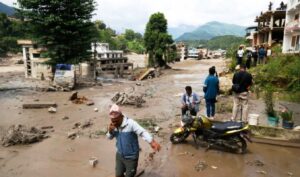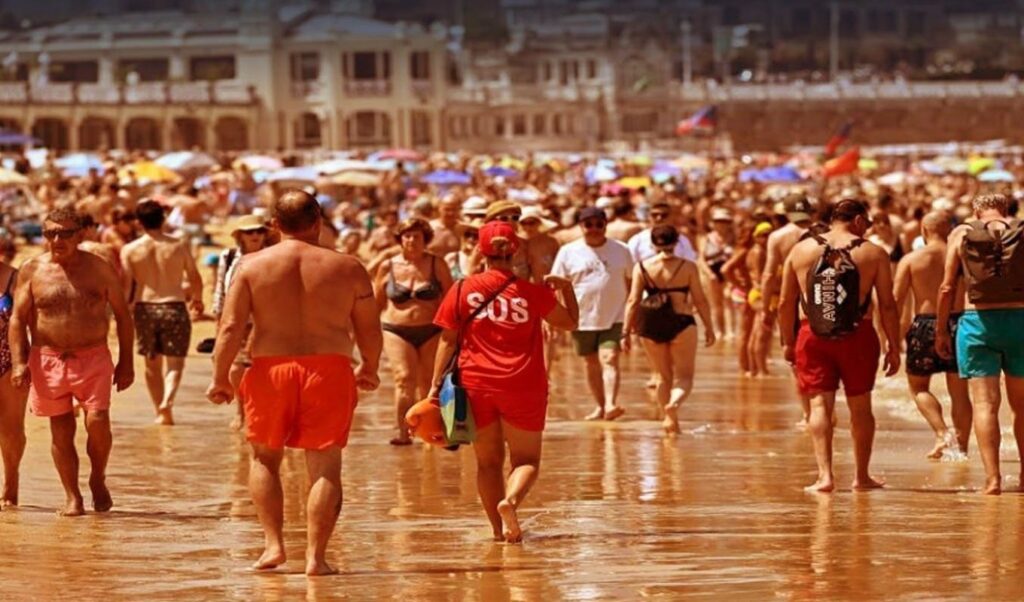
Western and central Europe is burning under heatwaves that have persisted for weeks, while the conversation around climate change has been ongoing for more than a decade. The Athens-Macedonian News Agency presented the perspective of Dr. Andreas Flouris, Professor of Physiology and Director of the Environmental Physiology FAME Lab at the University of Thessaly. “Climate change is no longer an abstract environmental discussion. It enters our homes, our fields, our construction sites, our schools, and our businesses. It reduces people’s ability to work safely, puts pressure on agricultural production and incomes, raises the costs of energy, healthcare, and insurance, and strains infrastructure that was designed for a milder climate. Simply put, rising temperatures translate into losses in health, working hours, and financial security,” he stated.
Heatwaves in Europe: A social issue
Andreas Flouris emphasized that climate change concerns everyone as a whole and exists as a social problem, while also carrying a class dimension: “It tests society as a whole. And the burden is not distributed equally: the elderly, children, people with chronic illnesses, outdoor workers, and low-income households are hit first and hardest.” Europe, according to Flouris, is on the front line of this change: “It is the fastest-warming continent on the planet and, over the past three decades, its temperatures have been rising at more than twice the global average rate. This doesn’t just mean hotter summers. It means more frequent and prolonged periods of heat stress, warmer nights that don’t allow the body to recover, and greater challenges in water management, food production, energy networks, and healthcare services.”
Heat never comes alone
Unfortunately, the heat does not arrive on its own, stressed Dr. Flouris: “Imagine the climate as a chain, where each link pulls the next,” he said, going on to explain: “High temperatures make the atmosphere ‘thirsty,’ drawing moisture from the soil and vegetation, and when combined with drought and strong winds, they create the ideal conditions for the rapid spread of wildfires. The smoke then carries fine particles far from the fire front, burdening the hearts and lungs of people who may be hundreds of kilometers away.
Similarly, sandstorms and dust storms are born from strong winds over dry and exposed terrain. Not every episode of African dust is directly caused by climate change. However, drought, land degradation, and shifts in atmospheric circulation are changing the backdrop against which these episodes unfold. When dust coincides with a heatwave, wildfire smoke, or urban pollution, the human body is not facing one threat — it is facing many simultaneously.”
Dr. Flouris concluded: “This is why our response cannot be limited to emergency announcements every time an extreme weather event strikes. We need early warning systems that combine temperature, air quality, and wildfire risk data, resilient infrastructure, workplace protections, strengthened public health systems, and meaningful emissions reductions. If we treat each risk in isolation, we will always be one step behind. Climate resilience begins when we simultaneously protect people, incomes, and social cohesion.”